Category: come sunday

High Priestly Duties – A Lectionary Reflection for Lent 5B (Hebrews 5)

Hebrews 5:5-10 New Revised Standard Version

So also Christ did not glorify himself in becoming a high priest, but was appointed by the one who said to him,

“You are my Son,
today I have begotten you”;

as he says also in another place,

“You are a priest forever,
according to the order of Melchizedek.”

In the days of his flesh, Jesus offered up prayers and supplications, with loud cries and tears, to the one who was able to save him from death, and he was heard because of his reverent submission. Although he was a Son, he learned obedience through what he suffered; and having been made perfect, he became the source of eternal salvation for all who obey him, 10 having been designated by God a high priest according to the order of Melchizedek.

***************

                In 1 Peter 2, we’re told that to be in Christ is to be part of a royal priesthood (1 Peter 2:9). That revelation led to the doctrine, especially prominent among Protestants, of the “priesthood of all believers.” The document that guides the ordering of ministry in my denomination—The Theological Foundations for the Ordering of Ministry in the Christian Church (Disciples of Christ)—speaks directly to this understanding of priesthood: “In Christ the individual becomes a member of ‘a royal priesthood, a holy nation, a people of God’s own possession’ (1Peter 2:9). Thus it has been common to speak of the ‘priesthood of all believers’ —the persons who live as faithful disciples of Jesus Christ in the church and in the world. This language highlights the sacramentality of the work of the laity through whose witness and service the grace of God is made manifest.” If we are all part of this royal priesthood, who is the high priest? In the Book of Hebrews, we are told that Jesus is the high priest. Of course, there is a caveat here, and we’ll need to address it. That caveat has to do with the qualifications for being a priest and whether Jesus actually qualifies.

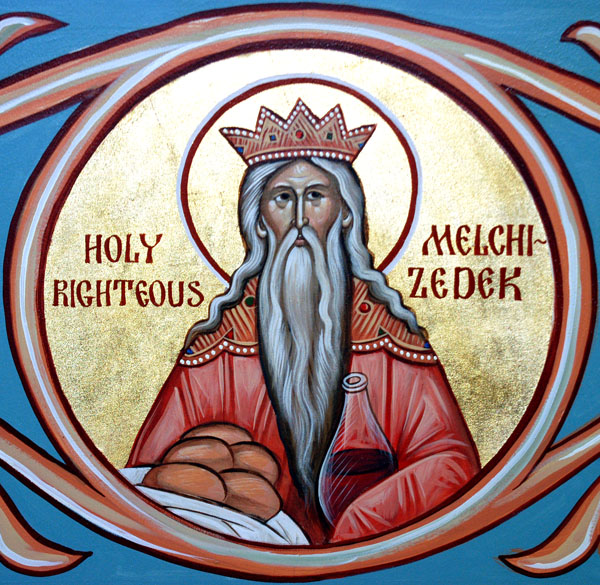
                In ancient Israel, the priesthood was limited to the tribe of Levi, while the high priests were to be lineal descendants of Aaron. As for Jesus, he was neither a Levite nor a descendant of Aaron. So, how might he be our high priest? According to the genealogies in Matthew and Luke Jesus was a descendant of David, which made him a member of the tribe of Judah. That seeming barrier does stop the author of Hebrews from creating a workaround so that Jesus might qualify. While Jesus might not be a descendant of Aaron, Hebrews simply calls Jesus a priest according to the order of Melchizedek.

                Before we get to this mysterious Order of Melchizedek, we would be wise to begin with the question of Jesus’ appointment to the office of high priest. Then we can turn to Melchizedek and the implications of this passage for our Lenten journey.  The reading from Hebrews 5:5-10 is part of a larger section of the letter that begins in verse 14 of chapter 4. In the opening lines of the section, the author of Hebrews (Hebrews is anonymous) writes that “since, then, we have a great high priest who has passed through the heavens, Jesus, the Son of God, let us hold fast to our confession.” We’re also told that this high priest can sympathize with our weaknesses. He was “tested as we are” and yet he did not sin. Therefore, we can “approach the throne of grace with boldness, so that we may receive mercy and find grace to help in time of need” (Heb. 4:15-16).  

                Having learned about this high priest who was tested and yet without sin, when we come to verses 5-6 of chapter 5, we are told that when appointed to this position, Jesus did not glorify himself but was appointed to the position by God. Thus, the author draws upon the Psalms to describe the qualifications of this high priest. First, God says of this high priest, “you are my Son, today I have begotten you” (Ps. 2:7). So, the main qualification here is that Jesus is the Son of God. Then, we learn that Jesus is “a priest forever, according to the order of Melchizedek” (Ps. 110:4).  

                The author of Hebrews makes it clear that one does not appoint oneself to the position of high priest. In the verse prior to our passage, we read that “one does not presume to take this honor, but takes it only when called by God, just as Aaron was (Heb. 5:4). As noted above, Jesus did not descend from the priestly line, so Hebrews links him to the mysterious Melchizedek, who appears in Genesis as the priest-king of Salem who receives tithes from Abraham and blesses him (Gen. 14:17-20). This figure suddenly appears and then disappears from the story. But, the author of Hebrews discovers in this mysterious figure the means to unlock Jesus’ high priestly calling. He might not have an Aaronic pedigree, but he has something else, something rooted in mystery. Interestingly, it’s only in Hebrews that Jesus is connected to Melchizedek. But the identification of the too is intriguing.   

                Having been appointed to this position as a high priest according to the order of Melchizedek by God, in large part because of his status as Son of God, Jesus takes up his priestly duties. During his earthly life, Jesus “offered up prayers and supplications, with loud cries and tears, to the one who was able to save him from death.” Here is a reference to Jesus’ priestly duties taken up, it would appear, while on the cross. He was heard because of his submission to the one who appointed him to this role. He was heard because of his submission. Though he held the status as Son of God, in words reminiscent of what Paul said of Jesus in Philippians 2—he “learned obedience through what he suffered.” It was in this suffering that he was perfected and became the source of our salvation. Nothing is said here about being a substitute sacrificed for our sins. The point simply is that his pathway to this priesthood of Melchizedek included the suffering of the cross.  

                Back in Hebrews 4, the author reveals that Jesus is not a high priest who is unable to sympathize with our weaknesses. He too has been tested and yet did not sin (Heb 4:15-17). That testing includes suffering. Jesus can understand our struggles, our sufferings, because he also suffered. This is the foundation of his priesthood. You might say that he graduated from the school of hard knocks. This is true even though he was the Son of God. That status did not prevent him from experiencing human realities, therefore, we can put our trust in him. In this, we find good news.

The Rich Mercy of God – Lectionary Reflection for Lent 4B (Ephesians 2)

Ephesians 2:1-10 New Revised Standard Version

You were dead through the trespasses and sins in which you once lived, following the course of this world, following the ruler of the power of the air, the spirit that is now at work among those who are disobedient. All of us once lived among them in the passions of our flesh, following the desires of flesh and senses, and we were by nature children of wrath, like everyone else. But God, who is rich in mercy, out of the great love with which he loved us even when we were dead through our trespasses, made us alive together with Christ—by grace you have been saved— and raised us up with him and seated us with him in the heavenly places in Christ Jesus, so that in the ages to come he might show the immeasurable riches of his grace in kindness toward us in Christ Jesus. For by grace you have been saved through faith, and this is not your own doing; it is the gift of God— not the result of works, so that no one may boast. 10 For we are what he has made us, created in Christ Jesus for good works, which God prepared beforehand to be our way of life.

***********

                As the Lenten journey continues, we are continually invited to engage in self-examination. That can be challenging. If we look too deeply, we might find things buried inside that we’d rather not see the light of day. We all have those secret things that we wrestle with, and that we work hard at keeping them at bay, so they don’t define our lives. Here in the Ephesian letter, we read a word likely spoken to Gentiles, whom the author of the letter suggests had been children of wrath. That is, they once lived in bondage to a spiritual power that kept them separated from their Creator. But there is good news here. God’s mercy reigns. There will be liberation from the bondage. Once they were children of wrath, but that is no longer true, so now they can embrace the good works God has prepared from them.

                Before we get to the heart of the matter, I need to address the question of authorship. While traditionally authorship has been assigned to Paul. After all, the letter begins with a greeting from the Apostle (Eph. 1:1). Nevertheless, many scholars have questioned that claim, believing that the letter comes from a later time. As for the identity of the author, I tend not to take sides. When I wrote my study guide on Ephesians, I left the question of authorship open. There are good arguments on both sides, but I’m not sure that authorship is going to make too much of a difference to our interpretation of this passage. However, in the pursuit of brevity, I’m going to use Paul’s name in this meditation. As I do so, I hold this ascription very lightly!

                What I discern here in Ephesians 2 is a reminder that there is a spiritual realm that influences/affects our lives. According to Paul (remember for our purposes I’m using the traditional author) there are powers, both good and evil present in the universe. We would be wise to keep that in mind as we attend to our Lenten journey. Concerning this spiritual realm, Richard Beck has done a marvelous job in explaining how things work in his book Reviving Old Scratch. Just to be clear, “Old Scratch” is another name for the devil. He writes: “I’d love to have a Christianity full of rainbows and daisies, full of love and inclusion. But there are forces working against love and inclusion in the world, and some of those forces are at work in my own heart and mind. We call those forces hate and exclusion, to say nothing about everything else that is tearing the world to shreds, pushing the loving and gracious rule of God out of the world” [Reviving Old Scratch, p. 10]. So, have you noticed those forces at work of late? I have and sometimes they’ve been at work in me.

                Might this be what Paul has in mind when speaking of the ruler of the power of the air? The Enlightenment mindset sought to eliminate the spiritual/supernatural realm. Science or at least reason was expected to explain everything (I’m not anti-science here, just to be clear). In this modern view of things, there was no room for the devil. While there might not be a “personal” devil out there, I do believe there are malignant spiritual forces that entrap us and keep us in bondage. Lent gives us the opportunity to pause and check to see if any of these forces have taken hold of our lives. If so, we can give thanks for God’s mercy that can recalibrate our lives, so we live in tune with God’s vision for creation. Although these spiritual forces continually seek to push God out of the picture, God isn’t going anywhere.

                The good news that comes to us from the Ephesian letter is that God is “rich in mercy.” In fact, God loved us even when we were caught up in this web of wrath and because of that, God has been providing us a way out of the morass through faith in Christ. As we consider how Jesus does this, we might want to keep in mind that the Gospel writers regularly picture Jesus engaging in exorcisms. It was one of the ways in which he healed people. He did so as an expression of God’s mercy and grace. So, it is by this grace that we are saved, we are healed.  We receive the healing by faith, but it is the work of God that provides the healing/salvation. In doing this, God raises us up with Christ so that we might be seated with him in the heavenly places.

                In this passage, the emphasis is on grace. We can’t work our way into the heavenly places? We don’t earn the right to sit with Jesus. That’s a gift of grace. However, that doesn’t mean there’s nothing for us to do. In fact, God has prepared works for us to do. These works also come as gifts of grace. So, who we are now is not the same as who we were before the divine encounter with Jesus, and so we live accordingly. Once we were dead in our sins, now we are alive in Christ! That is because, due to the rich mercy of God, the prince of the power of the air no longer holds sway in our lives! That is good truly news.   

The Foolishness of the Cross – Lectionary Reflection for Lent 3B (1 Corinthians 1)


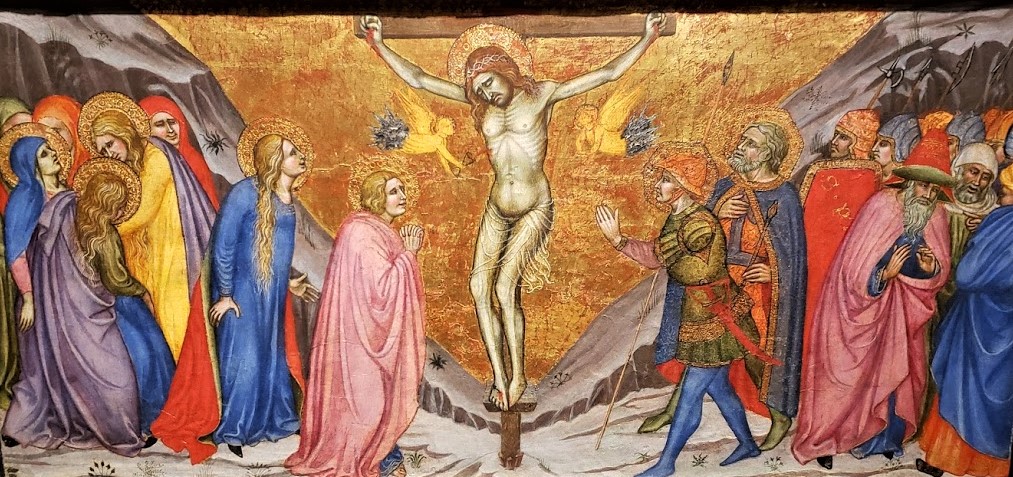
The Crucifixion — Taddeo di Bartolo (Art Institute of Chicago)


1 Corinthians 1:18-31 New Revised Standard Version

18 For the message about the cross is foolishness to those who are perishing, but to us who are being saved it is the power of God. 19 For it is written, 

“I will destroy the wisdom of the wise,
    and the discernment of the discerning I will thwart.”

20 Where is the one who is wise? Where is the scribe? Where is the debater of this age? Has not God made foolish the wisdom of the world? 21 For since, in the wisdom of God, the world did not know God through wisdom, God decided, through the foolishness of our proclamation, to save those who believe. 22 For Jews demand signs and Greeks desire wisdom, 23 but we proclaim Christ crucified, a stumbling block to Jews and foolishness to Gentiles, 24 but to those who are the called, both Jews and Greeks, Christ the power of God and the wisdom of God. 25 For God’s foolishness is wiser than human wisdom, and God’s weakness is stronger than human strength.

26 Consider your own call, brothers and sisters: not many of you were wise by human standards, not many were powerful, not many were of noble birth. 27 But God chose what is foolish in the world to shame the wise; God chose what is weak in the world to shame the strong; 28 God chose what is low and despised in the world, things that are not, to reduce to nothing things that are, 29 so that no one might boast in the presence of God. 30 He is the source of your life in Christ Jesus, who became for us wisdom from God, and righteousness and sanctification and redemption, 31 in order that, as it is written, “Let the one who boasts, boast in the Lord.”

***********

Ah, holy Jesus, how has thou offended, 

that mortal judgment that on thee descended?

By foes derided, by the world rejected, O most afflicted! 

—Johannn Heerman (Chalice Hymnal, 210).

                The scandal of the Gospel is that it is centered in a message about a crucified  messiah. What is it about a figure who suffered a humiliating death on one of the cruelest forms of execution ever devised that would attract anyone? Truly it would be foolishness to embrace such a one as Jesus of Nazareth, who met his death on a Roman cross outside a city in a backwater part of the Roman Empire.

                The cross continues to be a scandal. For some within the Christian community, the way in which Jesus is often portrayed as a means of satisfying the demands for blood on the part of a wrathful God causes angst.  This is because some forms of atonement theory can look a lot like divine child abuse. Thus, for some, it seems as if it would be better if we eschew the message of Good Friday and simply skip from Palm Sunday to Easter, from one triumph to another. Of course, there are others who worry that a religious leader who dies on a cross might look like a loser. Who wants to be associated with a loser. Maybe we can photoshop out the cross and simply focus on a Jesus sitting on a throne.  Nevertheless, Paul makes it clear to critics, both Jewish and Greek, ancient and modern, that he is going to “proclaim Christ crucified.” Just so you know, Paul’s not afraid of being associated with someone the world might consider a loser.

               It’s appropriate to situate this word about the cross in an imperial context. The Romans valued power. They ruled a vast empire on the basis of their military might. They built roads that made commerce efficient, but just like our modern interstates, these roads had a military purpose. In fact, it was the Roman legions who built the roads so they could move quickly across the empire. The religions of the empire tended to emphasize power as well. The mystery religions promised their adherents access to power that was intoxicating. So, it’s not surprising that these young Christians in Corinth would have expected something similar from their religious tradition. Some of them might have been embarrassed by Paul’s preaching a gospel that placed the cross at the center.

                We encounter this word from Paul as we journey through Lent, a season that invites us to let go of things that impede our relationship with Jesus. It invites us to consider how the cross of Jesus defines our faith. Perhaps it’s the desire for power that we need to let go of so that we might share in a different kind of power. This is the kind of power that emerges from humility. It’s a very different message from the one proclaimed by imperial Rome. Is it not different from the message we hear in our culture? Who wants to be a loser or aligned with a loser?

                Here is how Paul defined the way of the cross. He informed his readers that God wasn’t interested in hanging out with the rich and powerful of this world. Instead, God had chosen the “low and despised in the world” to identify with. This is the message revealed in Jesus’s death on a cross. What we see in Paul’s letter to the Corinthians is evidence of class-based division. Most likely a large portion of this Christian community was poor. Many might have been slaves. There were, of course, wealthier members, who seemed intent on having power over the poor and the despised. Paul responds to this division by reminding the people that Jesus had died on a cross, despised by those who were in power and those who prized power.

                Paul emphasized God’s identification with the ones the world considered to be expendable and losers, recognizing that for many it appeared that Rome’s power reigned supreme. Was not Jesus’ death an expression of weakness? If so, is this not foolishness? Now, Paul understood that there was more to the story than simply Jesus’ death. Paul knew that his proclamation of this message of the cross included the resurrection. It might appear that Rome won, but did it really? That is a question we need to wrestle with in our day. What does it mean to win?

                Ever since Constantine decided to make Christianity a recognized religion, we’ve tended to rethink the message of the cross. For Constantine, it was a symbol of conquest. He would not be the last to conquer in the name of the cross. What was once a symbol of weakness has been transformed into a symbol of political and military power. Many Christians today have found the promise of gaining power over others, of using the premise of religious liberty to discriminate, rather intoxicating. In fact, it appears that quite a number of Christians have given their allegiance to a figure who promised them power in exchange for loyalty. They have given themselves over to his vision of dominance over others. Lest we think ourselves immune from the intoxicating allure of political power, we might want to heed Paul’s words here. We might want to remember that we are called to live in a relationship with one whose death on a cross was deemed foolish.

                It might help us gain perspective on our place in the world if we remember that this message Paul delivers to the Corinthians is rooted in an eschatological vision of reality. Rome represented the old age, while Jesus represents the new age. We have a choice. We can stay with Rome, which promises victory. Or we can embrace Jesus, who also offers a vision of victory, but of a very different kind. Yes, it might appear that Rome has won, but if dive below the surface of our reality, we will discover that the crucified Jesus is risen and has set in motion a new way of living before God. That is a message worth considering during this Lenten season.    

Reckoned as Righteous – Lectionary Reflection for Lent 2B (Romans 4)

Romans 4:13-25  New
Revised Standard Version

13 For the promise that he would inherit the world did not come to Abraham or to his descendants through the law but through the righteousness of faith. 14 If it is the adherents of the law who are to be the heirs, faith is null and the promise is void. 15 For the law brings wrath; but where there is no law, neither is there violation.

16 For this reason it depends on faith, in order that the promise may rest on grace and be guaranteed to all his descendants, not only to the adherents of the law but also to those who share the faith of Abraham (for he is the father of all of us, 17 as it is written, “I have made you the father of many nations”)—in the presence of the God in whom he believed, who gives life to the dead and calls into existence the things that do not exist. 18 Hoping against hope, he believed that he would become “the father of many nations,” according to what was said, “So numerous shall your descendants be.” 19 He did not weaken in faith when he considered his own body, which was already as good as dead (for he was about a hundred years old), or when he considered the barrenness of Sarah’s womb. 20 No distrust made him waver concerning the promise of God, but he grew strong in his faith as he gave glory to God, 21 being fully convinced that God was able to do what he had promised. 22 Therefore his faith “was reckoned to him as righteousness.” 23 Now the words, “it was reckoned to him,” were written not for his sake alone, 24 but for ours also. It will be reckoned to us who believe in him who raised Jesus our Lord from the dead, 25 who was handed over to death for our trespasses and was raised for our justification.

*********************

                How might a person be reckoned as righteous? Is it by faith or by keeping the law? Is it even possible to keep the law so as to be judged righteous before God? And what does being so reckoned lead to? According to Paul, it may have something to do with the inheritance given to Abraham and his descendants. What would that be? According to Paul, that inheritance given to Abraham and his heirs is the world (Rom. 4:13). To suggest that it is through the law, again according to Paul, would make faith null and void. Therefore, the inheritance must be an act of grace received through faith. That sounds like a message Martin Luther would embrace! The idea that we are justified by faith has been a central part of the Christian confession, but like everything in life, things are more complicated than what might be revealed in a simple slogan like sola fide, sola gratia (faith alone, grace alone).

                Here in Romans 4, Paul focuses our attention on Abraham our Ancestor, who believed God and therefore was reckoned or counted as righteous (Rom. 4:1-3; Gen. 15:6). The premise of chapter 4 is that Abraham’s relationship with God rested in God’s
grace and did not depend on his adherence to the law. If by law, one means Torah, then he would not have had that available to him, as it was revealed at Sinai. What Paul is getting at here is that Abraham’s relationship with God, a relationship that declared him righteous, which made him the recipient of God’s promise, rests on God’s grace, which Abraham received by faith. It is through faith that he and his descendants shall receive the inheritance (vs. 13). The promise that is spoken of here is summarized in a word given to Abraham by the Angel of the Lord: “I will indeed bless you, and I will make your offspring as numerous as the stars of heaven and the as the sand that is on the seashore. And your offspring shall possess the gate of their enemies, and by your offspring shall all the nations of the earth gain blessing for themselves, because you have obeyed my voice” (Gen. 22:17-18). Interestingly enough, in Genesis 22, the blessing is pronounced after Abraham showed his willingness to offer Isaac, the chosen one, as a sacrifice in response to God’s request.   

                Regarding the Law, in this chapter, Paul seems rather negative. But, I wonder whether Paul should be seen as rejecting the Law. It seems to me that Paul wants to broaden the possibilities by which one is included in the covenant community. He’s concerned that the requirement to be circumcised would be a stumbling block to Gentiles (Rom 4:9-10). In Paul’s mind, Abraham was declared righteous before he was circumcised. Circumcision was not a requirement for this declaration, but it did seal the relationship, much like baptism seals the commitment Christians make to follow Jesus. Now, it’s true that Paul did say that the law brings wrath and if there is no law there is no violation, but isn’t that a technicality? It’s like saying, if we don’t get tested for COVID-19 then we don’t have COVID. 

                If we look closely at Paul’s message, we’ll see that if received by faith, the promise is extended both to those who are adherents of the Law (Jews) and those who are not (Gentiles) (Rom. 4:16). Perhaps that is the key for Paul. He is emphasizing a broader view of what it means to be a descendant of Abraham. As Paul reminds us, Abraham is not only the father of Israel but is the father of many nations. Therefore, while Israel is included in the inheritance, others are as well. That is true for both those who are adherents of the Law and those who are not. As Karl Barth writes:

Since the heirs are what they are not through the law by of faith, not as a consequence of moral and historical status but according to grace, it follows as a matter of course that participation in that company cannot be confined to those who have been made children of Abraham according to the law, cannot be limited to the historical Israel, or to those who accept a particular and definite and historical tradition and doctrine, or to those who are members of some particular ‘movement.’ Such limitation in the number heirs makes the inheritance itself more than insecure (iv. 14, 15). As the recipient of the promise, Abraham stands outside every historical and particular company of men; similarly his true seed, being the race of believers, likewise stand outside. [Barth, Epistle to the Romans, pp. 138-139].  

I might be taking this a bit farther than Barth might, but it does seem to make sense that if inclusion in the family is by grace, then we might see this as broadening out beyond believers in Jesus. It is worth pondering for a moment that Muslims understand themselves to be heirs of Abraham through Ishmael. So, what does it mean for Abraham to be the father of many nations?

                I sense that Paul might take a narrower view of who is included among the heirs than I just suggested, but it’s worth pondering. For Paul, Abraham is understood to be the ancestor of those who believe and walk in faith. For Paul that involves who
“believe in him who raised Jesus our Lord from the dead, who was handed over to death for our trespasses and was raised for our justification” (Rom 4:24-25).  Thus, in Paul’s mind, circumcision isn’t a requirement when it comes to being judged righteous (justification). Only faith is necessary. It is worth noting here that the lectionary reading from Genesis 17, stipulated for this Sunday, excludes the verses that refer to circumcision as the seal of the covenant. While the lectionary creators set aside reference to circumcision, it’s there in Genesis 17 (Gen. 17:9-14). Paul is aware of this and acknowledges it (Rom 4:11). Of course, all of this takes place before the Law is instituted at Sinai, but circumcision was instituted long before Sinai.

                Paul draws on the promise of God made to Abraham and Sarah as a foundation for the inclusion of Gentiles in the family of God. He suggests, again just before our reading, that Abraham is the “ancestor of all who believe without being circumcised and who thus have righteousness reckoned to them” (vs. 11). While Paul doesn’t seem to have a problem with the Law as it applies to Jews, he does not see the Law as the appropriate means through which Gentiles will be included in the blessing promised to Abraham. After all, Abraham received God’s call by faith, believing that though he and Sarah didn’t have children of their own, somehow God would take care of that problem. In other words, they trusted God’s promise.

                Now, if you follow the story of Abraham, you know that Abraham did try on occasion to take matters into his own hands. Nevertheless, Paul wants to claim that the promise made to Abraham was an act of grace. Therefore, those who are considered heirs with Abraham, are recipients of the same grace. That means that Gentiles enter the covenant community that is rooted in the promise made to Abraham through faith in Jesus.

                If we read Paul here through the lens of the covenant that God made with Abraham and Sarah, which is a covenant of blessing (Gen. 12, 17), then it seems right that we should embrace our place in the family with humility. After all, it is not by biological descent that we Gentiles trace our heritage back to Abraham. Rather it is through an adoption that Jesus engineered on our behalf. For that, we give thanks that by God’s grace we’ve been added to the family that inherits the earth.

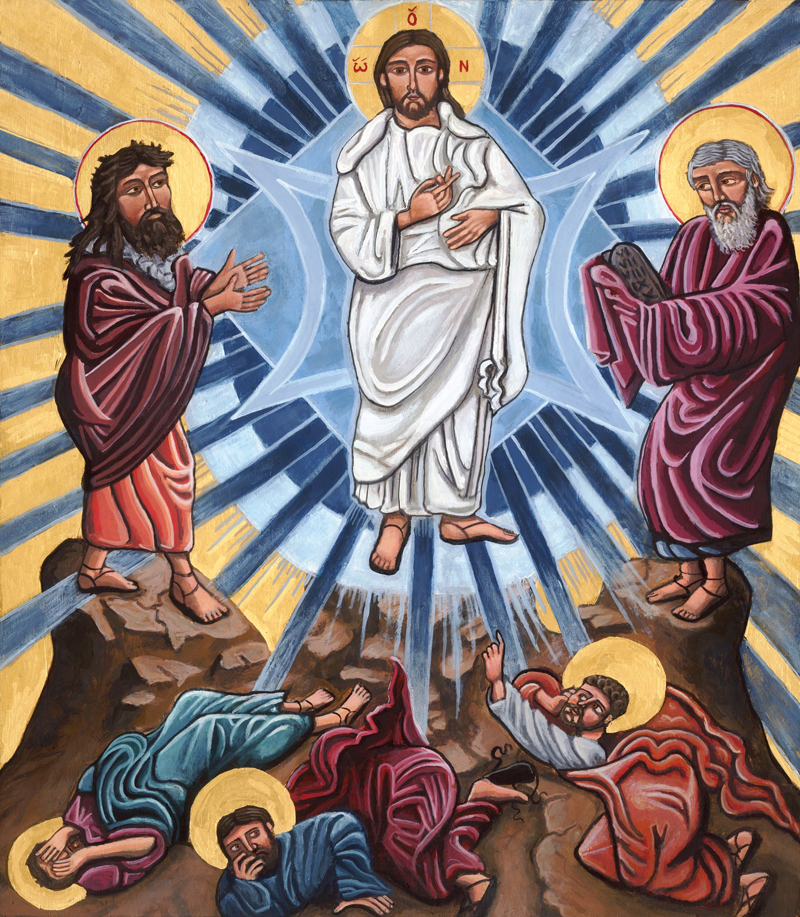
Let the Light Shine Bright — Lectionary Reflection for Transfiguration Sunday, Year B (2 Corinthians 4)

2 Corinthians 4:3-6   New Revised Standard Version

3 And even if our gospel is veiled, it is veiled to those who are perishing. In their case the god of this world has blinded the minds of the unbelievers, to keep them from seeing the light of the gospel of the glory of Christ, who is the image of God. For we do not proclaim ourselves; we proclaim Jesus Christ as Lord and ourselves as your slaves for Jesus’ sake. For it is the God who said, “Let light shine out of darkness,” who has shone in our hearts to give the light of the knowledge of the glory of God in the face of Jesus Christ.

******

            On Transfiguration Sunday we join with Jesus as he climbs the mountain with three of his disciples. When they arrived on that mountain top Jesus is joined by Moses and Elijah, the lawgiver and the prophet. While these three conversed, Jesus was transfigured. Then a voice from heaven called out “This is my Son, the Beloved; listen to him!” (Mark 9:2-10). The heavenly message was essentially the same as the one heard by Jesus at his baptism. Mark’s description is of course spare in detail, but we have enough to get a sense of the experience. And from Peter’s response to the event, it’s clear that something dramatic has occurred. If we use Paul’s words from 2 Corinthians as a guide, then what we have before us is an unveiling of the light of God present in Jesus. As Vladimir Lossky notes, “In so far as God reveals Himself, communicates himself and is able to be known, He is Light. The divine light is not an allegorical or abstract thing; it is given in mystical experience” [Mystical Theology of the Eastern Church, p. 220]. Might the transfiguration be a moment of mystical experience where the “light of the gospel of the glory of Christ, who is the image of God” is revealed to these three witnesses?

            In the story of the transfiguration event, we see the veil that kept the three disciples from fully perceiving that light is lifted for a moment. However, according to Paul, the veil continues to cover the eyes of those who to this point fail to see the light of Christ’s glory. For Paul, that veil will be lifted as we come to understand the things of God as they are revealed in Christ. So, if we participate in the life of Christ, we can see the glory of the Lord with unveiled faces, and thus experience transformation through the Spirit (2 Cor. 3:12-18). What we see here in 2 Corinthians 4 is rooted in the conversation that begins in chapter 3 that takes into consideration the revelation of God’s presence to Moses.

            This brief reading for Transfiguration Sunday stands as part of a larger conversation about Paul’s ministry. Some have challenged his ministry and he seeks to defend that ministry by speaking to the spiritual realities of his day. Part of his defense includes a word about the “god of this world” who blinds the eyes of the unbelievers. We moderns struggle with the idea that there are spiritual forces that resist the ways of God. While we may have explanations unavailable to the ancients about how the world works, it’s also possible that we are susceptible to spiritual reductionism. We may have taken the process of demythologizing too far and have thus clouded our minds from seeing deeper things. Perhaps it is time to reimagine the spiritual realm. If so, might not the story of the transfiguration be a good place to start? As we do this, we can ask the question, what are the “things” that cause this veil to stay in place and how might it be lifted? We know from Paul’s letters that there was all manner of issues present in the Corinthian church that got in the way of their ability to experience the full presence of God. So, what are the issues present in the modern context?

            A word of caution is necessary as we approach this passage. The contrast present in this letter of Paul that seems to pit Moses against Jesus lends itself to a supersessionist interpretation. As Barbara Brown Taylor reminds us, in our context, “the proclamation of Christ’s light does not require the debasement of Moses’s light. Those who are being transformed by God’s shining presence can find far better ways to witness to what they see in Jesus’ face.” [Feasting on the Word, p. 451]. So, be careful if you attempt to contrast law and gospel. 

            While the glory of God that Jesus embodies might be veiled to some, however, that veiling is understood, there are moments when the veil is lifted. That is part of the message of the Transfiguration. Something happens on the mountain, and the disciples of Jesus see the light of the knowledge of the glory of God in the face of Jesus Christ.”  As Jesus and his disciples gather on the mountain top with Moses and Elijah, the disciples (Peter, James, and John) appear to have a mystical experience in which the veil that covers Jesus in his humanity is removed for a moment and they see Jesus in the fulness of his glory. They see his divinity shine through for a moment.

            Gregory Palamas, a medieval Orthodox theologian, writes of the Transfiguration: 

The light of the Lord’s transfiguration does not come into being or cease to be, nor is it circumscribed or         perceptible to the senses, even though for a short time on the narrow mountain top it was seen by human eyes. Rather, at that moment the initiated disciples of the Lord “passed,” as we have been taught, “from flesh to spirit” by the transformation of their senses, which the Spirit wrought in them, and so they saw that  ineffable light, when and as much as the Holy Spirit’s power granted them to do so. [Gregory Palamas, The Saving Work of Christ: Sermons by Saint Gregory Palamas (p. 43). Mount Thabor Publishing. Kindle Edition].

Gregory speaks of such mystical encounters coming as a result of contemplation: 

Those who behold God in divine contemplation need no other light, for He alone is the light of those who live forever. What need is there for a second light when they have the greatest light of all? Thus, while He was praying, He became radiant and revealed this ineffable light in an indescribable way to the chosen disciples in the presence of the most excellent of the prophets, that He might show us that it is prayer which procures this blessed vision, and we might learn that this brilliance comes about and shines forth when we draw near to God through the virtues, and our minds are united with Him. It is given to all who unceasingly reach up towards God by means of perfect good works and fervent prayer, and is visible to them. Everything about the blessed divine nature is truly beautiful and desirable, and is visible only to those whose minds have been purified. Anyone who gazes at its brilliant rays and its graces, partakes of it to some extent, as though his own face were touched by dazzling light That is why Moses’ countenance was glorified when he spoke with God (Exod. 34:29).  [The Saving Work of Christ: Sermons by Saint Gregory Palamas (p. 44). Kindle Edition].

According to Gregory, to have this experience one must put oneself in a position to encounter the unveiled Christ so that we too might behold his glory. Something similar is true for Paul as well, the light that shines in the darkness is Christ as one beholds the face of Jesus.

            Transfiguration Sunday serves as an invitation to see Jesus with unveiled faces, to set aside the distractions of this world, and to see, if only for a moment, a glimpse of Jesus’ full  divinity. As we do so we can participate in the divine energies, moving us toward union with God in Christ. As Athanasius declared, God became human so that humans might be God—not in the sense that we share the divine essence, but through mystical experience of God’s light, we can experience union with God. In this, may the light shine bright, bringing hope to our world.    


 Image Attribution: Latimore, Kelly. Transfiguration, from Art in the Christian Tradition, a project of the Vanderbilt Divinity Library, Nashville, TN. http://diglib.library.vanderbilt.edu/act-imagelink.pl?RC=57114 [retrieved February 6, 2021]. Original source: https://kellylatimoreicons.com/contact/.

In the Fullness of Time – Lectionary Reflection for Christmas 1B (Galatians 4)

Galatians 4:4-7 New Revised Standard Version

4 But when the fullness of time had come, God sent his Son, born of a woman, born under the law, in order to redeem those who were under the law, so that we might receive adoption as children. And because you are children, God has sent the Spirit of his Son into our hearts, crying, “Abba! Father!” So you are no longer a slave but a child, and if a child then also an heir, through God.

**********

                The Sunday that falls after Christmas Eve/Christmas Day often seems anti-climactic. Church attendance, even under the best of circumstances, is usually pretty low. Clergy who have been working hard preparing for those important Christmas services held a few days earlier often take the Sunday off or at the very least turn it into a congregational carol sing (not a wise thing to do in 2020). Nevertheless, the church gathers, even if with a substitute preacher and a smaller crowd. It’s in this context that we hear this word from Paul’s Galatian letter.

                Paul doesn’t say much about Jesus’ origins. He doesn’t reveal whether he had any information about Jesus’ birthplace, the name of his parents, or whether he envisioned a virginal conception. This may be as close as we get to a word about those origins. What he does say is that in the “fullness of time . . . God sent his Son.” That suggests that God is Jesus’ father, but what does that mean? As for his mother, well, all we’re told is that he was born of a woman and under the law. The reference to the law could suggest Jesus’ Jewish heritage though he was also born under Roman jurisdiction. As for the woman’s name, no identification is made. No mention of Joseph is made either.

                If we take this at face value, God is Jesus’ father and his mother is an unnamed woman. Nevertheless, despite the absence of the kinds of details we’d all like to have—I might be pressing things a bit here, but it is Christmastime—Paul appears to be raising some significant Christological questions. Might we take this as Paul’s incipient acknowledgment of Jesus’ divinity (derived from the Father) as well as his humanity (taken from his mother)? I don’t want to suggest that Paul had a full-blown Chalcedonian Christology (Chalcedon was the 5th-century council at which the “orthodox” understanding of Jesus’ two natures was affirmed), but the reference is intriguing and seems to allow us to do a bit of speculative theologizing. Whatever Paul says here about parentage, he was still born in the same way as every other human being.  

                While Paul’s statement here raises questions about what he knew of Jesus’ origins, his major point here concerns our redemption, adoption, and inheritance. In other words, if in the fullness of time God sent his Son to be born of a woman, in Paul’s mind that has important implications for us. It’s useful to take into consideration that when Paul speaks of Jesus as God’s Son, he knows that the emperor claims to be the son of a god. Therefore, in making this declaration Paul could be offering Jesus as a rival to the emperor. But more to Paul’s point, not only did God send the Son but as the Son of God, Jesus redeems those who were under the law. Not only are they redeemed, but they are also adopted.  In other words, in Christ, we become God’s adopted children. As children of God, through the Spirit of the Son, we are empowered to declare before God: “Abba Father!” In this, there is a sense of intimacy. It’s not just an honorific. It’s true relationality.

                If we are God’s adopted children, then we are also heirs of God with Christ. Paul wrote something similar to the church in Rome:

15 For you did not receive a spirit of slavery to fall back into fear, but you have received a spirit of adoption. When we cry, “Abba! Father!” 16 it is that very Spirit bearing witness with our spirit that we are children of God, 17 and if children, then heirs, heirs of God and joint heirs with Christ—if, in fact, we suffer with him so that we may also be glorified with him. (Romans 8:15-17)

In both Galatians and Romans, belief in Jesus, more specifically trust in Jesus, becomes the foundation for our redemption from slavery. As for the nature of this slavery, for Paul, it is defined by sin. Nevertheless, now that we are in Christ that state no longer defines us. We are no longer slaves because we’ve been adopted out of slavery as children of God, which makes us heirs of the promise. If Paul was directing this word to Gentile Christians, then this word concerning adoption is likely linked to the promise of blessing given to Abraham and Sarah (Gen. 12). As Kelley Nikondeha writes in her wonderful book about the spiritual dimensions of adoption as a sacrament of belonging, reflecting on Paul’s message to the Church in Rome that Abraham acted in faith before he was circumcised so that he was reckoned as righteous before being circumcised. She asks rhetorically why this was true? The answer she hears from Paul is that this happened “so that Abraham would become our common ancestor, the father to all who believe. He has uncircumcision in common with some, circumcision in common with others, but what holds this expanded family together is faith. According to Paul, we belong to each other, a family shaped by faith, not physical marks.” [Nikondeha, Adopted, p. 13]. Therefore, by faith, all of Abraham’s descendants share in the inheritance.

                Contextually, it’s always too good to remember that when we come to the Galatian letter, the conflict between Jewish and Gentile Christians is center stage. Paul wants the two parties to recognize each other as God’s children in Christ. Both are adopted and both are heirs, with or without circumcision. For Gentile Christians, Paul was making quite clear that they needn’t be circumcised to be adopted!

                Here is the thing about adoption, it is an act of grace. People don’t usually ask to be adopted, at least if they are infants or young children at the time of their adoption. They are simply adopted out of love. When adopted, they become new persons with new identities, because they are now part of a new family. The same true for us as we become part of the family of God through Christ. If we are adopted into the family, we have all the rights and privileges of the family. Therefore, as Kelley Nikondeha writes:

God’s family stretches beyond our smaller notions of biological or ethnic connection. The other is always  much closer to being our kin than we imagine. It’s the continual work of the prophets and the Spirit to open our eyes to this simple yet astounding truth: Anyone can be our family if we let them. With eyes opened, we realize we are a family so wide with welcome that enemy love is inevitable. Eventually, contrary to the current world order, even our enemy can become our flesh. [Adopted, p. 154].

               As we continue to reflect on the message of Christmas, a message that speaks of God’s presence with us through Jesus, the one born in Bethlehem, who would eventually die on a cross before being resurrected, we can embrace our adoption and our inheritance as children of Abraham and Sarah, and therefore as children of God, joint-heirs as it were with Jesus, our elder

Time to Rejoice – Lectionary Reflection for Advent 3B (1 Thessalonians 5)

1 Thessalonians 5:16-24 New Revised Standard Version

16 Rejoice always, 17 pray without ceasing, 18 give thanks in all circumstances; for this is the will of God in Christ Jesus for you. 19 Do not quench the Spirit. 20 Do not despise the words of prophets, 21 but test everything; hold fast to what is good; 22 abstain from every form of evil.

23 May the God of peace himself sanctify you entirely; and may your spirit and soul and body be kept sound and blameless at the coming of our Lord Jesus Christ. 24 The one who calls you is faithful, and he will do this.

*************

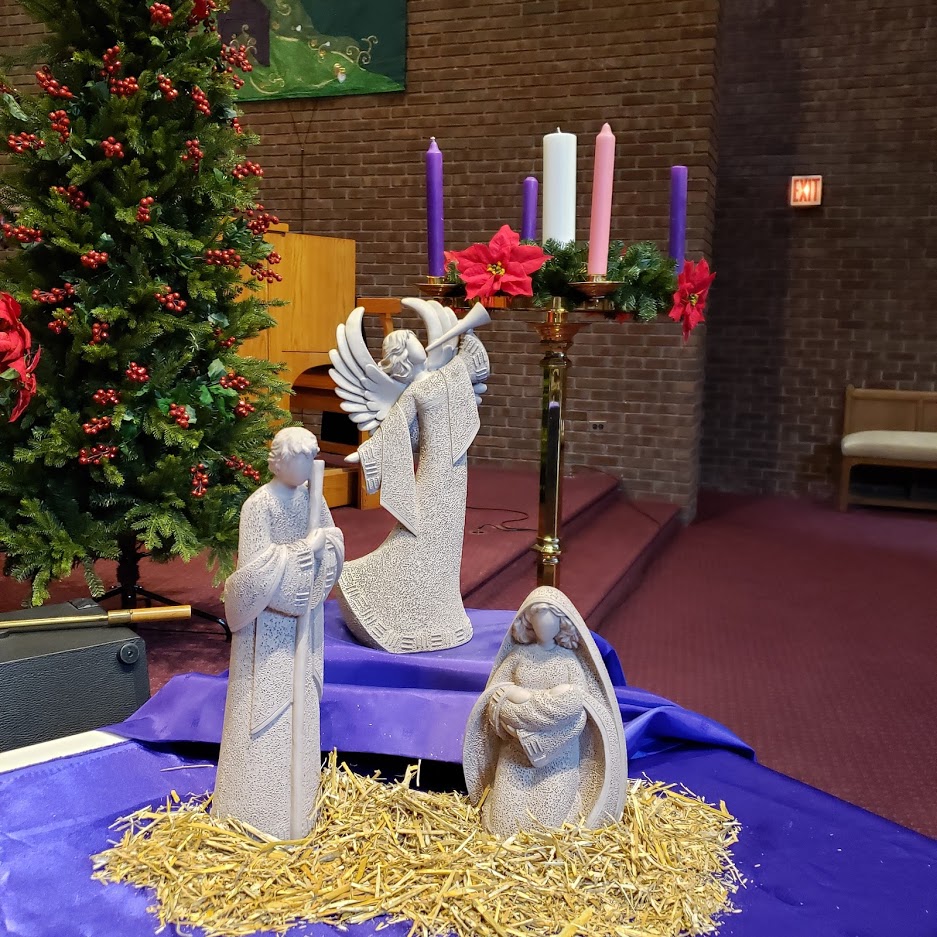
                It’s the third Sunday of Advent and it’s time to light the Joy Candle. That’s the rose-colored one. This reading is fitting for this Sunday, if for no other reason that the word rejoice is present in it. We hear the word from Paul’s first letter to the Thessalonians, which is also by most estimates the earliest Pauline letter. That would make it the oldest document in the New Testament. In this reading, Paul brings the letter to the Thessalonian congregation to a close. The lectionary cuts things off a bit early (there are another four verses to go), but we get the idea. “Rejoice always, pray without ceasing, and give thanks in all things.” Again, these words make for a reading fit for Gaudete Sunday as we light the Joy candle.

                As I write this reflection on the reading from the Epistles for the Third  Sunday of Advent, the world is anything but joyful. We’re beginning the tenth month of this COVID-inspired exile that continues to surge, at least in the Northern Hemisphere as we head into the winter months. So where is the reason for joy? There is a reason for hope, of course. We just have to survive the next few months before a vaccine is readily available for the bulk of the population. In the meantime, we’re tired and lonely and frustrated and anxious. We might even be a bit fearful. If the pandemic weren’t enough to take make us all Grinches, we’re also dealing with political turmoil in the United States. An election has been held and the votes counted. We know who won, at least if you accept the certification of votes by the states. Unfortunately, a large swath of the population hasn’t accepted the results, at least when it comes to the presidential results. So, perhaps it’s a bit premature or maybe naïve to talk about joy, even if the season is supposed to be filled with joy.

                 All of the above may be true, but Paul won’t let us off the hook. Remember he doesn’t tell us to rejoice only when things are going well or when it feels good. No, he tells us to rejoice always. I will confess that I find this a hard directive to live into. Nevertheless, the directive is there for us to ponder. Now, Paul doesn’t just tell us to rejoice, he also calls on us to pray unceasingly (and by that Paul isn’t suggesting that we all go off into the mountains and spend every waking hour on our knees talking to God). When Paul talks about praying unceasingly, he’s encouraging us to live with God in our hearts always. In this, we will find joy. Then Paul adds gratitude to the list. As William Brosend notes, the focus here is on wholeness. This is, Brosend suggests “at the foundation of Paul’s understanding of the Good Life.” He adds: “The shape of the Christian life is not contoured in measured apportionment—one part work to one part prayer, or some other recipe for spiritual fulfillment—but in unreserved and all-consuming self-giving” [Feasting on the Word, p. 64].  Thus, joy, prayer, and gratitude all go together as a sign of wholeness.

                That sounds like a good place to stop, but Paul isn’t finished. He has a lot on his mind as he brings this letter to a close. What we’ve heard so far might suffice for the third Sunday of Advent that is focused on Joy, but Paul has practical concerns to deal with before he seals the letter. He wants to address the role of the Spirit in the community. Paul tells the Thessalonians not to quench the Spirit or despise the words of the prophets in their midst. We moderns tend to think in institutional terms when it comes to church. We have our constitutions and by-laws. We have governing boards. Everything is done decently and in order (at least if we follow the rules). As for the Spirit, well, what does the Spirit have to do with church? In these early days of the church, the Spirit was moving and that led to the prophetic. While Paul was open to the work of the Spirit, and even encouraged prophetic ministry. He understood the need for boundaries. This word may concern a problem in the community. There is a sense that under the guise of prophecy some may have confused the congregation concerning the coming Parousia (the return of Christ) so that many in the church were suspicious of those claiming to speak for God. That’s understandable. Paul doesn’t want to quench the Spirit, but he understands the challenge posed by rogue prophets. So, he encourages the congregation to test what they were hearing. Only embrace what is good and stay away from what is evil. If we turn to 1 Corinthians, we find guidance there concerning the proper place of prophetic ministry within the church. He even gives guidance to how women who are gifted in this way should comport themselves, which I find intriguing since a few chapters later Paul tells women not to speak. So, which is it?  (1 Cor. 11:5). Nevertheless, he tells the Corinthian church that the purpose of prophecy is to build up, encourage, and console (1 Cor.14:3). Therefore, they should listen to the prophets with great discernment. In fact, some of them should pray to receive the gift of discernment. The point here, in the Corinthian letter, is guidance for orderly worship (1 Cor.14:26-33). Paul gives this word of guidance in the Thessalonian letter because he knew that not everyone claiming to have a word from God was a true prophet. After all, there were plenty of false prophets making the rounds, as we can see not only in the Corinthian letter but also in 2 Peter and 1 John.

                Although not directly related to the word about prophecy, the encouragement to test what we hear speaks to concerns of the moment in our world. We are living at a time that has come to be known as a “post-truth” era. Both religious and political leaders spout “alternative truth” as if it is fact. With the expansion of
24-hour news channels and social media, we are bombarded by messages, all claiming to represent truth, but often it is nothing more than rumor, innuendo, or speculation. So, how do we know what is true and what is not?  This might not be the kind of topic that is welcome on Joy Sunday in the season of Advent, but it is timely, nonetheless. It is therefore important that we heed this word to us, that we hold fast to what is good and resist evil, wherever we encounter it.

                All of this is couched in a larger conversation about the future. The message Paul has preached to this community suggests that Jesus would be returning soon to inaugurate the second Advent. It’s possible that the false prophets have been upsetting the people with claims that contradict what Paul has been teaching. We know that some in the community were worried about whether those who died before the Parousia would be included in the great gathering up of the people at Jesus’ return. Paul had given them assurances that the dead in Christ would rise first (1 Thess. 4:13-18). In these concluding verses, Paul reaffirms that premise, encouraging them to remain faithful, because the “God of peace” would sanctify them, making them holy and therefore be blameless when Jesus returned. 

                This is the word of joy we hear on this third Sunday of Advent. Rejoice, pray, give thanks, because this is the will of God for us. It is worth remembering that when Paul writes these words he addresses not just individuals, but a community. It is in the community that we can stand for what is right and resist evil so that we might rejoice in the Lord always!  We can also rejoice in the knowledge that “the one who calls you is faithful, and he will do this.” That is a message that is deeply rooted in the biblical story. God’s steadfast love will endure forever! There is joy in that word.

God’s Patience Is a Blessing — A Lectionary Reflection for Advent 2B (2 Peter 3)

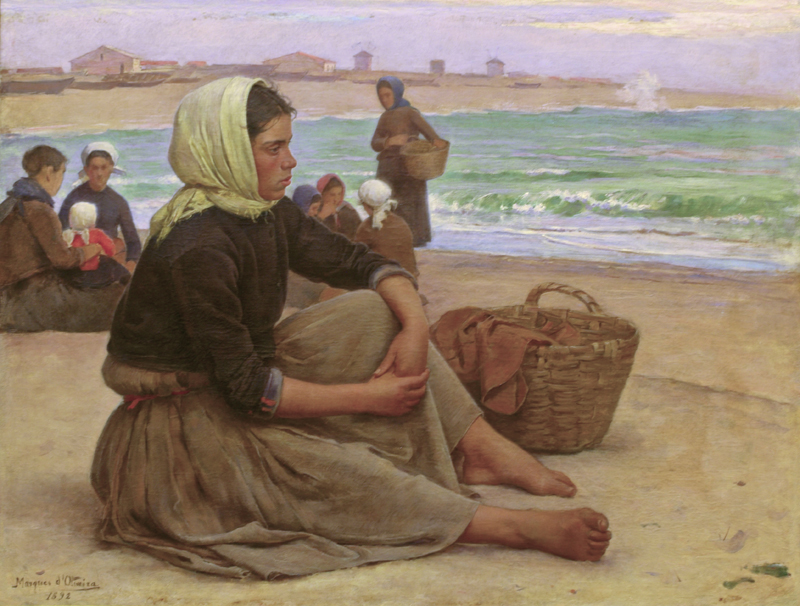
João Marques de Oliveira, Waiting for the Boats

2 Peter 3:8-15a New Revised Standard Version

8 But do not ignore this one fact, beloved, that with the Lord one day is like a thousand years, and a thousand years are like one day. 9  The Lord is not slow about his promise, as some think of slowness, but is patient with you, not wanting any to perish, but all to come to repentance. 10 But the day of the Lord will come like a thief, and then the heavens will pass away with a loud noise, and the elements will be dissolved with fire, and the earth and everything that is done on it will be disclosed.

11 Since all these things are to be dissolved in this way, what sort of persons ought you to be in leading lives of holiness and godliness, 12 waiting for and hastening the coming of the day of God, because of which the heavens will be set ablaze and dissolved, and the elements will melt with fire? 13 But, in accordance with his promise, we wait for new heavens and a new earth, where righteousness is at home.

14 Therefore, beloved, while you are waiting for these things, strive to be found by him at peace, without spot or blemish; 15 and regard the patience of our Lord as salvation.

************

                They say patience is a virtue. When it comes to God’s patience it’s not only a virtue, it’s a blessing. You see God has God’s own timeline, which is different from ours. Thank the Lord for that! Humans are not very patient, especially those of us living in the modern age. We have embraced microwaves, computers, and fast food. We are also rather impatient drivers, some more so than others. Yes, and count me among them! Such is not the case when it comes to the way God works in the world. God is more tortoise than hare.  

                When we read the New Testament, especially the letters of Paul, we see a community that assumed that the Day of the Lord was close at hand. Paul encouraged people not to marry if they could control themselves because the days were short. As Paul put it, “the present form of this world is passing away” (1 Cor. 7:25-31). We see a similar message across the New Testament, but there is also another voice present in the text. While the Pauline letters give evidence that he believed the Parousia, the second coming, was near at hand, the letters that came later often call for patience on the part of the people. Such is the case here in 2 Peter, which suggests that it dates to a second or third generation period in church history. There is still an apocalyptic element to the message, but there’s less urgency and more caution.

                We come to this reading from 2 Peter, one of only two readings from the letter stipulated by the Revised Common Lectionary on the Second Sunday of Advent. This Advent season easily gets buried in the rush to Christmas. While that rush is both understandable and very enticing, if we set aside Advent we will miss something important. We will miss the message that we live not only after the first Advent, but we live between two Advents. One has occurred with the birth of Jesus in Bethlehem, according to the Gospels of Matthew and Luke. However, the second advent is yet to come. Each year as we undertake this liturgical cycle that begins with Advent and ends with Christ the King Sunday, we’re reminded of this fact. While Paul, and even the author of 2 Peter, may have thought the second advent would have occurred already, two millennia later, we’re still living in the “between times.” For the most part, we live our daily lives as if things will go on as they have been for the foreseeable future. So, “we plow the fields and scatter the good seed on the land,” with the expectation that the harvest will come once again, just like it comes each year. Those who are prudent will plan for the future. Because we don’t know how long we’ll live, we put make plans for tomorrow. If we’re able, we put away funds for our retirement years. We may purchase extended warrantees for goods we expect to use over the long term. Experience and history suggest that this is a wise move. However, we don’t know what tomorrow will bring! So, stay alert!

                Although written in the name of the Apostle Simeon Peter (2 Pet. 1:1), most scholars believe that this document is rather late. It could date to the middle of the second century, though more likely it’s the late first century. At the very least, it was written by a second-generation follower of Jesus, who probably was a member of what some call the Petrine circle. While this letter has a strong eschatological vision, it also reflects a changing understanding of what that looks like. Here, in this letter, we hear a call for patience. Though it is cast in the form of a letter, the scholarly consensus is that this is a farewell address, a genre that tends to be pseudonymous. 

                One of the arguments against Petrine authorship is that it would appear that the author is highly literate. This author appears to be well-versed in Hellenistic terminology. As Duane Watson notes, the author “was skilled in the art of Greco-Roman rhetoric, especially Asiatic rhetoric, a flowery, verbose, and excessive rhetoric popular in the late first-century CE.” Besides, the author’s knowledge of the Old Testament and Jewish tradition, suggests that “he was a strongly Hellenized Jewish Christian” [Watson, “The Second Letter of Peter,” New Interpreter’s Bible, 12:324]. That probably wasn’t St. Peter, the fisherman from Galilee. Nevertheless, it likely originated from a community that was committed to Peter’s vision of the Gospel.

                Knowing this context can help us better understand the message we find here. The apocalyptic element remains present in the letter, with the author speaking of the Lord coming “like a thief.” The author also suggests that the heavens will pass away and everything done on earth will be disclosed. There will be no hiding from the one who judges all. Despite the specificity of this message, the author also reveals that we don’t know when this will take place. After all, one day is like a thousand years, and a thousand years just a day in the eyes of God. This declaration reflects the words of the Psalmist who writes in Psalm 90: For a thousand years in your sight are like yesterday when it is past, or like watch in the night” (Ps. 90:4). So, God isn’t slow, as some might suspect. Instead, God is patient, hoping that none will perish, and all will come to repentance.

                This word about God’s hope regarding the possibility that all will come to repentance is intriguing. Theologically, it is suggestive that God expects that all will come to the point of repentance and thus not perish. This message concerning God’s slowness to inaugurate the Day of the Lord, of course, stands in contrast to other texts for Advent that suggest immediacy. Consider the Gospel reading from Mark 1, which takes note of John the Baptists preaching a message of preparation for the coming of the one will baptize with the Holy Spirit. There is urgency in John’s message (Mk. 1:1-8). There is much less urgency here. Nevertheless, the author does call on the members of the community to lead holy and godly lives as they wait for and even hasten the coming day of the Lord. When that day comes, “the heavens will be set ablaze and dissolved and the elements will melt with fire” (2 Peter 3:11-12). While this is suggestive of the idea that God’s creation will be annihilated rather than transformed, one need not embrace the annihilationist part of the message to embrace the word concerning God’s patience when it comes to the Day of the Lord.

                In fact, God desires that it’s better to wait if more people will be drawn into the realm of God than to jump the gun and leave lots of people on the outside looking in. What that looks like, the author doesn’t tell us. However, passages like this, even with the apocalyptic elements present, are suggestive of a possible universalistic reading. If God is patient in the hopes that all will return to God, then is that not good news? If we take a universalistic approach to the passage that doesn’t eliminate the call for repentance, it just extends the time for that to take place. What God desires is reconciliation.

                So, let us wait patiently, living our lives with holiness, in preparation for the Day of the Lord. The author fully expects that to happen but is aware that God’s timing is not ours. In the meantime, while we wait, the author encourages us to “strive to be found by him at peace, without spot or wrinkle, and regard the patience of our Lord as salvation” (2 Pet. 3:14-15b). Since we stand some two millennia after this was written, we should take comfort in God’s patience. In fact, God may need to be patient for a good deal longer!  

Image attribution: Marques de Oliveira, João. Waiting for the Boats, from Art in the Christian Tradition, a project of the Vanderbilt Divinity Library, Nashville, TN. http://diglib.library.vanderbilt.edu/act-imagelink.pl?RC=56327 [retrieved November 28, 2020]. Original source: https://commons.wikimedia.org/wiki/File:Waiting_for_the_boats_(1892)_-_Marques_de_Oliveira_(1853-1927)_(16215690116).jpg.

Awake, Awake, the Son of Man is Coming – Lectionary Reflection for Advent 2B (Mark 13)

Mark 13:24-37 New
Revised Standard Version (NRSV)
 
24 “But in those days, after that suffering,
the sun will be darkened,
and the moon will not give its light,
25 and the stars will be falling from heaven,
and the powers in the heavens will be shaken.
 
26 Then they will see ‘the Son of Man coming in clouds’ with great power and glory. 27 Then he will send out the angels, and gather his elect from the four winds, from the ends of the earth to the ends of heaven.
 
28 “From the fig tree learn its lesson: as soon as its branch becomes tender and puts forth its leaves, you know that summer is near. 29 So also, when you see these things taking place, you know that he[a] is near, at the very gates. 30 Truly I tell you, this generation will not pass away until all these things have taken place. 31 Heaven and earth will pass away, but my words will not pass away.
 
32 “But about that day or hour no one knows, neither the angels in heaven, nor the Son, but only the Father. 33 Beware, keep alert;[b] for you do not know when the time will come. 34 It is like a man going on a journey, when he leaves home and puts his slaves in charge, each with his work, and commands the doorkeeper to be on the watch. 35 Therefore, keep awake—for you do not know when the master of the house will come, in the evening, or at midnight, or at cockcrow, or at dawn, 36 or else he may find you asleep when he comes suddenly.37 And what I say to you I say to all: Keep awake.”
******************
                The
ancient hymn Let All Mortal Flesh Keep Silence
(4th Century) sets a penitential tone for the season of Advent, which is an appropriate stance as we begin the journey of a new liturgical year:
               
Let all mortal flesh keep
silence, and with fear and trembling stand;
                Ponder nothing earthly minded,
for with blessing in his hand Christ our God to earth descendeth,
                our full homage to demand.
                Advent is a penitential season.  It is a time to take stock of one’s life in preparation for the great festival to be held in the coming weeks.  It is a season of hope and expectation.  It is also a season where we begin to look at how faith is related to the facts of life and whether judgment is in store for us.  In other words, Advent is an eschatological season.
Mark 13, the gospel reading before us, is known as “The Little Apocalypse,” because of its similarity in tone to Revelation.  There is the sense that the coming of the Lord demands of us a certain fear and trembling. It requires that we be cognizant of our own resistance to the things of God.  It is a reminder that too often we fail to pay attention.  This first Sunday in Advent is, therefore, with Mark’s Gospel in hand, a wake-up call.  Yes, the Messiah is coming and not in a sleigh with eight tiny reindeer.  So be prepared.
The reading begins ominously. The sun is darkened. The moon fails to give off light.  The stars are falling.  The moment before the coming of the Lord is one of pure darkness.  As I prepare this meditation I’m mindful of events that took place the evening prior, under the cover of darkness. A prosecutor chose to make an announcement that a grand jury voted no indictment on a police officer who shot and killed a young African American man.  We don’t know all the details.  They are fuzzy.  The way they have been set out is meant to keep things fuzzy.  The announcement stirred anger in the crowd, and some chose violence as a way to respond.  This is nothing new.  Violence is always an option.  Others chose nonviolent protests.  The choice of timing, of course, seems to many, myself included, to be craven.  The verdict could have been just easily read at 8 AM as at 8 PM.  But the prosecutor chose to issue the report at night when such a response could be predicted.  Why do we never learn?  Why do we try to hide under the cover of darkness?  With regard to Ferguson and Michael Brown, I, as a white, middle class, pastor, must first listen to the voices calling out for justice.  I may want to understand, but in many ways, I cannot.  So what is required of me is solidarity with those who grieve and mourn and suffer.
Apocalyptic texts like this one emerge out of similar feelings.  Mark writes either right before or soon after the great Jewish War that led to the
destruction of Jerusalem. Could it be that the reference to a time of suffering has in mind that reality?  Where is hope to be found in the midst of all of this destruction and grief?
               In this gospel reading Jesus speaks of the coming of the Son of Man, an image that is lifted from Daniel 7:13.  The image is one of the Messiah coming riding on the clouds. We know that Jesus often used the title “Son of Man” as a self-appellation. The question is whether this mean to speak simply of his humanity, which he shares with us, or does it speak of something more?   Is this not a recognition that the people are crying out for a redeemer, one who will rescue them from the time of trial?  At the same time, Jesus speaks of this apocalyptic moment as one of a final verdict.  The Son of Man will come and gather the elect, the chosen ones, from the far winds.  Yes, this speaks of a final moment of gathering, much like the judgment scene spoken of in Matthew 25, the reading for Christ the King Sunday, just a week earlier.
                The greatest threat to justice and mercy is complacency.  We become immune to the cries of those suffering. We might not even hear them or understand the nature of the cry.  We fall asleep.  Our oil goes out.  We miss the sign of the fig tree, whose changing leaves signal a new day.  The signs suggest the time of deliverance and judgment is near at hand.  So will we be prepared?
There is only one problem – even if the signs are there, we don’t know the exact time and place of this coming of the Son of Man.  Not even the Son himself knows the exact time of this event.  If you know the exact time it is easy to be prepared.  Just set out your clothes, pack your bag, and set the alarm.  Then you can go to sleep knowing that when day breaks you will be ready.  But in the apocalyptic world, things don’t work that way.  You can’t predict time and place, even if certain figures have made a fortune on trying to make the prediction.  It makes for best-selling fiction, but in the end, proves unhelpful.  Why?  For one thing, it leads to disappointment.  The followers of William Miller found that out the hard way in the 1840s.  Besides, we can get hung up on details and miss the big picture.  So don’t get
caught trying to figure out what only God knows for sure.
In our context, it is better to see this as a call to always be ready for the Day of the Lord. I realize that this is not easy. It’s difficult to stay on high alert always.  It’s a ready recipe for burn out. You can do it for a while, but then you have to get some sleep.
Recognizing the challenges of remaining awake and alert, the word remains present with us – Don’t be found asleep when the day comes.  Don’t get complacent.  Don’t get too comfortable with your surroundings.  Instead, keep ready by being engaged in the word of God in the World. Seek justice and mercy wherever you go.  Listen for the cries of the suffering. This is our calling in the interim.  We all have our assignments, our callings, and it is to this work that we have been elected.
In hope we will continue to sing as the body of Christ:
O come, O Come Emmanuel, and ransom captive Israel,
That mourns in lonely exile here, Until the Son of God appear.
                Rejoice, rejoice!
                Emmanuel shall come to thee, O Israel!    

Belonging to the Daylight – A Lectionary Reflection for Pentecost 24A (1 Thessalonians 5)


1 Thessalonians 5:1-11 New Revised Standard Version


Now concerning the times and the seasons, brothers and sisters, you do not need to have anything written to you. For you yourselves know very well that the day of the Lord will come like a thief in the night. When they say, “There is peace and security,” then sudden destruction will come upon them, as labor pains come upon a pregnant woman, and there will be no escape! But you, beloved, are not in darkness, for that day to surprise you like a thief; for you are all children of light and children of the day; we are not of the night or of darkness. So then let us not fall asleep as others do, but let us keep awake and be sober; for those who sleep sleep at night, and those who are drunk get drunk at night. But since we belong to the day, let us be sober, and put on the breastplate of faith and love, and for a helmet the hope of salvation. For God has destined us not for wrath but for obtaining salvation through our Lord Jesus Christ, 10 who died for us, so that whether we are awake or asleep we may live with him. 11 Therefore encourage one another and build up each other, as indeed you are doing.

**************

                The Day of the Lord, when Christ returns (Parousia), for his people (1 Thess.4:13-18), will come without warning, just like a thief in the night. The analogy Paul uses here of the thief coming in the night is well-known in
certain circles that insist that we are living in the last days. The reference has apocalyptic elements, which were developed for full effect in a movie by that title made back in the 1970s with the title A Thief in the Night that proved rather popular (strangely enough, I don’t remember seeing it).

                Paul uses this image of a thief coming in the night because it catches one’s eye. We understand the implications. If you know when the thief is going to strike, you will be ready. Of course, thieves don’t give warnings. They don’t call ahead to tell us the time and location they intend to make their entry. They also don’t generally come during the day (bank robbers are not in view here), because they could easily be seen. At night, they can wear dark clothing and skulk about in the shadows. When they find a weak spot, they can get in and out without anyone knowing the difference (unless you have a very effective security system that wasn’t available in the first century). At least that’s how it works in the movies! The image, therefore, underscores the unexpected nature of Jesus’ return.

                What we read here is a continuation of the message Paul delivered in 1Thessalonians 4:13-18. In that reading, Paul gives us a few details about what the moment of Christ’s return would look like. On that day, Jesus will return in the clouds and the dead in Christ will rise first, after which the believers who are alive will join them for the grand procession. Paul offered that message as a word of encouragement to a community worried about those who had died before the Day of the Lord. While Jesus might come as a thief in the night, without warning, Paul wants the Thessalonian believers to be ready when that moment comes.

                One must be ready  for the sudden appearance of Jesus, like in the thief in the night, but believers should live in the light as children of the day and not the night. The assumption here is that evil takes place under the cover of darkness when things go bump in the night. Keep in mind that the action in most horror movies under the cover of darkness. There is a clear dualism at work here, with light and darkness, day and night, contrasted. Thus, daylight is when we are awake, but we sleep at night. Here, we’re not supposed to sleep. The night is also the time when people get drunk. Believers, on the other hand, are supposed to be sober,
not drunk.   

                What Paul is doing here is reinforcing the apocalyptic message he had earlier delivered. He has offered them a word of encouragement concerning the dead in Christ (they will rise first). However, Paul is concerned that in the interim, they might grow complacent. If this happens then they could easily fall back into old Gentile habits (living in the night). That concern is revealed in Paul’s reference to those who speak of “peace and security,” a watchword of the Empire, which placed those words on some of its coins. This may be the message of the Empire, but Paul warns against taking it to heart because to do so leads to destruction. Paul uses the metaphor here of a pregnant woman whose labor pains come without warning. When they begin, there is no going back. The same is true of the coming of the Lord. So, don’t get complacent. Be ready!

                All of this is rooted in Jewish apocalyptic though, which offers a dualism of light and darkness, earthly realm versus the heavenly realm. As George Parsenios notes, “the hostility between the two realms is most obvious in Paul’s use of the imagery of armor in verse 8. This armor, though, is also the basis of the Thessalonians escape from judgment because the helmet that arms them is the ‘hope of salvation.’” [Feasting on the Word, p. 305]. The reference to armor is similar, but not as developed as that found in Ephesians 6:10-17. It should be noted that this armor is not something we choose, but is something received. In any case, Paul is preparing them for spiritual warfare that includes salvation that is received through Christ who died for us. As we hear this message of spiritual warfare, it’s worth noting that, as Ron Allen and Clark Williamson write: “Given the fervor for supporting national wars that sometimes uncritically sweeps through Christian communities, it is worth noting that the breastplate and helmet are to protect the wearer and are not instruments of killing” [Preaching the Letters without Dismissing the Law, p. 101].

                While the Day of the Lord will come, according to Paul, the Thessalonians, if they keep alert and stay in relationship with Jesus, they will receive the gift of salvation. They will not be subject to God’s wrath, God’s judgment. It is good to remember as Allen and Williamson remind us, this apocalyptic message isn’t a “pie in the sky” sentiment. For Apocalyptic theologians, like Paul, the Day of the Lord was understood to be the means by which “God would set things right for people who had been denied blessing in the present evil age—for example, the poor, the enslaved, those who suffered injustice and violence” [Preaching the Letters, p. 101]. We might not embrace a full apocalyptic vision, but we must recognize the need for God to set things right, lest we not take seriously the realities of our age. For those of us who have universalist tendencies, we need to be careful that we don’t deny the possibility of God’s judgment. To do so might lead to the belief that there are no ultimate consequences of our actions.  

                Even as the previous reading from chapter 4 concluded with a call to encourage one another with this message, so does this portion. Paul wants them to encourage one another and build each other up with this message that believers are not destined for wrath but for salvation in Christ who died for us. With that, we can know that whether awake or asleep we will ultimately live with him, for as we learned in chapter 4, Jesus will gather us up. The challenge here, especially for Christians living in the United States, we must be careful not to receive