Category: Epiphany

Goin’ Old School: Baptism of Jesus

Goin’ Old School: Baptism of Jesus

Narrative Lectionary Reflection

January 13, 2019

Reflection

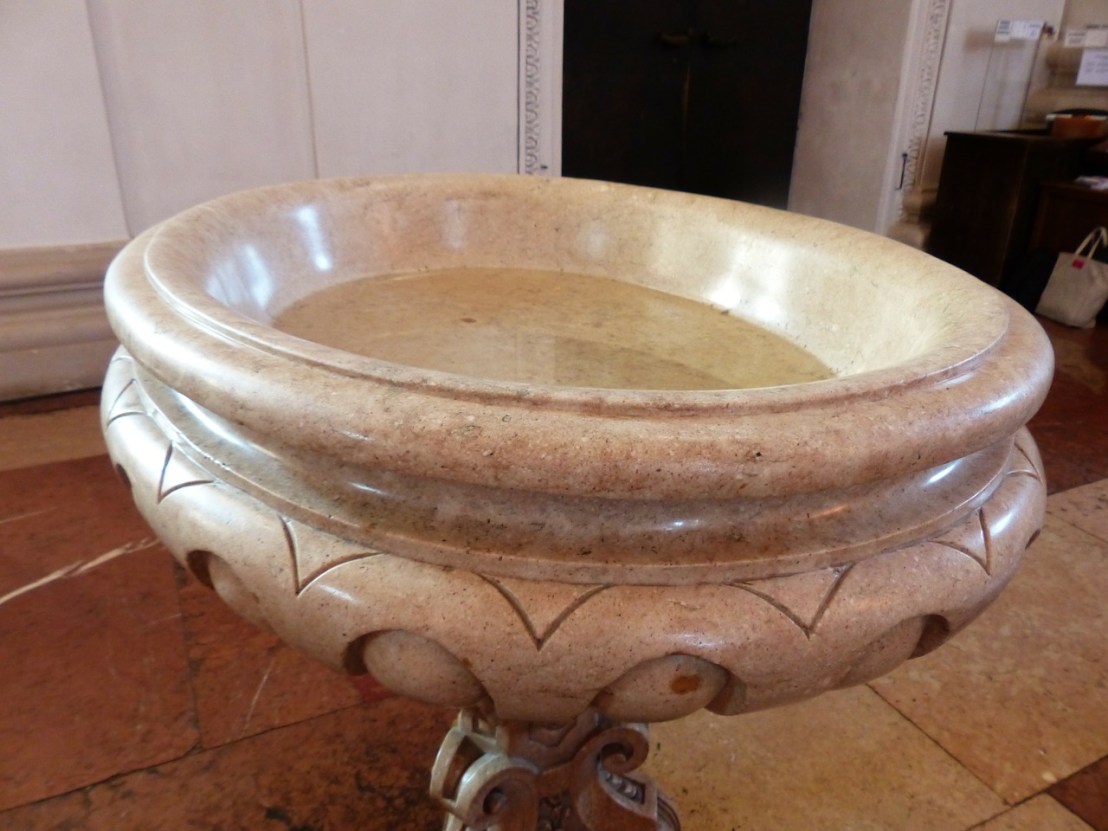
baptismal-font-116878_1280

Today’s passage reminds us that baptism isn’t all sweetness and light.  God wants people to live changed lives and when John baptizes these people, they are saying they will live a changed life. Baptism is a wonderful experience, but it’s also asking God to come into our lives and God wants it all.

John talks about the coming of Jesus as the One who will baptize with the Holy Spirit and with fire.  That’s important to remember because too often, people see John as an old fashioned prophet who instilled fear while Jesus was all about love.  Nope.  Look at Matthew chapter 23 sometime.  Jesus calls the religious leaders…a brood of vipers. 

Matthew 4:17 has Jesus beginning his ministry by saying “Change your hearts and lives! Here comes the kingdom of heaven!” (Common English Bible) Matthew 11:21 issues woes for the towns that refused to repent:

How terrible it will be for you, Chorazin! How terrible it will be for you, Bethsaida! For if the miracles done among you had been done in Tyre and Sidon, they would have changed their hearts and lives and put on funeral clothes and ashes a long time ago.

-Common English Bible

So Jesus and John were not saying different things, they were preaching the same message; asking people to change their lives.

Our baptism is a reminder that we are loved by God and there is nothing we can do about that. In gratitude, we go from these walls to serve others: our neighbors and strangers in need.

It was Alexander Campbell, one of the founders of the Disciples of Christ, summed up what baptism is. He said, “baptism is sort of an embodiment of the gospel and solemn expression of it all in a single act. In baptism, we are passive in everything but giving our consent. We are buried and raised by another. Hence, in no view of baptism can it be called a good work.”

Many traditions including Lutherans, Catholic and Anglican have Easter Vigil. People gather on the Saturday before Easter and hear the salvation story from the Creation to Jesus’ resurrection. At some point during the service, the pastor takes a tree branch and puts in the baptismal font. He or she then will throw the water into the congregation, telling them: “remember your baptism and be thankful.”

Now, it’s a little hard for the traditions to remember their baptisms since they practice infant baptism, but that’s not what the pastor means. What it means is to remember that it was at these waters that a person became part of God’s family and that God loves cares.  Remember that baptism and repentance means your world has changed.

Peter Morgan, the past head of the Disciples Historical society said this about baptism: “We rose from the water to manifest the presence of Christ. We are the laos, the people of God born from the water of baptism into a sacramental ministry, manifesting the presence of Christ.”

This is an excerpt from a Bible Study from the Chronicles of God series. You can learn more by going to the Chronicles of God website.

Dennis Sanders is the Pastor at First Christian Church of St. Paul in Mahtomedi, Minnesota. He’s written for various outlets including Christian Century.

Drawn Towards the Light: Epiphany

Drawn Towards the Light: Epiphany

Narrative Lectionary Reflection

January 6, 2019

Read Matthew 2:1-23 (CEB)

Reflection

threekingsIn the summer of 1984, I was fourteen. I was part of the cross-country team in high school, and the coach thought it would be a good idea to go up to a state park in northern Michigan to train before school started. I should state that I am NOT the world’s best runner. I wasn’t then, and as I am not now. During the evenings, we would walk from the campground to the lodge, which was probably a good mile or two away. We would hang out and play pool and listen to the radio. When we were done and headed back, we made our way down a very, very dark road. It was scary, but I knew I wasn’t alone, so I could deal with it.

Well, one evening, we were at the lodge and I stepped away for a bit. When I came back, my fellow teammates were gone. They had met some local girls and decided to head down to the lake. I was alone and I didn’t know what to do. I could try to follow them down the tricky path to the lake, or I could just walk back to the campground. Neither option was that pleasant, but I went for door number two and started walking back to the campground.

Did I say walking? I meant running for dear life. The road was pitch black and I could not see in front of me. I probably did my best mile ever. Here I was running alone in the darkness. I was incredibly scared. 

At some point, I saw a light. I felt a sense of relief. I went to the door and knocked. A woman came to the door and I frantically explained my situation and asked for a ride to the campground. I didn’t want to continue on this dark road. For whatever reason, the woman did not offer much help except to say that I was not far from the campground. So proceeded on the dark road. I saw a small glimmer of light ahead that broke through the darkness. I kept running and the light grew and multiplied. I started to give thanks to God as I realized I was nearing the campground. I was finally home and the complete darkness was replaced by the warm glow of a campfire.

In our world today, there are many like the Wise Men who are looking for Christ, looking for the light. They are our loved ones, our friends and our workmates. Sometimes they come to our churches wanting to seek Christ. What will they find here? Will they find Christ or will it be a Herod and the priests, who seemed to be more interested in worldly things than in the things of God?

Christ is present in the world. The way most people know of Jesus is not simply the words found in the Bible but in the lives of Christians. When we publicly live as Christ would have us to live, people are drawn to the presence of God.

The light of Christ is in the world, but it can only be known when those who dare to call themselves Christians are living in the light.

When the Wise Men finally found Jesus, they gave gifts and worshiped him. So it is when today’s Magi find Christ, they will give worship to Christ when they see it happening. And they should see that happening in the gathered community of believers called the church.

When I was 14, that light shining in the distance have me hope. When the Magi finally found the baby Jesus they were filled with joy. So should it be when people encounter God’s followers. When the encounter a place where they are welcomed and loved; a place where they are fed when hungry, clothed when naked, befriended when lonely.

Arise and shine, for your light has come.

Dennis Sanders is the Pastor at First Christian Church of St. Paul in Mahtomedi, Minnesota. He’s written for various outlets including Christian Century.

Gathered at the Light

Adoration of the Magi – by Joos van der Beke van Cleve (Detroit Institute of Art) 
Isaiah 60:1-6 New Revised Standard Version (NRSV)
 
60 Arise, shine; for your light has come,
and the glory of the Lord has risen upon you.
For darkness shall cover the earth,
and thick darkness the peoples;
but the Lord will arise upon you,
and his glory will appear over you.
Nations shall come to your light,
and kings to the brightness of your dawn.
Lift up your eyes and look around;
they all gather together, they come to you;
your sons shall come from far away,
and your daughters shall be carried on their nurses’ arms.
Then you shall see and be radiant;
your heart shall thrill and rejoice,
because the abundance of the sea shall be brought to you,
the wealth of the nations shall come to you.
A multitude of camels shall cover you,
the young camels of Midian and Ephah;
all those from Sheba shall come.
They shall bring gold and frankincense,
and shall proclaim the praise of the Lord.
*****************
                It is the Day of Epiphany. The journey of Christmas, which began with the promise of the coming of Emmanuel, is coming to a close. We have witnessed the birth of the child born in Bethlehem of Judea (Luke 2), and now we celebrate the light that shines in the darkness, guiding the nations to the child who reveals the light of God to the world. Yes, it is time to celebrate the truth that God has been manifest to us in the person of Jesus. Even when darkness seems to be closing in, “the star of wonder, star of light, star with royal beauty bright, westward leading, still proceeding, guide us to thy perfect light” (John H. Hopkins, 1857).
Epiphany, as a liturgical event, is connected to the visit of the magi (wisemen) to the holy family, who in Matthew’s story of the birth of Jesus are living in Bethlehem. We celebrate this story in the John H. Hopkins famous hymn “We Three Kings,” which tells the story of kings bearing gifts of gold, frankincense, and myrrh. Each holds great value and is fit for royalty, but they are brought to a child living not in a palace but in some non-descript home in the village of Bethlehem. In our Christmas pageants and creche scenes, the three kings or magi (as they are named in the Gospel of Matthew), appear at the manger along with shepherds and angels. It’s an easy merger of the stories, but Matthew’s version of the infancy story is rather different from that of Luke. Even Matthew doesn’t give us the number of magi, only the description of the gifts. But historical accuracy isn’t the point.
In Matthew’s telling of the birth story, the Holy Family is living in Bethlehem. It seems as if this is their hometown. Matthew knows nothing a census that draws the family from Nazareth in the north. They’re just there, when the magi (astrologers) show up in the neighborhood, having seen a star in the sky that they interpret as a sign that a new king of the Jews has been born. These Gentile seers go first to Herod, hoping he can give them some further guidance, and Herod learns that the promised messiah is to be born in Bethlehem (Micah 2:2-5). When Herod learns from his advisors the messianic prophesy, he sends them on their way, asking that they report back so he too can give homage to the new born king. Of course, after they follow the star to the home of the Holy Family and offer their gifts, they are warned to go home without reporting to Herod. For his part, Herod is infuriated, and orders his troops to kill all the baby boys in Bethlehem, making sure that this rival is cut down before he can prove to be trouble. Fortunately, for the Holy Family, but not the other families in Bethlehem, they are warned to flee to Egypt as political refugees, which they do (reversing the Exodus story). That is the Epiphany story in a nutshell (Matthew 2:1-18).
Standing behind this story of the magisterial visit to the home of the Christ child is this vision from Isaiah. In what is most likely a post-exilic message, perhaps coming from the time of the rebuilding of Jerusalem, the prophet pictures the glory of the Lord rising and shining into a world that had experienced deep darkness. We see that darkness described in the previous chapter (Isaiah 59), where injustice seems rampant, and the people grope in the darkness, seeking a way forward, and that reality is reaffirmed in verse 2 of chapter 60. That is the context in which the prophet offers a word of hope. In verse three we’re told that the Lord will rise in the midst of the people, revealing God’s glory. Yes, the light that is God breaks through the darkness, as the “glory of the LORD has risen upon you.” The people may have lived in darkness, but God is now present, and with God comes the light that overcomes the darkness. Not only does this light shine into the darkness, but the nations are drawn to it, making their way to the source of light, even as the magi were drawn to the home of Jesus, guided by the star in the sky. 
 
If we’re to see this light, we’ll have to lift up our eyes and look around. That’s not easy when our eyes are attuned to the darkness, having groped around in that darkness. It takes some time and discipline to focus our attention on the light, having become accustomed to the darkness. The light, however, is good. It disperses darkness and reveals God’s vision of hope and healing for Israel and the world. It’s a message of hope and healing. Consider that sons and daughters will return home, perhaps ending the brokenness that existed in the community. For Judah, which had suffered exile, this promise of return is powerful and healing. With them come the nations, bearing gifts, so as to acknowledge the healing presence of God. The gifts, interestingly, include gold and frankincense, even as they come to give praise to God. You can see the connection here between Isaiah and Matthew.
As we contemplate this vision of Isaiah, we might ask what kind of light is shining into the darkness? Is it a powerful bank of lights that blinds us once turned on? Or is it subtler? David Schlafer, suggests that this light is on the subtle side, being “like the imperceptible dawning of the morning sun, like the slowly building brightness of a kindled fire.” He goes on: “As in other poetic oracles (see the text for Christmas Eve, Isa. 9:2-7), the reiteration in cadence of complementary images of darkness and light underscores the felt sense of God’s light rising slowly, imperceptibly, rather than in a burst of clarity coming all at once” (Connections, p. 146). It’s bright enough to be seen by the nations, but not so bright that it overwhelms. It requires, as in the story of the magi, an ability to discern the meaning of the light.
So what is the message of Epiphany for us? The Day of Epiphany rarely falls on a Sunday, and so only the most liturgically oriented traditions, which might meet on a day other than Sunday, will normally celebrate the event. Growing up in the Episcopal Church, we held a service called the Feast of Lights, which included a post-service party that featured a cake (which may be why I remember it). In 2019, the calendar allows for the churches to once again observe this holy day in its full glory, celebrating together the word that God’s presence has become fully manifest in the person of Jesus. The story of the magi is often seen as a sign that the gospel will extend to the nations, to the Gentiles, as well as Jews. Isaiah speaks here of the light drawing to itself the nations, the Gentiles, so that all might experience God’s presence. The nations even come bearing gifts.
As we celebrate this festival, affirming the message that God’s presence is fully manifested in Jesus, whom Matthew pictures being born in Bethlehem, and to whom the nations gather bearing gifts, what forms of darkness do we confront? What is the darkness of our times into which this light from God shines? What does it reveal about our lives, our world, and God’s vision for us?  To name one, it might be the ongoing presence of racism in our culture, which influences so much of our social context and issues. As light shines into this reality, might we begin to see things differently? Might we even see ourselves differently. We can add to this list, of course. As we do, may we find hope for the present and the future in the light of God that shines into our darkness, drawing us to it, so that we might find a pathway forward into God’s new reality. In Isaiah’s vision the people will be blessed by material benefits, a sharing of resources, both exotic and basic, even camels. In other words, it’s time for a party!

Robert Cornwall is the Pastor of Central Woodward Christian Church in Troy, Michigan. He holds the Ph.D. in Historical Theology from Fuller Theological Seminary. He is the author of a number of books including Out of the Office (Energion, 2017), Marriage in Interesting Times (Energion, 2016), and Freedom in Covenant (Wipf and Stock, 2015) and blogs at Ponderings on a Faith Journey.

Talk About the Passion, Palm/Passion Sunday

comesundayfb

Narrative Lectionary Reflection

March 25, 2018

Read John 19:17-23 (CEB)

Introduction

 All glory, laud, and honor 
to you, Redeemer, King, 
to whom the lips of children 
made sweet hosannas ring. 
You are the King of Israel 
and David’s royal Son, 
now in the Lord’s name coming, 
the King and Blessed One. 

This hymn, “All Glory, Laud and Honor” is the song we sing on Palm Sunday. It’s kind of an odd hymn to sing on Palm Sunday because we know what’s going to happen a few days down the road.  But it is also revealing something about Jesus: Jesus as king. Of course, when we see Jesus on the cross it doesn’t feel like Jesus is the king.  But it is in weakness that Jesus truly reveals who Jesus really is.

Today’s text seems out of place for Palm Sunday (the narrative lectionary gives you the option of preaching from John 12: 12-27 where Jesus enters Jerusalem). Many churches use Palm Sunday to preach the texts of Jesus’ Passion (the time leading up to Jesus’ death).  Our text today continues the story of Jesus in John and places us in the middle of the passion.

To see Jesus suffer, gives us the thought that Jesus is out of control.  Jesus is just a victim of the Roman state.  But looks can be deceiving.  Jesus is suffering and Jesus is a victim, these shouldn’t be minimized, but what we are seeing here is a person in control of the narrative, of telling the story of the king, the suffering king who lives and dies for the sake of the world.


Engaging the Text

19 Pilate had a public notice written and posted on the cross. It read “Jesus the Nazarene, the king of the Jews.” 20 Many of the Jews read this sign, for the place where Jesus was crucified was near the city and it was written in Aramaic, Latin, and Greek.21 Therefore, the Jewish chief priests complained to Pilate, “Don’t write, ‘The king of the Jews’ but ‘This man said, “I am the king of the Jews.”’”

22 Pilate answered, “What I’ve written, I’ve written.”

-John 19:19-22

For the last two weeks, we have been subject to an ongoing argument primarily between Pilate, the governor of Judea and the Jewish religious leaders with Jesus adding a few comments now and then. Today’s passage is mostly focused on Jesus, with one final argument between Pilate and the religious leaders.

Let’s take a look at the two part of today’s passage

All By Myself

The first thing to realize is that in the ancient world, to die on the cross was the worst way to die.  It was called, “the most cruel and horrifying death” by Cicero and a “despicable death” by Tacitus.  The Persians were the ones that started the practice. They viewed the earth as sacred and they didn’t want it defiled with the body of an evildoer.  The person was nailed on the cross and then left to die, with the vultures and other carrion birds disposing of the evildoer piece by piece.

The Romans have a certain way of crucifying a person.  It was very specific and very unnerving:

The condemned man was placed in the centre of a quaternion, a company of four Roman soldiers. His own cross was placed upon his shoulders. Scourging always preceded crucifixion, and it is to be remembered how terrible scourging was. Often the criminal had to be lashed and goaded along the road, to keep him on his feet, as he staggered to the place of crucifixion. Before him walked an officer with a placard on which was written the crime for which he was to die, and he was led through as many streets as possible on the way to execution. There was a double reason for that. There was the grim reason that as many as possible should see and take warning from his fate. But there was a merciful reason. The placard was carried before the condemned man and the long route was chosen, so that if anyone could still bear witness in his favour, he might come forward and do so. In such a case, the procession was halted and the case retried.1

As we have said throughout this gospel, John’s narration of the crucifixion is different from the telling of the Synoptic gospels. One example is found in verse 17 where it says, that Jesus carries the cross alone. In the other three gospels, we read that Simon of Cyrene is commandeered to carry Jesus’ cross.  Why is this not mentioned in John? There is probably a theological reason for this; it shows that Jesus is in command of what is going on here. John 10:17-18 reminds us that Jesus is the one that chooses to give up his life, he is not the victim of events.

Where and when Jesus was killed is listed as something very specific.  The fact that Jesus is crucified between two people.  In the other gospels, they are depicted as bandits. In John 3 Jesus says that being lifted up will bring salvation: “Just as Moses lifted up the snake in the wilderness, so must the Human One be lifted up 15 so that everyone who believes in him will have eternal life,” (John 3:15-16). Above Jesus on the cross was as sign written in three languages, Hebrew, Latin and Greek; “King of the Jews.”  The writing in three languages reminds us that this act was for the whole world and not just a specific group. The universality of the sign reminds us who is the object of God’s love: the whole world. The crucifixion continues Jesus’ coronation as the King.

Vereses 23-25 tells us that the soldiers cast lots for Jesus garments. Will learn that one of Jesus clothes is seamless, which would indicate the clothing of a high priest, the one that would bring together God and humanity.

During the crucifixion, we see two groups of people, Pilate and the Jewish leaders and the women.


Responding to the Cross

As said earlier, Pilate and the Jewish leaders had been in an argument over what to do with Jesus. Now that Jesus is on the cross dying, the Jewish leaders are upset about the sign above Jesus on the cross. Pilate had written “Iesus Nazarenus Rex Iudaeorum” which is translated to “Jesus of Nazareth, King of the Jews.” The chief priests complained to Pilate to not write King of the Jews, but instead “This man said, I am king of the Jews.” They wanted him to be viewed as either crazy or blasphemous. They wanted Jesus claim to be reduced to a claim, something they could easily refute.  They also had to keep up what they had pledged to Pilate, that it was Caesar and not Jesus, that was their king.  But Pilate, who gave into the religious leaders when it came to crucifying Jesus, held his ground.  “What I have written, I have written,” he says. In doing this, Pilate is announcing a reality, that Jesus is king, which is not an idle claim.

Finally, there are the women.  In the other gospels, the women were far off, but in John, they are front and center. The mother of Jesus (who is unnamed in John) and the Beloved Disciple are right there at the foot of the cross. Jesus’ mother was there are the beginning of his ministry in John 2 and she is here now at the end.  The Beloved Disciple has a prominent role throughout the Passion.  His being here shows his loyalty to Jesus.  The gathering of the women and the Beloved Disciple is symbolic of the community that will carry on Christ’s mission as Jesus leaves the scene.


Conclusion

The passage ends with Jesus saying “It is finished.” He then dies.

The concept of Passion Sunday came about for a reason.  Palm Sunday is usually a day of celebration, where we remember Jesus being entering Jerusalem like a triumphal king. It is the day in many churches where the children and youth will parade around the church, while the rest of the congregation waves their palms.  Beacause Maundy Thursday and Good Friday take place during the week and are low attended, there was a concern that the person who only comes on Sundays would only see celebration during  Holy Week.  We would welcome Jesus into Jerusalem and we would praise Jesus rising from the grave on Easter. It would give people a faith that went from strength to strength, with no sense of the pain and horror of Good Friday.

In the same way churches can bypass Good Friday, people can do the same thing when we get stuck on certain aspects of the event.  It is easy to debate what theory of atonement works or even  if atonement exists at all.

But it is important to read the crucifixion (no matter which version) and be left with some of the feelings of disgust and some of the questions that are left.  We should shudder at how horrible the method of crucifixion works because it was horrible. We have to ask why did Christ allow himself to be crucified and why does it matter?

In First Corinthians, the Apostle Paul explains what Christ’s death means to outsiders and what it means for Christians and the meanings are different:


18 For the word of the cross is folly to those who are perishing, but to us who are being saved it is the power of God. 19 For it is written,

“I will destroy the wisdom of the wise,
    and the discernment of the discerning I will thwart.”

20 Where is the one who is wise? Where is the scribe? Where is the debater of this age? Has not God made foolish the wisdom of the world? 21 For since, in the wisdom of God, the world did not know God through wisdom, it pleased God through the folly of what we preach[b] to save those who believe. 22 For Jews demand signs and Greeks seek wisdom, 23 but we preach Christ crucified, a stumbling block to Jews and folly to Gentiles, 24 but to those who are called, both Jews and Greeks, Christ the power of God and the wisdom of God. 25 For the foolishness of God is wiser than men, and the weakness of God is stronger than men.

1 Corinthians 1:18-25

Why is cross looked at as folly to some and as salvation to others? Why does cross remain a stumbling block and sheer folly?

Many have tried to explain the cross in a way that makes sense, but does it?  Does the cross make sense? What does the cross, which doesn’t make sense mean to you and me?

What we do know is that the cross is where Jesus is finally king.  After that, the cross is the beginning of our questions and discoveries and not the end.

1.Barclay, W. (2001). The Gospel of John (Vol. 2, p. 292). Louisville, KY: Edinburgh.


Dennis Sanders is the Pastor at First Christian Church of St. Paul in Mahtomedi, Minnesota. He’s written for various outlets including Christian Century and the Federalist.


While the Nations Rage, Lent 5

comesundayfb

Narrative Lectionary Reflection

March 18, 2018

Read John 19:1-16 (CEB)

Introduction

“London Bridge is down.”

When the Prime Minister of the United Kingdom hears this phrase, he or she will know what has happened: Queen Elizabeth II has died.

Operation London Bridge is the code name for the plan that will come into action in the days following the death of Elizabeth.  This is a plan that has been in the works since the 1960s with changes taking place every few years.  It involves several agencies including the Church of England, the media, the British Armed Forces and London Park service.  There are plans as to what will be played on the radio, how presenters will dress on television and when and where the successor (at this time it’s Prince Charles) will be made the new ruler of the UK.  There are plans in how to communicate the message to the 51 nations that make up the British Commonwealth. Parliament will be recalled and the Prime Minister will address the House of Common and probably the entire nation. The plans even include the Royal Mint, that will immediately start printing money with the new monarch’s face, so that they will be ready once the successor is coronated.

Why such intricate planning? Mostly because the British had a bad history of royal funerals.  The undertakers were drunk during the burial of  princess Charlotte in 1817 and the death of King George IV funeral in 1830 was mismanaged. Queen Victoria didn’t want this to be her fate, so she started planning her funeral in 1875, 26 years before her death.

Royalty and other leaders get the…royal treatment because they are important figures. Societies believe that these leaders deserve a funeral that is dignified and respectful of the office they hold.

Today’s text is the second text featuring Pilate.  The Roman governor is still debating with Jesus and tackling what is to be done with him.  In the middle of all this, the soldiers roughed him up and placed a crown of thorns on his head.  He was mocked as the “king of the Jews.

But what they didn’t know, what Pilate didn’t know, what the Jewish leaders didn’t know is that they were in the midst of royalty and in giving him a coronation of sorts.

Today, we see this odd coronation that crowns Jesus as the king of all.

Engaging the Text

10 So Pilate said, “You won’t speak to me? Don’t you know that I have authority to release you and also to crucify you?”

11 Jesus replied, “You would have no authority over me if it had not been given to you from above. That’s why the one who handed me over to you has the greater sin.” 12 From that moment on, Pilate wanted to release Jesus.

-John 19:10-12a

Last week, we had the first part of the encounter between Jesus and Pilate.  Pilate questions Jesus who is as unscrutable as ever. Jesus tells Pilate that his kingdom is not from this world, meaning it operates in a way that is different to how the rulers in this world act. Pilate just wants to get Jesus off his hands, but he finds no real reason to put this man to death no matter the insistence of the Jewish leaders.

Today’s text opens up the argument between Pilate and the Jewish leaders continues.  There are two stories that are taking place in this passage, so let’s take a look at both of them.

“Hail, King of the Jews!”

The soldiers take Jesus and is tortured by them. Scripture says “The soldiers twisted together a crown of thorns and put it on his head, and dressed him in a purple robe.Over and over they went up to him and said, “Greetings, king of the Jews!” And they slapped him in the face.” (John 19:2-3) He is beaten, and then has a crown of thorns paced on his head. Some accounts say that the thorns were pushed into his head, breaking the skin. It is a gruesome scene.

What the guards don’t realize is that through their mockery, they are revealing the true nature of Jesus. Throughout John, Jesus was “hiding in plain sight.” Now, the soldiers have said in no uncertain terms who Jesus is: king.

There is another example where Rome inadvertently sets up Jesus as king. Verse 13 states “When Pilate heard these words, he led Jesus out and seated him on the judge’s bench at the place called Stone Pavement.” The writer of John is actually ambiguous as to who was sitting at the judge’s bench. Was it Pilate, the person who was able to sit there, or was it Jesus? Which one was king? John seems to be saying that Jesus might be sitting there and that Pilate is installing Jesus as the new king. When Pilate says in verse 14 “Here is your king,” Pilate might be mocking Jesus and the Jewish leaders, but he is also proclaiming who Jesus is.

Can’t Nobody Do Me Like Caesar

Pilate and the Jewish leaders are still bickering over Jesus. Pilate doesn’t see why Jesus needs to be executed. He hasn’t done anything worth being crucified (though it didn’t stop Pilate from allowing his guards to torture Jesus).

Pilate tries to get the Jewish leaders to execute Jesus themselves, but they come back with a strong retort: “We have a Law, and according to this Law he ought to die because he made himself out to be God’s Son.” (John 19:7) When he hears the leaders saying his person claims to be God’s Son, Pilate is nervous. The phrase “Son of God” had a lot of meaning in the ancient world and for Pilate it meant he could be dealing with a divine or semi-divine being. When he asks “Where are you from?” he wants to know if Jesus is of human or divine origin. Pilate is a ruthless leader, but in this context, he is rather indecisive when it came to facing the Jewish leaders. He could not put his foot down, but instead is getting rolled by the leaders. Even Jesus shows Pilate how truly weak he is in this situation, when he responds to Pilate by saying the governor has no authority over him that isn’t given by God. Pilate might think he holds Jesus’ life in his hands, but Jesus announces that it is really he that holds Pilate’s life in his hands.

When Pilate wants to release Jesus, the Jewish leaders say something that is absolutely stunning. They say ““If you release this man, you aren’t a friend of the emperor! Anyone who makes himself out to be a king opposes the emperor!” (John 19:12) Later, when Pilate asks if they want Jesus their king put to death, they respond, “We have no king except the emperor,” (John 19:16) What makes this so stunning, is that even when Israel had kings, the belief was that there was no greater king than God. In fact, the commemoration of Passover was a reminder that God was the one in charge, not the Pharaoh. The writer of John shows the irony of the leaders who can’t enter Pilate’s quarters for fear of contamination that would keep them from taking part in a holiday that reminded them that God was their king, telling Pilate that they have no other king save Caesar.

Theologian Karoline Lewis thinks Pilate was in many ways a plot device to bring out the Jewish leaders’ true natures, one that showed them rejecting God.

This is as much a commentary by the fourth evangelist on the community that rejected the audience to whom he writes. The inside/ outside motif is less about Pilate’s waffling decision than about firmly situating the Jewish leaders on the outside of the presence of God, outside of the sheep pen, outside of the fold, deeply and decidedly in the darkness, in sin. The final verdict, or judgment, for the Jewish leaders they end up bringing upon themselves. Their words are not only a rejection of Jesus but simultaneously a rejection of God. Their descent into the dark side is complete, with God pushed away as far as possible. 1

The passage ends showing us what we have known all along: that the people who saw themselves as insiders, as the ones favored by God, were the outsiders after all.


Conclusion

Where are the nails that pierced His hands? 
Well the nails have turned to rust 
But not so the Man 
He is risen 
And He reigns 
In the hearts of the children 
Rising up in His name 
Where are the thorns that drew His blood? 
Well, the thorns have turned to dust 
But behold the love 
He has given 
It remains 
In the hearts of the children 
Who will love while the nations rage 
While the nations rage

-Rich Mullins

The quote is from the 1989 song, “While the Nations Rage” from the late Christian pop singer Rich Mullins. The song seems fitting here, reminding us that the thorns that Jesus wore, the nails driven into his body those symbols intended to show the power of mighty Rome are no more. Pilate believed he had the powers of life and death, but within a short time following this trial, Pilate was recalled by Rome.  The power of Rome would wane and finally disappear. The plans that the United Kingdom have put to prepare for Queen Elizabeth’s passing are necessary, but they also show the power of the state and the power of the kings, queens and presidents of our age. But again, like every other leader, these people pass from the stage, because in the end they are mortal, pretenders to the throne. Today’s text reminds us that true power comes from God, God is the the true king and we must keep that in our minds as we are tempted like the Jewish leaders to pledge fealty to Caesar.

At the same time, this trail in John19 is not just one that puts Pilate on the hot seat. We are also on that seat.  Who is King or who is Lord in our own lives?  When do we say we have no king but, name-your-modern-day-emperor?

The hymn Ah, Holy Jesus, How Has Thou Offended can seem a little over the top to people. But it many ways it gets to the point of our being on trial.

1 Ah, holy Jesus, how hast thou offended,
that we to judge thee have in hate pretended?
By foes derided, by thine own rejected,
O most afflicted!
2 Who was the guilty? Who brought this upon thee?
Alas, my treason, Jesus, hath undone thee!
‘Twas I, Lord Jesus, I it was denied thee;
I crucified thee. 2

The hymn reminds us that we, all of humanity have judge Jesus. We were the ones asking for Christ to be crucified. It’s a downer of a hymn that seems to want us whipping ourselves for our offense. But the reality is that we, like Pilate and the leaders have at times in our lives missed the true king staring us in the face.  And it is only through the life, death and ressurrection of Jesus that we are forgiven and freed.

1. Lewis, Karoline M.. John (Fortress Biblical Preaching Commentaries) (p. 227). Fortress Press. Kindle Edition.

2. A stirring version of Ah, Holy Jesus was recorded by the artist Sufjan Stevens and a choir in 2012. You can listen to it here.


Dennis Sanders is the Pastor at First Christian Church of St. Paul in Mahtomedi, Minnesota. He’s written for various outlets including Christian Century and the Federalist.
Showdown!, Lent 4

comesundayfb

Narrative Lectionary Reflection

March 11, 2018

Introduction

In the spring of 1989, the world was transfixed at the budding democracy protests that took root in Tianenemen Square in Beijing, China.  Most of the protesters were students that were asking for a more democratic society.  For those who remember the protests, we can remember the statute which was said to be patterned after the Statue of Liberty, the Goddess of Democracy.

Then came June 4.

The Chinese government finally decided to brutally crack down on the protests.  Scores were killed. The quest for democracy in China seemed over.

In the midst of the crackdown, there was an image that has become iconic.  A line of tanks is going down a main street in Beijing and they are stopped by one man. The man goes as far as climbing on the lead tank all the while protesting the crackdown.

It seemed rather foolish for one man to be challenging soldiers in tanks.  On the other hand, there is a sense of awe at this man’s bravery and boldness to face the might of the Chinese military.

We never know what happened to that man. We don’t know his name or where he came from.  What we do know is that he became a symbol of fighting against injustice.

As we continue our slow walk of the Passion, we are now to Jesus coming face to face with Pilate, the governor of Judea. This conversation between Jesus and Pilate will be the main text this week and next.  Jesus and Pilate represented two forms of power.  We are familiar with Pilate’s power; because it is the power of the world.  Jesus shows another kind of power, one that befuddles people like Pilate.

Today we look at part one of the showdown between two rulers: Jesus and Pilate.

Engaging the Text

 Then Pilate entered the headquarters again, summoned Jesus, and asked him, “Are you the King of the Jews?” 34 Jesus answered, “Do you ask this on your own, or did others tell you about me?”

-John 18:33-34

In the previous lesson, we talked about two trials taking place at the same time: Jesus in front of the former high priest Annas and Peter in the courtyard among the guards and servants.  Peter ends up denying Jesus three times before a rooster crows.  Jesus calls out Annas on how this trial was extrajudicial and is punished by a guard for daring the question the high priest.  Who isn’t the high priest.

When Annas was done, Jesus was then taken to see Caiaphas who then passed him on to Pilate.  What we know about Pilate in the Bible is that he is the representative of Rome and is known for being the guy that literally washes his hands after sentencing Jesus to death even though he was sure Jesus was innocent.

But there is a more about Pilate that you should know to help frame today’s text.  So let’s briefly look at the rule of Pontious Pilate.

Pilate the Ruthless

Pilate is the fifth governor of Judea appointed by Emperor Tiberius and served in that capacity from 26-36 BCE. The Biblical texts tend to have a thin description of him, but other extrabiblical texts have a fuller picture and by modern standards it is not pretty. Jewish sources present him in a very negative light, insensitive to the Jewish faith and quick on the trigger to use force to punish dissent.

The historian Jospehus reports that when Pilate became governor, he allowed the military to place busts of emperor all around Jerusalem which went against Jewish faith. To add insult to injury, this was done in the dead of night. The Jews responded using non violent tactics that made Pilate back down.  On another occassion Pilate appropriated funds for the Temple to build an aqueduct for Jerusalem.  This brought about protests. This time he had soldiers dressed as Jewish protestors that attacked when a signal was given. Many Jews died in that sneak attack and Jerusalem was horrified. 

The final event that finally got Pilate recalled to Rome was when a Samaritan false prophet promised to show sacred documents of Moses on Mt. Gerazim, a place sacred to Samaritans.  Pilate sent a heavily armed contingent of soldiers that intercepted the pilgrims and slaughtered most of them.  For Rome, this was too much.  He was recalled and a man named Marcellus became the new governor.

Who’s on Trial Here?

Jesus is sent from Caiaphas to Pilate. The discussion between Jesus and Pilate is one that shows two different kinds of power. It is also one of belief, Pilate could not see Jesus as anything more than an annoyance.  As it was last week, Pilate doesn’t realize that he is the one that is on trial not Jesus.

The passage opens up with the Jewish religious leaders bringing Jesus to Pilate. However, they don’t enter the headquarters. Since in John, the Passover has not yet happened, the leaders were concerned with defilement. Under Jewish law, one could not enter a Gentile’s home because that would make them unclean and ineligibile to eat the Passover meal. So, because of this, the leaders did not go into Pilate’s residence. The writer of Jihn is showing the hypocrisy of the leaders.  They didn’t want to be defiled and they wanted to show difference from the Romans like Pilate.  But in their desire to get rid of Jesus, they were closer to Pilate than they wanted to be. In reality, they are guilty of the greatest defilement, killing the lamb of God.

Pilate is curious why the leaders sent Jesus to him.  The leaders give him a nonanswer. Pilate then asks them to consider judging them themselves, but they say that their law doesn’t permit them to put someone to death. The Jews know that the charge of blasphemy might make Pilate interested since someone that claims they are a king would threaten Pilate’s rule.

Pilate then starts a conversation with Jesus that exists on two different levels. For Pilate, the claim that Jesus is king is a political question, one that threatens his own leadership. When Pilate asks if he is the king of the Jews, Jesus responds by asking the same question at him. By doing this, Jesus is turning the tables on Pilate.  Pilate is now the one that is on trial. Is Pilate the king of the Jews?  Jesus answers in that question, no, he really isn’t. Pilate might be worrying that he will lose his power, but Jesus is saying he already has since it is God that holds power.

Now it’s Jesus time to respond. He tells Pilate that his kingdom is not found on earth. Jesus talks about his followers in verse 36, which is the same word used for police at the beginning of chapter 18.  But unlike the police that are at Pilate’s command, Jesus followers don’t use force. Jesus draws his powers from God, not from human institution. Jesus is saying his power comes from a different source, one that Pilate doesn’t understand.

Pilate then speaks again with the Jewish leaders and tells them he finds nothing that would make him want to sentence Jesus to death. Pilate isn’t interested injudging this case, but he does come up with an idea: the custom every year was to release a prisioner for Passover.  He asks if he could release Jesus, but instead they choose Barrabas.

Verse 40 informs us that Barabbas was a bandit.  To understand why this wording was used, you have to see how this passage relates to John 10 and the story of the Good Shepherd. Bandit is only used one other time before this usage and that’s in John 10 when Jesus talks about a bandit that comes to take the sheep.  In choosing a known law-breaker over Jesus, it shows the leaders would rather have a thief be released than one that is innocent.

Finally, Pilate responds in verse 38 with a bit of snark, by asking “What is Truth?”  This isn’t the question of someone that is seeking truth.  In fact, he doesn’t realize that the truth is as plain as the nose on his face because Jesus is the truth!


Conclusion

Pilate is a leader, the governor in Judea.  He is appointed by the emperor himself.  In front of him is the true King, but he doesn’t look like a normal king. He is not what Pilate expected.

Twenty years ago, I was in China with a group from my seminary. We went to visit churches in the mountains of southwestern China.  The Christians we met were ready to greet us and they were excited to worship with us.

But we were not alone on our visits.  Everywhere we went, we had people from the government with us.  One day, an elderly man who was from the government sat in the front of the church with his arms crossed as the villagers worshipped.  There were worried looks on their faces.  What would the government do to them?  They were worshipping God, claiming Jesus as Lord- with the watchful eye of the state looking on.

To claim that Jesus is our King, that Jesus is Lord, can get you into trouble. Lutheran pastor Barbara Lundblad reminds us that claiming that God is king can anger those who are in power:


One of my students is an Anglican priest from South Africa. Not long ago he shared a story about what it was like to believe Jesus was King during the days of apartheid. “Our whole congregation was arrested,” he said, “for refusing to obey the government.” I thought I misheard him, but he went on to say that all 240 members of the congregation were arrested and put in jail — from babies to a 90-year-old man. “At least babies and mothers were kept together,” he added. The pastor himself was imprisoned for a year. To claim that Jesus is King can be dangerous.

King Jesus is not like other kings and will always cause the rulers of this world to scratch their heads.

Dennis Sanders is the Pastor at First Christian Church of St. Paul in Mahtomedi, Minnesota. He’s written for various outlets including Christian Century and the Federalist.

In the Dock- Narrative Lectionary, Lent 3

comesundayfb

Narrative Lectionary Reflection

March 4, 2018

Introduction

If you are called to serve on a jury, you get to see American jurisprudence (or wherever you live) in action. Both sides present evidence to the jury and when both sides rest their case, the jury goes over the evidence and decides the fate of the accused: guilty or innocent?

In today’s text we continue our slow walk of the Passion. Last week we talked about the Washing of the Disciple’s feet and the betrayal of Judas.  This week, Jesus has been arrested and is facing a trial.  But the trial Jesus faces is not fair.  It becomes little more than the show trials we hear of in authoritarian regimes.

But Jesus isn’t the only person facing a trial.  While Jesus is being judge by the religious leaders, Peter, one of Jesus disciples is also facing a trial of sorts. He was being asked by people outside of the house of Caiaphas if he is associated with Jesus.  A test was set up for Peter and he failed.

Today we look at the two trials of Jesus and Peter.

Engaging the Text

The servant woman stationed at the gate asked Peter, “Aren’t you one of this man’s disciples?”

“I’m not,” he replied. 

-John 18:17

A lot has happened between chapter 13 and today in chapter 18.  Starting with chapter 13 and going all the way through Chapter 17 is what has been called the “Farewell Discourse.”  This is where Jesus gives his final words to the disciples before his arrest. In the first part of Chapter 18, we see Jesus being arrested and his disciples scatter.  That leads us to this point.  As the text starts, Jesus is sent to the home of the former high priest Annas, while Peter stood outside of the gate of Annas’ courtyard.  An unnamed disciple was with Peter, and because he knew the high priest, he was able to come into the court. He is able to talk Peter into the courtyard where Peter could warm himself by the fire.

Inside, is when an “unofficial”(and maybe unlawful) trial begins.  It’s important to note that Annas had no formal legal standing because he wasn’t the high priest.  He was the high priest at a time in the past, but the current high priest was his son-in-law Caiaphas.

There is some evidence that in Jewish trials, the defendant was never required to testify or answer questions. Instead witnesses were called on the behalf of the accused to testify to their integrity. After this, the witnesses against the accused spoke.

This was how it was supposed to be done, but Annas dispense with procedure and started questioning Jesus by telling Annas all of the people who saw him preach out in the open and wondering why they weren’t called to testify.  This causes a response from a nearby guard. “Do you answer the high priest like that?” the guard said, which is a way of saying “Who do you think you are?” Jesus is then led to Caiaphas for trial, but we already know the verdict: in John 11:47-52, we see the high priests coming together after the raising of Lazarus from the dead.  They all wonder what they can do and Caiaphas says  “You don’t know anything!  You don’t see that it is better for you that one man die for the people rather than the whole nation be destroyed.” He has already made up his mind that Jesus would be sentenced to die in order to please the Romans and save the Jewish community.  Even though Jesus is going to trial, it is yet another show trial- Jesus fate was sealed before long before Christ enters the Caiaphas’ house. 

What Annas, the guards, Caiaphas and Pilate don’t realize is that it really isn’t Jesus that’s on trial, but them.  When Jesus calls them on the show trial, it reveals that the high priests and Roman leaders have been judged and found wanting by Jesus. 

Meanwhile, Peter is entering the courtyard.  The woman at the gate asks him,“Aren’t you one of this man’s disciples?”  Peter immediately responds “I am not.”  Peter is set up as the opposite of Jesus here. Throughout John, Jesus announces himself using the words, “I AM” (think of in John 6 where Jesus says he is the Bread of Life). Here in John18, Peter says “I am not.” Peter’s denial is really one of identification. When Peter starts to deny Jesus, he is denying his relationship with Jesus; it is a rejection of his discipleship. He not only denies Jesus, he denies being a disciple.

Peter denies Jesus two more times. Earlier in John, Peter brags that he would lay down his life for Jesus (John 13:37).  This is in stark contrast to Jesus, who before the authorities is willing to speak boldly even to the point of death. In this passage, like in similar passages in the other gospels, we learn of the cock crowing three times, just as Jesus predicted. Here in John, the story ends there which is different from the other gospels that have Peter weeping loudly for having let Christ down.

While it is true that the act of washing heals the man’s blindness, the washing also enables him to see where Jesus comes from, and, in the end, he is brought into the fold of the Good Shepherd. The healing of the man born blind is also a sign that exposes those who do not believe. The foot washing in chapter 13 has similar connotations. It is a washing to be made clean if the sense is washing away that which would prevent full recognition of who Jesus is and what is about to happen. It exposes Judas. The washing makes possible having a share with Jesus, being in relationship with him, in his community, in the fold, as opposed to being cast out, like the blind man or going out, like Judas.

Judas is not clean because he doesn’t believe. Why? We don’t know. What we do know is that as Jesus shows what it is to be a follower, Judas misses the point.

Conclusion

There is an old saying that goes, “If you were charged with being a Christian, would there be enough evidence to arrest you?” The point behind the statement is to ask if our lives, our witness is so evident that people know who we are and whose we are.

In the passage today, we are given two examples, one positive and one negative.  Jesus got into trouble with the high priests because he raised Lazarus from the dead. There were willing to do what it took to make sure Jesus was put to death.  Jesus’ witness was in the open and it was considered so shocking by those in power, that they charged him with death.

On the other side is Peter.  Peter who made bold promises to give up his own life for Jesus. The Peter who earlier in chapter 18 is willing to start a fight with the authorities and cuts off the ear of a servant. This same Peter now didn’t want to admit he had anything to do with Jesus.  He stands with the guards instead of standing with Jesus. When push came to shove, Jesus didn’t want to be identified with the One that would soon be crucified.

The hope in this passage, is that Peter ultimately finds grace.  He is given a second chance and reading the book of Acts, we see a more bold Peter witnessing to the love of Jesus.

The 1987 movie Cry Freedom tells the story of Steven Biko, an anti-apartheid activist who died in police detention in 1977.  A scene from the film portrays a trial that took place in 1976, a year before Biko’s death. Nine young men are on trial for subversion.  Biko is being questioned by the prosecuting attorney, and while he himself is not on trial, his beliefs were.  The late Donald Woods, a white South African journalist who wrote a book that the movie is based on, described the trial (the movie clip is available here):

In 1976 [the year before Biko’s death] Steve Biko played a leading role in one of the most remarkable trials in South African history.

A group of nine young blacks was prosecuted in the Supreme Court for alleged subversion by intent.  That is to say, in a sense their thoughts were placed on trial.  That Steve sought to establish that their philosophy, the Black Consciousness philosophy … was a danger to public safety in that it was likely to lead to a mobilization of black opinion against the established white order in a manner calculated to cause “racial confrontation.”

…The defense took the line that blacks needed no inculcation of resentment against white racism; that such resentment was already widespread among blacks; that even within the country’s statutory curbs on anti-apartheid expression blacks had the right to mobilize opinion to seek redress of their grievances and that Black Consciousness was a constructive rather than a destructive philosophy.

The lesson here is two-fold: are we bold enough to identify with Christ even when it costs us something, even if it costs our lives?  And are we bold enough to accept the grace from God when we fall short?

Dennis Sanders is the Pastor at First Christian Church of St. Paul in Mahtomedi, Minnesota. He’s written for various outlets including Christian Century and the Federalist.

Down and Dirty- Narrative Lectionary, Lent 2

comesundayfb

Narrative Lectionary Reflection

February 25, 2018

Introduction

On Maundy Thursday, churches have taken part in a footwashing ceremony.  People come forward, taking off their socks and shoes while someone splashes water on their feet.

Not everyone takes part.  As a pastor, I can remember planning footwashing as part of Maundy Thursday service years ago.  It happen to be one of the lowest attended Holy Week services that year.

Footwashing can seem uncomfortable to us moderns.  It was just as uncomfortable to Peter as Jesus began to clean his feet.  He didn’t understand that Jesus was showing a new way of being in the world- a message that still resonates today.

We now focus on the Last Supper and the washing of the disciples’ feet.

Engaging the Text

He said to them, “Do you know what I’ve done for you? 13 You call me ‘Teacher’ and ‘Lord,’ and you speak correctly, because I am. 14 If I, your Lord and teacher, have washed your feet, you too must wash each other’s feet. 15 I have given you an example: Just as I have done, you also must do. 

-John 13:12-15

John 13 starts what is commonly called “The Book of Glory.”  These final chapters of John describe the glorification of Jesus and his eventual return to God the Father. The farewell discourse keeps with an ancient tradition where famous men are remembered in exhortations, prayers and consolation of followers.

In keeping with the theme that John is different from the other gospels, this story is different than the synoptics.  For one, it takes place the day before Passover, while in the synoptics it takes place on the day of Passover.  The Synoptics have the Passover meal which became the Lord’s Supper as the focus, but not so in John.  In John the focus is footwashing. While the two are different, the focus is the same: making Jesus’ love for his friends visible and instructing his disciples to do likewise.

Chapter 13 opens with Jesus knowing that the time had come.  Soon he would be led away, tortured and crucified.  He chose this time to show his love for his friends. Some versions say that Jesus loved them to the end which can mean loved them fully or to the utmost.  Jesus  loves as much as it is possible to love, starting with the footwashing and going to the cross, the grave and the resurrection.

In verse 2, we have a bit of an interruption of Jesus showing his love to his disciples. We are told that satan enters Judas who will soon betray Jesus. The devil and Jesus are at work. What is important to remember here is that Jesus washes all of the disciple’s feet including Judas.  It is an act of love in the face of the devil’s actions.

After the meal, Jesus gets up, takes off his robes and grabs a towel. He is getting ready to begin washing his friend’s feet. Now, footwashing was considered an act of hospitality offered to guest after their journey. In washing the disciple’s feet, Jesus is combining the role of host and servant. What makes Jesus’ act so scandalous is that the act of footwashing was either done by the guests themselves or by a slave or servant.  It was considered so menial that Jews didn’t think Jewish servants should have to do this. It was only appropriate for Gentile servants. Jesus was showing what it meant to be a follower, a disciple. The way of the world is that leaders were to sit in places of honor while those below them wash their feet. But Jesus is flipping the script. “ You call me ‘Teacher’ and ‘Lord,’ and you speak correctly, because I am,” Jesus says.  Teacher and Lord were titles that in the world meant someone who was an important person who was to be served.  But Jesus inverts the meaning. To be Lord means to show love in service. “Just as I have done, you also must do,” Jesus says telling the disciples that this is what they must do if they claim to follow Jesus.

In washing the disciples feet, Jesus says that they are clean, but not all of them. Jesus is referring to Judas.  Theologian Karoline Lewis notes that washing reveals what was hidden

While it is true that the act of washing heals the man’s blindness, the washing also enables him to see where Jesus comes from, and, in the end, he is brought into the fold of the Good Shepherd. The healing of the man born blind is also a sign that exposes those who do not believe. The foot washing in chapter 13 has similar connotations. It is a washing to be made clean if the sense is washing away that which would prevent full recognition of who Jesus is and what is about to happen. It exposes Judas. The washing makes possible having a share with Jesus, being in relationship with him, in his community, in the fold, as opposed to being cast out, like the blind man or going out, like Judas.

Judas is not clean because he doesn’t believe. Why? We don’t know. What we do know is that as Jesus shows what it is to be a follower, Judas misses the point.

Conclusion

Judas is a central part of this text.  We don’t know why Judas did what he did. What we do know is that Satan worked through Judas to betray Jesus.  Each gospel has a different take on Judas. John is probably the most negative. What is so important about Judas in John?

For some theologians, Judas is not simply evil, but pathetic.  Theologian G.S. Sloyan sheds no tears for Judas:

The figure of Judas is immensely attractive in popular preaching. He is the favored one who turns on his friend, the table companion who acts against one whose only deeds were love. How to account for it? In a culture like ours, where human motivations are of paramount importance, this question can make even the world’s salvation look insignificant. The latter is cosmic and therefore daunting, but the microcosm of the human heart is the stuff of drama. The Evangelist, it should be noted, does not linger on the betrayal. He discredits the traitor by calling him a thief (12:6) without naming avarice as Judas’ motive for handing Jesus over. In the apprehension of Jesus in the garden, John omits the kiss of Judas as the identifying sign. In sum, he is content to specify diabolical influence as the compelling motive. But once this flight to the preternatural has been taken, the pulpit dramatist feels cheated. The amateur psychologist is at home with the ordinary run of human motives: a bit of Shakespeare, a bit of Freud, a counseling course just completed. John situates the struggle on higher ground: the all-holy God challenged by the ruler of this world through a contemptible weakling. John should be let have his way. (Emphasis mine)

But there is another way to look at this.  Instead of focusing on Judas motivations or lack thereof, we should focus on the fact that Jesus washed Judas’ feet.  Nothing in the passage suggests that Jesus didn’t wash the feet of his betrayer.  What we are show is that Jesus truly does love fully, to the point of loving the one who would hurt him deeply.  A poem by George Marion McClellan shows this love of one that definitely did not deserve it:

CHRIST washed the feet of Judas!
The dark and evil passions of his soul,
His secret plot, and sordidness complete,
His hate, his purposing, Christ knew the whole,
And still in love he stooped and washed his feet.

Christ washed the feet of Judas!
Yet all his lurking sin was bare to him,
His bargain with the priest, and more than this,
In Olivet, beneath the moonlight dim,
Aforehand knew and felt his treacherous kiss.

Christ washed the feet of Judas!
And so ineffable his love ’twas meet,
That pity fill his great forgiving heart,
And tenderly to wash the traitor’s feet,
Who in his Lord had basely sold his part.

Christ washed the feet of Judas!
And thus a girded servant, self-abased,
Taught that no wrong this side the gate of heaven
Was ever too great to wholly be effaced,
And though unasked, in spirit be forgiven.

And so if we have ever felt the wrong
Of Trampled rights, of caste, it matters not,
What e’er the soul has felt or suffered long,
Oh, heart! this one thing should not be forgot:
Christ washed the feet of Judas.

Jesus washing the feet of his friends, even the traitor is a sign of God’s overflowing love, even for one that doesn’t deserve it.

Dennis Sanders is the Pastor at First Christian Church of St. Paul in Mahtomedi, Minnesota. He’s written for various outlets including Christian Century and the Federalist.

Caught Out There- Narrative Lectionary, Epiphany 5

comesundayfb

Narrative Lectionary Reflection

February 4, 2018

Introduction

Last week, we looked at John 3 and his visit with the Pharisee Nicodemus.  Nicodemus comes at night for reasons we don’t know to meet Jesus.  Night was a good metaphor for not really understanding who and what Jesus was all about.

In John 4 we are introduced to a Samaritan woman with no name who meets Jesus at the heat of the day. Again, there is some debate as to why she came at that time to draw water, but it might show that she is open to hear what Jesus was going to say.

Why does this story matter?  What does this speak to us today?

Let’s look at Jesus and the woman at the well.

Engaging the Text

Jesus had to go through Samaria. He came to a Samaritan city called Sychar, which was near the land Jacob had given to his son Joseph. Jacob’s well was there. Jesus was tired from his journey, so he sat down at the well. It was about noon.

-John 4:4-6

In this passage, we have Jesus and the disciples on a trip.  The first verse says that Jesus had to go through Samaria.  Samaria was a region home to Samaritans, a group of people that had a mixed Jewish-Gentile heritage.  It’s interesting that the passage says “he had to go through Samaria.”  If you were to look at a map of ancient Palestine, you would see that it isn’t necessary to go through Samaria to get to Galilee. Most Jews didn’t want to have any contact with Samaritans so they crossed the Jordan River and go up the other side, thereby bypassing Samaria.

There is a reason why most Jews would ignore Samaria. Now, when we hear the word Samaritan, we think of the parable Jesus told about the Good Samaritan.  While we might think Samaritans are good stand-up folk, that wasn’t how Jews saw them.  The two groups despised each other. 

The reason for the bad releations between Jews and Samaritans is rather complicated. The Jews saw the Samaritans as outsiders and idolaters. The Samaritans saw themselves as descendent of the long passed Northern Kingdom. They used the Pentateuch as scripture like Jews, but they worshipped at Mount Gerizim instead of Jerusalem.

While most Jews would avoid Samaria on trips.  Jesus, however doesn’t.  As the passage says, he had to go through Samaria which is better translated “it was necessary for him.” This shows his choice of route was not about geography, but theology.  It shows that no part of creation is beyond God’s love.

At some point, Jesus and the disciples stop at a well.  The disciples go on into an unnamed town to get some food.  The writer of John says it was about noon. Jesus is reclining in the noonday heat, a woman makes her way to the well to draw water.  If you’ve been to very warm regions of the world like Spain or the American South during the summer, noon means the sun is high in the sky and it is hot.  People tend to stay indoors to escape the heat.

But this woman was out gathering water.  Why? As we said before, in hot climates like Spain, Puerto Rico or the American South you learn that people tend to do their main work either in the early morning or in the evening; times when the temps are cooler.

This woman went to gather water at noon.  Why?  It could be that the time she drew water indicated that the town treated her as an outcast.  Dealing with the extreme heat of midday was easier than dealing with stares from the other women.  This is a small town and she couldn’t hide.  

This is the first of a two parts of the passage where there is disagreement.  While some see the time she come to draw water as a sign of judgement, in this case the community she lives in, others think that is not the case.  Theologian Karoline Lewis thinks the time of day has a more metaphorical meaning instead of a moral one:

The reference to the time of day points to the theological theme of light and darkness, with darkness representing the realm of unbelief and light, the realm of belief. The fact that the Samaritan woman meets Jesus at noon invites hopeful anticipation of this conversation.

Jesus sees the woman and asks her, “Give me something to drink.” The woman looks at Jesus and notices maybe by his skin tone or his speech that he is Jewish. That must have sent chills up her spine that her hated enemy was sitting there asking her for drink as if she was his servant. She then responds, “Why in the world would ask me, a woman and a Samaritan, for water?”

The narrator explains that Jews have nothing to do with Samaritans. The hatred was so intense that rabbis taught the Jews to not eat anything cooked by a Samaritan, not use any vessels used by them  and not have any ritual contact with them. Samaritans were deemed unclean. So where the woman says “How do you, being a Jew, ask from me, a Samaritan woman, for a drink?” she is truly shocked.

Jesus then starts talking about water again- but not the water in the well. He speaks of a Living Water, a water that will quench the thirst of this woman forever. At first, she was still a bit skeptical, wondering how he could get this water without a bucket. Then she starts to ask if there is any way she could get this water and not have to come out in the heat to get water.

Jesus is turning her attention away from actual water to heavenly things. He tells her that she would get “living water” if she knew who he was.  The Old Testament describes God as the “fountain of living waters” which would have given the people of Israel had they not forsaken God (Jeremiah 2:13 and 17:13). Living waters also refers to to the end of time when God will rule over all the earth (Zechariah 14:8-9). Jesus turns her attention to heavenly things. He points out her non-understanding of the person who is asking for water and then discloses himself as the one who would have given her “living water” had she recognized him as the Christ and asked him (4:10). In the OT, God is described as the “fountain of living waters” from which his people would have received life had they not forsaken him (Jer 2:13; 17:13). The term “living waters” also denotes the life of the end-time, when God will be King over all the earth (Zech 14:8–9).

At some point, Jesus asks the woman to call her husband. She responds quickly that she has no husband.  When she says she has no husband, Jesus replies that she is correct. She has had five husbands and the man that she lives with now is not her husband.

Traditionally, people have thought that she might have been doing something that was considered sinful. However, another story has come forward in recent years that rejects seeing the woman as a sinner, but more as a victim of some sort. The Bible never really tells us what this woman has done, if anything. The passage raises question about this woman and what has led her to be an outcast, but we are never told what happened. The scholars argue that the traditional understanding of the woman at the well is full of misogyny and moralism.  Here is what David Lose said in a Huffington Post article in 2011:

Her story is told in the fourth chapter of the Gospel According to John. She is a Samaritan woman who Jesus encounters by a well. Jews and Samaritans don’t get along, and women and men in this culture generally keep a safe social distance from each other. So she is doubly surprised when Jesus asks her for a drink. When she makes a remark to that effect, he offers her living water. Confused, but intrigued, she asks about this miraculous water. He eventually invites her to call her husband, and when she replies that she has no husband, he agrees: “You have had five husbands, and the one you have now is not your husband” (4:18).

And that’s it. That’s the sentence that has branded her a prostitute. Conservative preacher John Piper’s treatment is characteristic. In a sermon on this passage, he describes her as “a worldly, sensually-minded, unspiritual harlot from Samaria,” and at another point in the sermon calls her a “whore.”

So if this seems at least as probable an interpretation as the more routine one, why do so many preachers assume the worst of her? I would suggest two reasons. First, there is a long history of misogyny in Christian theology that stands in sharp contrast to the important role women play in the gospels themselves. Women, the four evangelists testify, supported Jesus’ ministry. They were present at the tomb when their male companions fled. And they were the first witnesses to the resurrection. Yet from asserting that Eve was the one who succumbed to temptation (conveniently ignoring that the author of Genesis says Adam was right there with her — Gen. 3:6) to assuming this Samaritan woman must be a prostitute, there is the ugly taint of chauvinism present in too much Christian preaching, perhaps particularly so in those traditions that refuse to recognize the equality of women to preach and teach with the same authority as men.

A second reason preachers cast this woman in the role of prostitute is that it plays into the belief that Christianity, and religion generally, is chiefly about morality. Treating the Bible as one long, if peculiar, Goofus & Gallant cartoon, we read every story we find in terms of sin and forgiveness, moral depravity and repentance. But this story is not about immorality; it’s about identity. In the previous scene, Jesus was encountered by a male Jewish religious authority who could not comprehend who or what Jesus was. In this scene, he encounters the polar opposite, and perhaps precisely because she is at the other end of the power spectrum, she recognizes not just who Jesus is but what he offers — dignity. Jesus invites her to not be defined by her circumstances and offers her an identity that lifts her above her tragedy. And she accepts, playing a unique role in Jesus’ ministry as she is the first character in John’s gospel to seek out others to tell them about Jesus.

What do you think? Does it matter if the woman had a shady reputation or not?

At some point, Jesus reveals himself to her as the Messiah. She runs back to town and tells the townsfolk that this man told her everything about her. Could this be the Messiah?

This woman was an outcast. Whether or not she was an innocent victim or someone with a seedy past, doesn’t matter; she is on the outside. And yet, Jesus reached out to her. He crossed the boundaries of ethnicity, gender and probably 200 other boundaries to reach out to this woman in grace and love.

But this story isn’t simply about what Christ did, though that’s incredibly important. It’s also about how the community that claims to follow him lives. We call ourselves Christians. Do we respond to the people we meet with the same grace that Christ did? Could we love those who might be doing something we might not necessairly agree with?

Regardless of how we see the woman, she is a remarkable character. In her chat with Jesus she goes from protest, to doubt to confession and finally witness. She is willing to engage Jesus long enough to come to a new understanding. She becomes and evangelist to her people who then come and see Jesus for themselves. She becomes the model disciple before the disciples ever do.

Conclusion

The reason this is such a wonderful story is that it reveals something about God, and maybe even a clue as to how God’s church should act.  The God we have is one that loves us passionately.  This God will sit and talk with a woman at the risk of God’s own reputation.  We have a God that knows everything about us and loves us anyway.

Whether or not this woman appeared to be a sinner it shows  Jesus as the friend of sinners, the one who is willing to impugn his own reputation to love the sinner and the outcast.  THAT is what makes this story so amazing.  Regardless if this woman was a sinner or not, Jesus radically loves this woman, even to the point of causing people to talk.

Lutheran pastor Delmer Chilton recounts a story that place right after his ordination; one where the newly minted minister ends up in the midst of some “working girls:”

I was ordained many years ago in Fayetteville, North Carolina, in a church not far from Fort Bragg.  An old college friend drove several hours to be there.  After the service that evening, he gave me a ride to the house where I was staying with another friend during the clergy conference that was to begin the next day.  Our route took us through a part of town where “working girls” offered their services to GIs.  We came to a stoplight, and they spotted me sitting there in his open-bodied Jeep.  I was wearing a black suit and clergy shirt.  Several of them came over to the car and began talking while we waited for the light to change to green.  I said to my friend, “Get me out of here or this might be the shortest clerical career on record.”

He laughed as we drove away and then he said, “Well Delmer, I’m just a lowly English teacher, and you know I don’t go to church very much, but the way I read the Bible – aren’t those the very people you’re supposed to hanging out with?”  I’ve known the man a long time and I still hate it when he’s right.

The reason the Woman at the Well resonates  is that Jesus was willing to be seen talking with someone that at the very least was an outcast and still loves her. Because of that radical love, this woman was able to witness to her neighbors and they too saw Jesus as the Messiah.

This story is really about a God that is willing to love someone, anyone so radically that one might think God is off God’s rocker. If God is a friend to outcasts and sinners, then God is surely a friend to you and me. We can rest in the hope that we have a God that passionately loves each one of us.


Dennis Sanders is the Pastor at First Christian Church of St. Paul in Mahtomedi, Minnesota. He’s written for various outlets including Christian Century and the Federalist.

In the Dark- Narrative Lectionary, Epiphany 4

comesundayfb

Narrative Lectionary Reflection

January 28, 2018

Introduction

John 3 is perhaps one the most well known passages in the Bible because it contains the verse John 3:16.  It is also interesting in how Bible scholars look at the story of Nicodemus in contrast to John 4 where we encounter the Samaritan woman.  Nicodemus is more often than not frowned upon because of his position in society and when he comes to see Jesus.  Because he is a Pharisee, he is judged by Bible scholars. In contrast, the Samarian woman if portrayed in a more positive light, lifted up because of her status an outcast.

The result is that Nicodemus becomes an example of what we don’t want to be instead of an example of who we are.

But maybe in doing that we don’t see how we don’t always understand Jesus, how sometimes we are in the dark and how encountering Jesus is a journey and not a sprint.

Let’s look at Jesus and Nicodemus.

Engaging the Text

There was a Pharisee named Nicodemus, a Jewish leader. He came to Jesus at night and said to him, “Rabbi, we know that you are a teacher who has come from God, for no one could do these miraculous signs that you do unless God is with him.”

-John 3:1-2

In the John chapter 3, we introduced to Nicodemus. We find out that he is a Pharisee and is intriguied by Jesus. He comes to visit Jesus under the cover of darkness to find out more about this man. 

Why did Nicodemus come to Jesus at night?  Many scholars contrast this with the Samaritian woman in John 4 who meets Jesus at midday. There are a few different reasons.  It could be out of secrecy, because so many Pharisees are against Jesus. It could be that this was the best time for him to converse with Jesus. It could be in line with the custom to study the law and talk about things of God at night.  It could also be that the darkness that Nicodemus doesn’t understand Jesus. There are a lot of reasons why Nicodemus came at night, but what we can say is that the night does reflect how he understands Jesus.  When it comes to this man he meets, he is in the dark about the true nature of Jesus.  He and other Pharisees are impressed by the signs and believe that God is within him.  But he doesn’t know that Jesus not simply with God, but Jesus is the very presence of God. So, darkness doesn’t mean that Nicodemus was a bad person or spineless, but it can mean that he doesn’t understand all that Jesus is about.

One can imagine Nicodemus walks down the streets at night, trying to make sure no one sees him and then going to a door on a side street and knocking the door. One of the disciples opens the door and leads him to a room where Jesus is sitting with tea or coffee at the waiting. Nicodemus sits and the two converse among many, many cups of tea.

Nicodemus was well versed in the law and believed he had done all the right things. But Jesus starts talking about being “born again” and about how being born of water and Spirit. Jesus tells Nicodemus that it is not about one has done for God, but what God has done for us; how God loved the world so much that he sent Jesus to live among us.

When he hears Jesus talk about being born again, he confuses the Greek word anothen. The word is a synonymn, and it can mean born from above or born again. When our friend, Nick heard it, he started thinking of a grown man trying to get back into his mother’s womb.

I can imagine Jesus smiling and saying to Nicodemus, “You are a teacher of Israel and you don’t know these things?” It might be a way of showing Nicodemus that even though he is learned in the law, he is still in the dark.  He might have learned a lot, but Jesus is telling him there is more to learn.

Jesus wasn’t talking about being literally born again, nor was it as some would believe about a specific event when we were saved. What Jesus is talking about is to see things with different eyes: to enter into the life of the Spirit.

When Jesus talks about the flesh, he isn’t saying that the flesh is bad, but you can’t understand the things of the Spirit only with the flesh. Let me put this in English: faith can’t be understood with only the mind. It isn’t a rational exercise. It is only when we enter the life of the Spirit that we are able to understand and the Spirit is any but logical. Jesus likens it to the wind, that blows where it blows. The Spirit carries you to places you wouldn’t expect.

The Spirit moves us like the wind, or a strong current. If you want an example of what it means to live in the Spirit, simply look at Jesus’ life. He was led to different places and events not of his choosing.

Nicodemus wanted an answer to his questions. Jesus gave them, but they were answers that had to be lived, not simply heard. Jesus wasn’t giving an answer that would satisfy the mind; he was offering Nicodemus the chance to enter another reality, a new way of thinking and seeing.

We don’t hear from Nicodemus in chapter 3 after verse 10. We don’t really know why that is, I’d like to imagine that Nicodemus just shuts up and listens to Jesus. What we do know that this isn’t the last we see of Nicodemus. We later see the Pharisee stand up for Jesus and after the crucifixion works with others to find proper burial place for Jesus. We don’t know if he becomes a disciple, but the signs are there that he was taken by Jesus.  Maybe he was no longer in the dark.


Conclusion

Born again.  That word means different things to different Christians.  The word in Greek for born again is anothen which can also mean born from above, which tends to be the favorite of more mainline Christians, while born again is more popular to evangelical Christians. Edward Marquardt helps people understand what anothen means:

The phrase, “born again,” occurs three times in the Bible: John 3:3, 7; I Peter 1:23.

John defines what it means to be born again: to be “born again” is to be born of the water and the Spirit.

What does it mean to be born of the water? To have our sins washed away. We never outgrow the need for having our sins and imperfections washed away daily and continuously. The water in baptism reminds us of our need for daily cleansing and washing.

What does it mean to born of the Spirit? To have the Spirit of Christ living inside of us. It mean to have the love of Christ, the joy of Christ, the peace of Christ, the patience of Christ, kindness of Christ, the goodness of Christ, the faithfulness of Christ, the gentleness of Christ, the self control of Christ living inside of us. It is having the Spirit of Christ taking up residence in us and living within us.

There are three references in the Bible to being “born again;” whereas there are 245 references to the word, “faith.”

If a student takes the Logos computer program and inserts the words, “born again,” the computer will turn up three references. If a student takes the Logos computer program and inserts the word, “faith,” in either the New International Version (NIV) or the New Revised Standard Version (NRSV), there will be 245 references to “faith” in the Bible.

In other words, the word, “faith” is a much more dominant Biblical word and concept than the phrase, “born again.”

If a student types in words like “faith, believe, believes, believing,” there are then 421 Biblical references to faith/believe/believes and believing.

Some Christians work themselves into a theological lather about the phrase, “born again” whereas the words “faith/believe/believes/believing” are much more dominant in the Bible.

“Born again” simply means to have “faith” or “believe” in Jesus Christ.

To be born again is to have faith in Jesus Christ.  Does Nicodemus have faith in Jesus? Maybe not that night, but as John shows, maybe as he stood up for Jesus and later tended to his body he was being born again.


Dennis Sanders is the Pastor at First Christian Church of St. Paul in Mahtomedi, Minnesota. He’s written for various outlets including Christian Century and the Federalist.