Category: revised common lectionary

Gathered at the Light

Adoration of the Magi – by Joos van der Beke van Cleve (Detroit Institute of Art) 
Isaiah 60:1-6 New Revised Standard Version (NRSV)
 
60 Arise, shine; for your light has come,
and the glory of the Lord has risen upon you.
For darkness shall cover the earth,
and thick darkness the peoples;
but the Lord will arise upon you,
and his glory will appear over you.
Nations shall come to your light,
and kings to the brightness of your dawn.
Lift up your eyes and look around;
they all gather together, they come to you;
your sons shall come from far away,
and your daughters shall be carried on their nurses’ arms.
Then you shall see and be radiant;
your heart shall thrill and rejoice,
because the abundance of the sea shall be brought to you,
the wealth of the nations shall come to you.
A multitude of camels shall cover you,
the young camels of Midian and Ephah;
all those from Sheba shall come.
They shall bring gold and frankincense,
and shall proclaim the praise of the Lord.
*****************
                It is the Day of Epiphany. The journey of Christmas, which began with the promise of the coming of Emmanuel, is coming to a close. We have witnessed the birth of the child born in Bethlehem of Judea (Luke 2), and now we celebrate the light that shines in the darkness, guiding the nations to the child who reveals the light of God to the world. Yes, it is time to celebrate the truth that God has been manifest to us in the person of Jesus. Even when darkness seems to be closing in, “the star of wonder, star of light, star with royal beauty bright, westward leading, still proceeding, guide us to thy perfect light” (John H. Hopkins, 1857).
Epiphany, as a liturgical event, is connected to the visit of the magi (wisemen) to the holy family, who in Matthew’s story of the birth of Jesus are living in Bethlehem. We celebrate this story in the John H. Hopkins famous hymn “We Three Kings,” which tells the story of kings bearing gifts of gold, frankincense, and myrrh. Each holds great value and is fit for royalty, but they are brought to a child living not in a palace but in some non-descript home in the village of Bethlehem. In our Christmas pageants and creche scenes, the three kings or magi (as they are named in the Gospel of Matthew), appear at the manger along with shepherds and angels. It’s an easy merger of the stories, but Matthew’s version of the infancy story is rather different from that of Luke. Even Matthew doesn’t give us the number of magi, only the description of the gifts. But historical accuracy isn’t the point.
In Matthew’s telling of the birth story, the Holy Family is living in Bethlehem. It seems as if this is their hometown. Matthew knows nothing a census that draws the family from Nazareth in the north. They’re just there, when the magi (astrologers) show up in the neighborhood, having seen a star in the sky that they interpret as a sign that a new king of the Jews has been born. These Gentile seers go first to Herod, hoping he can give them some further guidance, and Herod learns that the promised messiah is to be born in Bethlehem (Micah 2:2-5). When Herod learns from his advisors the messianic prophesy, he sends them on their way, asking that they report back so he too can give homage to the new born king. Of course, after they follow the star to the home of the Holy Family and offer their gifts, they are warned to go home without reporting to Herod. For his part, Herod is infuriated, and orders his troops to kill all the baby boys in Bethlehem, making sure that this rival is cut down before he can prove to be trouble. Fortunately, for the Holy Family, but not the other families in Bethlehem, they are warned to flee to Egypt as political refugees, which they do (reversing the Exodus story). That is the Epiphany story in a nutshell (Matthew 2:1-18).
Standing behind this story of the magisterial visit to the home of the Christ child is this vision from Isaiah. In what is most likely a post-exilic message, perhaps coming from the time of the rebuilding of Jerusalem, the prophet pictures the glory of the Lord rising and shining into a world that had experienced deep darkness. We see that darkness described in the previous chapter (Isaiah 59), where injustice seems rampant, and the people grope in the darkness, seeking a way forward, and that reality is reaffirmed in verse 2 of chapter 60. That is the context in which the prophet offers a word of hope. In verse three we’re told that the Lord will rise in the midst of the people, revealing God’s glory. Yes, the light that is God breaks through the darkness, as the “glory of the LORD has risen upon you.” The people may have lived in darkness, but God is now present, and with God comes the light that overcomes the darkness. Not only does this light shine into the darkness, but the nations are drawn to it, making their way to the source of light, even as the magi were drawn to the home of Jesus, guided by the star in the sky. 
 
If we’re to see this light, we’ll have to lift up our eyes and look around. That’s not easy when our eyes are attuned to the darkness, having groped around in that darkness. It takes some time and discipline to focus our attention on the light, having become accustomed to the darkness. The light, however, is good. It disperses darkness and reveals God’s vision of hope and healing for Israel and the world. It’s a message of hope and healing. Consider that sons and daughters will return home, perhaps ending the brokenness that existed in the community. For Judah, which had suffered exile, this promise of return is powerful and healing. With them come the nations, bearing gifts, so as to acknowledge the healing presence of God. The gifts, interestingly, include gold and frankincense, even as they come to give praise to God. You can see the connection here between Isaiah and Matthew.
As we contemplate this vision of Isaiah, we might ask what kind of light is shining into the darkness? Is it a powerful bank of lights that blinds us once turned on? Or is it subtler? David Schlafer, suggests that this light is on the subtle side, being “like the imperceptible dawning of the morning sun, like the slowly building brightness of a kindled fire.” He goes on: “As in other poetic oracles (see the text for Christmas Eve, Isa. 9:2-7), the reiteration in cadence of complementary images of darkness and light underscores the felt sense of God’s light rising slowly, imperceptibly, rather than in a burst of clarity coming all at once” (Connections, p. 146). It’s bright enough to be seen by the nations, but not so bright that it overwhelms. It requires, as in the story of the magi, an ability to discern the meaning of the light.
So what is the message of Epiphany for us? The Day of Epiphany rarely falls on a Sunday, and so only the most liturgically oriented traditions, which might meet on a day other than Sunday, will normally celebrate the event. Growing up in the Episcopal Church, we held a service called the Feast of Lights, which included a post-service party that featured a cake (which may be why I remember it). In 2019, the calendar allows for the churches to once again observe this holy day in its full glory, celebrating together the word that God’s presence has become fully manifest in the person of Jesus. The story of the magi is often seen as a sign that the gospel will extend to the nations, to the Gentiles, as well as Jews. Isaiah speaks here of the light drawing to itself the nations, the Gentiles, so that all might experience God’s presence. The nations even come bearing gifts.
As we celebrate this festival, affirming the message that God’s presence is fully manifested in Jesus, whom Matthew pictures being born in Bethlehem, and to whom the nations gather bearing gifts, what forms of darkness do we confront? What is the darkness of our times into which this light from God shines? What does it reveal about our lives, our world, and God’s vision for us?  To name one, it might be the ongoing presence of racism in our culture, which influences so much of our social context and issues. As light shines into this reality, might we begin to see things differently? Might we even see ourselves differently. We can add to this list, of course. As we do, may we find hope for the present and the future in the light of God that shines into our darkness, drawing us to it, so that we might find a pathway forward into God’s new reality. In Isaiah’s vision the people will be blessed by material benefits, a sharing of resources, both exotic and basic, even camels. In other words, it’s time for a party!

Robert Cornwall is the Pastor of Central Woodward Christian Church in Troy, Michigan. He holds the Ph.D. in Historical Theology from Fuller Theological Seminary. He is the author of a number of books including Out of the Office (Energion, 2017), Marriage in Interesting Times (Energion, 2016), and Freedom in Covenant (Wipf and Stock, 2015) and blogs at Ponderings on a Faith Journey.
Growing Up in a Temple? – Lectionary Reflection for Christmas 1C (1 Samuel 2)

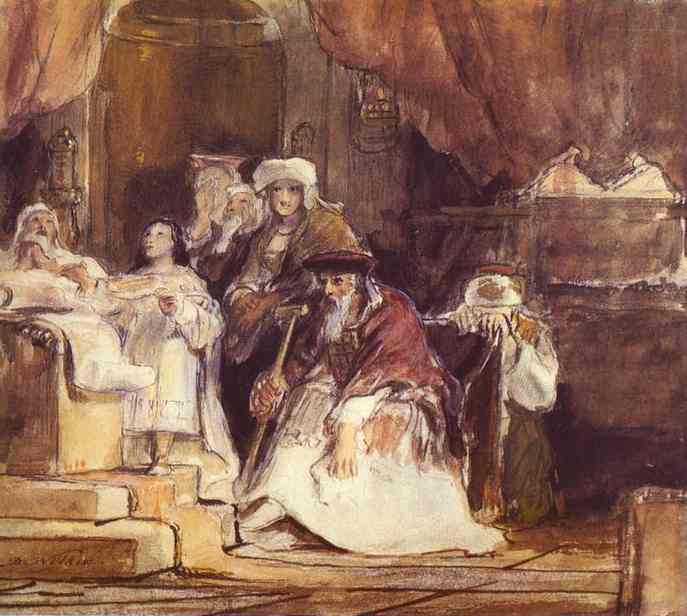
Samuel in the Temple – David Wilkie (1839)
1 Samuel 2:18-20, 26 New Revised Standard Version (NRSV)
18 Samuel was ministering before the Lord, a boy wearing a linen ephod. 19 His mother used to make for him a little robe and take it to him each year, when she went up with her husband to offer the yearly sacrifice. 20 Then Eli would bless Elkanah and his wife, and say, “May the Lord repay you with children by this woman for the gift that she made to the Lord”; and then they would return to their home.
***************
                Christmas has come, and in the minds of many, it’s time to move on to the next holiday. The stores will be clearing out extra merchandise, and unwelcome presents will be returned. Next up are the parades and games of New Year’s Day (and a new Dr. Who special). Liturgically, however, the Christmas season is not yet over. There is still time to sing some carols and hear Christmas related messages. The first Sunday after Christmas is usually low attendance, and my preachers (myself included) will be taking the week off. Nevertheless, liturgically we’re still in the midst of the Christmas season. The Gospel reading for the First Sunday after Christmas in Year C is Luke 2:41-52, which tells the story of Jesus’ visit to the Temple when he was twelve, so we’ve moved well beyond infancy. This is, however, the only reference to Jesus’ childhood to be found in the New Testament. There’s nothing spectacular going on here. Jesus’ doesn’t make clay pigeons fly, or anything like that. He does, however, pay a visit to the Temple, where he engages the religious teachers in deep theological discussions. You might say he’s a rather precocious lad! He also causes his parents a few worries, because he got separated from the family when their caravan headed back to Nazareth. I’ve always liked that story, not just the part about the theological discussions, but the troubles he caused his parents. Whatever moral perfection we grant Jesus, let’s remember he had to grow and mature. That he did!  As the Lukan story concludes we hear: “And Jesus increased in wisdom and in years, and in divine and human favor.” In other words, he had stuff to learn along the way!
 
                The reading from 1 Samuel 2 offers a parallel of sorts to that of Jesus. In the reading from the Hebrew Bible for this Sunday, we might picture Samuel as a boy of about twelve. He’s ministering in the Temple in Shiloh, as an apprentice to Eli the priest. If we turn back to chapter 1, we will find Samuel’s mother, Hannah, pleading with God to take away the shame of being unable to conceive and bear a child, in the course of her prayers, she promised that if God provided her with a son, she would return the child to the Temple to serve God there. Lo and behold, she conceives and bears a child, whom she names Samuel. As she promised, at the appropriate time, she brought Samuel to the Temple to live with Eli and serve with him in the Temple. We might use this story as an opportunity on what it means to dedicate children to God. Whether we practice infant baptism or infant dedication, the ritual invites parents to commit themselves to raising children in the faith, and congregations pledge to assist. I’m not sure we always do a great job at this, but in both the story of Jesus and Samuel, children are dedicated to the Lord’s service.
In chapter 2 we find Hannah and her husband Elkanah making an annual pilgrimage to Shiloh to offer sacrifices. Each time they make this trip, Hannah brings her son a new robe to wear in service in the Temple. After all, he’s a growing boy and will need new clothes on occasion. It also suggests that Hannah kept in contact with her son. Each time they visited the Temple, Eli would bless the couple, asking that God would bless them with more children.   
 
The lectionary omits verses 21-25, which tells us that Hannah had three more children, while Samuel grew up on the presence of the Lord,as well as about Eli’s own less-than-honorable sons. While it is understandable, the author of the story seemed to want to make the contrast between Samuel and the priest’s sons, all of whom would have been in line to succeed their father. You might even see in Eli’s blessing of Elkanah and Hannah a ruefulness, recognizing that their son was more committed to God than his own sons. In fact, as Melissa Browning notes: “These weren’t just preacher’s kids being mischievous at church; it was far worse. They were stealing the offering, sleeping around, and threatening violence—all within the sacred space of the Temple” (Connections, p. 114). You could understand if Eli didn’t wish that his own sons would be more like Samuel.  
 
The stories of Samuel and Jesus intersect in the Temples, where both demonstrate their faithfulness to God, and their wisdom. Samuel wears a linen ephod, a priestly vestment. Having served as an acolyte in the Episcopal church as a child, I can get a sense of what this might look like. I wore a black cassock with a white surplice. Properly dressed, I could assist the priest in consecrating the eucharistic elements. I would assume that Samuel had a similar responsibility, assisting Eli with the sacrifices, including those brought by his own parents. Jesus didn’t have the same responsibilities. He wasn’t an apprentice priest. Instead, he engaged in theological conversation with religious teachers, astounding his conversation partners with his understanding of deep topics (I wasn’t yet ready to do such things at age 12, believe me!).
There is another connector, and that is the description of their maturation process.  Of Samuel it is said that he “continued to grow both in stature and in favor with the Lord and with the people” 1 Sam. 2:26). Witness the similar appellation given to Jesus in Luke 2:52: “And Jesus increased in wisdom and in years, and in divine and human favor.” What more could any parent desire than to receive report cards like these?
Not all children grow up to be prophets and messiahs. Many children will be more like Eli’s sons than either of these two. Parents love to brag about their kids. Facebook seems to be a common space for doting parents to tell stories of their precocious children, who can do know wrong, and who at age 5 seem to have the wisdom and knowledge of a PhD candidate. Other parents, reading such reports of wondrous children, may feel like Eli, wishing their children could be wiser and looked upon with divine and human favor. It’s easy to feel a bit like a failure as a parent, when you discover that other children are better behaved and smarter than your own.
Whatever our status as parents, we can recognize in these two parallel stories, very special children, who grow up to fulfill important callings. We should celebrate their faithfulness, and call their parents are blessed.  We should also recognize that in both cases the children grew in faith and wisdom. They were not born with the fullness of wisdom and knowledge. They were given the opportunity to develop their faith, either under the guidance of a religious leader in the case of Samuel or, we can presume, under the tutelage of parents (Jesus).
With these stories in mind, may we continue the Christmas journey toward Epiphany, and the full manifestation of God’s presence in Jesus.

Robert Cornwall is the Pastor of Central Woodward Christian Church in Troy, Michigan. He holds the Ph.D. in Historical Theology from Fuller Theological Seminary. He is the author of a number of books including Out of the Office (Energion, 2017), Marriage in Interesting Times (Energion, 2016), and Freedom in Covenant (Wipf and Stock, 2015) and blogs at Ponderings on a Faith Journey.


O Little Town of Bethlehem – a lectionary reflection of for Advent 3C (Micah 5)

 
 But you, O Bethlehem of Ephrathah,
who are one of the little clans of Judah,
from you shall come forth for me
one who is to rule in Israel,
whose origin is from of old,
from ancient days.
Therefore he shall give them up until the time
when she who is in labor has brought forth;
then the rest of his kindred shall return
to the people of Israel.
And he shall stand and feed his flock in the strength of the Lord,
in the majesty of the name of the Lord his God.
And they shall live secure, for now he shall be great
to the ends of the earth;
and he shall be the one of peace.
*****
 
                O little town of Bethlehem, how still we see thee lie!
                Above thy deep and dreamless sleep the silent stars go by.
                Yet in they dark streets shineth the everlasting Light;
                The hopes and fears of all the years are met in thee tonight. (Philips Brooks, 1868).
        When we hear the Christmas story, the Gospel of Luke brings us to the little town of Bethlehem, and Matthew gets us out of town, just in the nick of time. In Luke it’s an imperial census that draws the Holy Family to Bethlehem, while in Matthew it is an enraged king who drives them out of town and into exile in Egypt. While Bethlehem is the city of David, the hometown of the young man, whom Samuel called to a new vocation, from shepherd to king of Israel. The prophet Micah speaks to a different age, several centuries after David’s rise to power. The kingdom that David put together no longer exists. It had divided into two parts after the death of his successor, and the northern portion was destroyed by the Assyrians during Micah’s time, leaving Judah as a remnant. While much of Micah’s message is one of judgment upon that kingdom and its leaders, this reading seems to offer hope of something, something better. What that might look like is uncertain, but for Christians this portends the coming of Jesus, born in Bethlehem, who is the one of peace.
           When we who are Christians read a passage from the Hebrew Bible, we need to remember that it has an original audience different from us. Sometimes that audience is difficult to discern, as it is here. Is this the message of an eighth century prophet who hails from the rural regions of Judah or a voice calling out from the exile, hoping for a restoration of what once existed, a kingdom under Davidic rule? Scholars are not of one mind on this. As Christians, however, we read it in light of the Gospels and apply it to the birth of Jesus. Micah may have had a different scenario in mind, but we hear it speaking to our Advent journey, pointing us to the little town of Bethlehem, from whence one will come bringing peace.
            The opening lines of the book of Micah identifies the prophet as “Micah of Moresheth in the days of Kings Jotham, Ahaz, and Hezekiah of Judah, which he saw concerning Samaria and Jerusalem” (Micah 1:1). This puts the prophet in the eighth century, around the time of the Assyrian destruction of the northern kingdom of Israel. Much of the early chapters of the book fit such a context, but some scholars place chapters four and five during the exilic or post-exilic period. So, while the opening chapters offer words of doom and gloom, chapters four and five offer a word of hope, possibly to a post-exilic people that the throne of David would be restored. Of course, that never occurred. Descendants of the Davidic line did hold some power in post-exilic Judah, but not as king. On the other hand, there is the possibility that this is not a post-exilic piece, but actually comes from the eighth century. Since Micah takes a rather dim view of the monarchy, including Hezekiah, then perhaps what is being suggested is not the post-exilic restoration, but a royal do-over. Remember Micah isn’t an urban prophet, he’s a rural prophet. He sees the devastation out in the villages that took place after the Assyrian invasion, because the authorities pursued war rather than peace. Thus, Micah is seen envisioning a shepherd king, rather than a warrior one. As you can see, the original audience is difficult to pin down.
       While the original audience is difficult to discern, Matthew and Luke found it to be pregnant with possibilities, as they tell the story of Jesus’ birth. While these two Gospels offer two rather different perspectives on Jesus’ birth, both stories center in Bethlehem. Micah may not have been the only influence, but likely influenced this vision. So, now, as Christmas draws near, and we prepare for that moment when we welcome the child born in Bethlehem, whom the angels celebrate, we hear this word of restoration. The word for us is that “he shall stand and feed his flock in the strength of the Lord, in the majesty of the name of the Lord his God.”
          I like the idea that Micah may be envisioning a new beginning, something unlike the historical record. It’s not that he envisions a restoration of the current order. It’s clear he’s not impressed with David’s successors, and maybe not even with David. But Bethlehem might be a better starting place than Jerusalem. It’s not a matter of making Judah great again, but rather living into God’s vision of a realm that is just, where those who rule do so for the good of all, and as Alan Gregory puts it, this person rules for the good “of all who struggle and work for life, who prefers peace to war, and who desires to secure their posterity in the land” [Connections, p. 50]. If as seems possible, Micah speaks from a social location that is rural and has been decimated by war (after all the rural villagers don’t have the benefit of Jerusalem’s walls to protect them, like Hezekiah did), then we can see how this vision might resonate.
Indeed, it may resonate in our day, as many in rural America feel left out and ignored. They many have also contributed their sons and daughters to serve in foreign wars or seen support for their communities sucked up by military budgets. Perhaps they have been left behind by the technological revolution. What is true for those living in rural America is often true of those living in our urban cores. Neither share in the benefits of living in suburban America (my social location), and thus feel a certain anger toward the government, who seems more intent on representing those with the means to contribute to political coffers than those living on the margins. That is, the community to whom Jesus more often than not spoke.
This is the Sunday we light the candle of love. Love is the foundation for peace and justice in the world. It is love that brings nourishment and strength to the people, allowing those gathered by God’s love to live securely. That is because the Good Shepherd is the prince of peace. Peace may have been the theme of the second Sunday of Advent, but the message peace continues to ring out. We long for its promise, even as military budgets eat up much of the governmental budgets here in my country and around the world. Maybe there is a better way, a way of peace. Micah proposes it, and Jesus exemplifies it in his words and deeds. The one who is born in Bethlehem becomes the good shepherd, who takes us on a different path.
O holy Child of Bethlehem descend to us, we pray;
Cast out our sin, and enter in; be born in us today.
We hear the Christmas angels the great glad tidings tell;
O Come to us, abide with us, our God, Emmanuel.
                                                                               —Phillips Brooks

Robert Cornwall is the Pastor of Central Woodward Christian Church in Troy, Michigan. He holds the Ph.D. in Historical Theology from Fuller Theological Seminary. He is the author of a number of books including Out of the Office (Energion, 2017), Marriage in Interesting Times (Energion, 2016), and Freedom in Covenant (Wipf and Stock, 2015) and blogs at Ponderings on a Faith Journey.

A Joyous Homecoming – Lectionary reflection for Advent 3C (Zephaniah 3)

Zephaniah (18th century Russian icon) 

Zephaniah 3:14-20 New Revised Standard Version (NRSV)

14 Sing aloud, O daughter Zion;
shout, O Israel!
Rejoice and exult with all your heart,
O daughter Jerusalem!
15 The Lord has taken away the judgments against you,
he has turned away your enemies.
The king of Israel, the Lord, is in your midst;
you shall fear disaster no more.
16 On that day it shall be said to Jerusalem:
Do not fear, O Zion;
do not let your hands grow weak.
17 The Lord, your God, is in your midst,
a warrior who gives victory;
he will rejoice over you with gladness,
he will renew you in his love;
he will exult over you with loud singing
18 as on a day of festival.
I will remove disaster from you,
so that you will not bear reproach for it.
19 I will deal with all your oppressors
at that time.
And I will save the lame
and gather the outcast,
and I will change their shame into praise
and renown in all the earth.
20 At that time I will bring you home,
at the time when I gather you;
for I will make you renowned and praised
among all the peoples of the earth,
when I restore your fortunes
before your eyes, says the Lord.

*****************

When you read this Psalm you almost get the sense that Zephaniah has Judah’s return from exile in Babylon, but Zephaniah’s ministry dates to the time of Josiah in the seventh century BCE, just prior to the exile in Babylon. While it’s possible that this song dates from the post-exilic period and was added to the earlier words of Zephaniah, it fits the earlier period just as well. Whether a celebration of a return from exile or national revival, it invites us to rejoice that God’s judgments have been removed and God is ready to renew the people in love. So, let us rejoice and be glad in the Lord our God!
We hear these words from Zephaniah as we continue our journey through Advent to the revealing of the Christ Child on Christmas Eve. The opening season of the Christian year, Advent serves as a reminder that God is faithful to the promises made. Thus, as we gather for Advent worship, we take hold of those promises that inspire and encourage us along the way. Advent is, of course, an eschatological season. It looks forward to the ways in which God will act on behalf of the people—thus the warrior imagery here.
For a nation like Judah, which stood on the road connecting the powers of Egypt and Mesopotamia, it often “hosted” armies seeking to expand their domains at Israel’s expense. Thus, they must entrust themselves to God’s care. There is a word here in verse 19 that declares that God the liberator will deal with oppressors, save the lame, and gather the outcast. Those on the margins will “change their shame into praise.” Of course, it should be noted that much of the book of Zephaniah is a rebuke to Judah, but not here. At least, here Zephaniah, looking forward, perhaps with Joshua’s reforms in mind, envisions a different, purified nation, that will celebrate God’s presence. In the verses just prior to the song, we hear the prophet speak of the remnant of Israel that will seek refuge in the name of the Lord and will “do no wrong and utter no lies, nor shall a deceitful tongue be found in their mouths. Then they will pasture and lie down, and no one shall make them afraid” (Zeph. 3:12-13).
Taken by itself, upon reading this song of joy, you would never know that Zephaniah had pronounced judgment on Judah. There is the reference to judgments rescinded, but the nature of the crimes isn’t laid out. More likely we take hold of the opening lines, which invites us to sing the Lord, with songs of joy and exultation. Perhaps the song celebrates a new reality, in which Judah has heeded the call of the prophet and reformed its ways. Thus, it would appear, that Judah has taken steps to change their ways. They’ve heard the pronouncements and have reformed their ways. Thus, we can see the connection to the reforms of Josiah that returned appropriate forms of worship and decorum to the Temple, and proper behavior among the people. This leads naturally to a call to rejoice in the Lord. Even as we see signs that behavior changed, there is also the recognition that God is acting on behalf of the people. Again, it is good to remember that Judah was a small nation that sat between dueling empires, thus this little kingdom was a valued vassal, not for its treasures, but for its strategic location. The nation was constantly needing to shift loyalties, but for Zephaniah, there is only one loyalty to be considered, that is the loyalty to God, the protector, the warrior.
Placing this song into the season of Advent, we can see how it connects with the day of joy. So, Zephaniah joins Paul with a song of joy, as Paul invites the Philippians to “rejoice in the Lord always” (Phil. 4:4). Though in Luke, John the Baptist is warning the crowds to be baptized, so maybe he is where Zephaniah was before the song was written! (Luke 3:7-18). There is, therefore, a connection in the season of Advent between the call for repentance and change and the invitation to rejoice in God’s presence.
So, what does Zephaniah have to say to us? How might we move into a position of joy? It would seem that this would require accepting God’s judgment, if we are to move into God’s new vision. If we fail to heed those calls to change our behavior, we will make the call to rejoice rather shallow. So, we might want to hear this reading with the caravan at the border in mind. Why, we would be wise to ask, have thousands of Central Americans lined up at the border seeking asylum? What might be the cause of the disruptions of life in Honduras and Nicaragua. How might situations on the northern side of the border, have contributed to the frustrations and distress, where parents fear the power of gangs that originated in the United States. Perhaps, we can start, as Seth Moland-Kovash suggests, by praying “in solidarity with our sisters and brothers around the world who do experience the world in ways much more like the experience of Zephaniah’s hearers. We pray for an end to all disasters and conflicts, and we trust in God’s promise for restoration” [Feasting on the Word, p. 55]. When we pray in solidarity, then it’s possible for us, whose situation is very different, to experience God’s restoration in our own situations. At the same time, it’s important to remember that this word of judgment is issued within a broader offer of mercy. Remember that Zephaniah sings that God has taken away the judgments placed on Judah. The same would be true for us.
When we are burdened with guilt, feeling that we must clean ourselves up first, before we come to God, will leave us in the dust. Yes, John called out the “the brood of vipers” for their hypocrisy, he also offered them an opportunity to start afresh in baptism. It is God’s offer of forgiveness that leads to joy. As Alan Gregory notes, “though God has not taken back a word of the condemnation, God’s grace exceeds the condemnation in the healing powers of renewal” [Connections, p. 36]. This encounter, both now and in the future, will not leave us unchanged, but instead will allow us to move forward in God’s grace into a new reality, one of renewal, and thus a joyous homecoming. So “Rejoice and exult with all your heart, O daughter Jerusalem!” (Zeph. 3:14b).

Robert Cornwall is the Pastor of Central Woodward Christian Church in Troy, Michigan. He holds the Ph.D. in Historical Theology from Fuller Theological Seminary. He is the author of a number of books including Out of the Office (Energion, 2017), Marriage in Interesting Times (Energion, 2016), and Freedom in Covenant (Wipf and Stock, 2015) and blogs at Ponderings on a Faith Journey.
The Coming Refining Fire – Lectionary reflection for Advent 2C (Malachi 3)

Malachi 3:1-4 New Revised Standard Version (NRSV)
 
See, I am sending my messenger to prepare the way before me, and the Lord whom you seek will suddenly come to his temple. The messenger of the covenant in whom you delight—indeed, he is coming, says the Lord of hosts. But who can endure the day of his coming, and who can stand when he appears? 
For he is like a refiner’s fire and like fullers’ soap; he will sit as a refiner and purifier of silver, and he will purify the descendants of Levi and refine them like gold and silver, until they present offerings to the Lord in righteousness.Then the offering of Judah and Jerusalem will be pleasing to the Lord as in the days of old and as in former years.

***************

                The message of Advent is clear. Get ready. Get cleaned up. Prepare yourself for the coming of the Lord. But, are we ready to bear the burden of purification? Are we ready to be refined by the refiner’s fire? A little water from baptism maybe, but fire?  Sometimes we ask for things to occur, but don’t know the full ramifications. We cry for justice, forgetting that we might get singed along the way.
                Malachi speaks to a people facing a crisis. Exiles have returned home to a ruined Jerusalem, from Babylon and Persia. They have rebuilt the Temple, but maybe they’re not of one mind when it comes to supporting it. The Book of Malachi is best known for its “stewardship theme” of tithing so as not to rob God. Maybe the context of this message was a capital campaign to rebuild the Temple. Maybe people were a bit behind in their pledges (Mal. 3:8-12). Could the prophet of record be a disgruntled priest, who is discouraged by the lack of progress in supporting the Temple or in behavior change for that matter. We aren’t reading that portion of Malachi 3. We’re reading the word that precedes it.
That word follows the word we hear now, a word about a messenger, perhaps an eschatological messenger, who will come suddenly to carry out judgment. The identity of the messenger is uncertain. The name Malachi can be translated as “My Messenger,” which is the task given to the one who is coming. In any case, the word comes to the people from God, and it is God who will do the refining.
                Whoever this prophet is, who likely writes early in the fifth century, BCE, the word we hear, is that the people have lost their way. They want much but seem unwilling to give of themselves for this purpose. They may be experiencing disillusionment. They decry corruption, but perhaps are caught up in it themselves (and can’t see it). So, the prophet calls the people to account on behalf of YHWH Zebaoth (Lord of Hosts), who is coming, with refiner’s fire, to cleanse and renew the community.
                The Gospel reading from Luke 3 that accompanies this reading speaks of another messenger, who is sent to the people, to prepare them for the coming of the Lord. That messenger or prophet is John, son of Zechariah, who proclaimed a baptism of repentance in preparation for the coming of the Lord—as Isaiah had already revealed (Luke 3:1-6). Malachi’s calling is similar, or better, John’s calling is similar to that of Malachi. Both prophets call for repentance so that sins might be forgiven, and people might be purified.
The age in which we live is an age of division that at times lacks a sense of moral vision. As Reinhold Niebuhr would say, moral man is living in an immoral society. We hear hue and cry about corrupt systems—political, religious, corporate—even we participate and perhaps benefit from those systems. We want change, but we would rather not incur any pain or inconvenience. It is like those who complain about the roads, but demand tax cuts. So, we throw out the bums, and elect new bums in their place. When the new bums fail to fulfill their promise (or fulfill it at our inconvenience), we complain. It seems to be a never-ending cycle. So, perhaps Malachi’s concerns are our concerns.
While we’re not sure about the context, the prophet is concerned about the context at hand. Things are not as they should be, which suggests that God will do something to set things right. People have been calling for God act, but perhaps they need to ready themselves first. The refining fire might prove uncomfortable. So, am I ready? I don’t know. Is the church I serve ready? I don’t know that either.
                As we move quickly toward Christmas, on this the second Sunday of Advent, with only two more Sundays after this one we are faced with the question: are you ready for what is to come? Perhaps we will answer: If only we had more time, or perhaps more resources, then we could fulfill our promise. But will this answer be sufficient? While the promise that the coming messenger will bring refiner’s fire might seem ominous (who wants to undergo judgment), perhaps it is for the best. Perhaps if we submit ourselves to this process, we will be better prepared to bring our offerings to the Temple in righteousness.
                With Malachi’s message in our minds, what is the vision that moves us in this journey toward Bethlehem? What are we hearing from God that speaks to our souls? Are we ready to receive this word of judgment so we can prepare ourselves for the coming of the Lord?
                Let us remember that the season of Advent points not only to the first Advent, when a child is born in Bethlehem, a child who will grow up to preach good news, bring healing and wholeness, and then face death, but also a second Advent, the eschaton, the time of judgment. While the death of Jesus culminated in the Resurrection, that was the end of the story. We live in the interregnum, the in-between time, before the coming Day of the Lord. We may be experiencing some of that refining fire now, in our time.
                After centuries of Christendom, where in Europe and its colonies, Christianity dominated culturally, that cultural dynamic no longer exists. People find church to be less important. They still claim faith in God but operate outside the usual channels. Our congregations shrink, and along with it, our budgets. The majority of churches in America have less than 100 members. I serve one of those churches. I know the challenges that come as we grow smaller. Thousands of cars pass by our church each day, no one paying attention to that church on the corner. I don’t know the future. I am hopeful, but realistic as well. The future of our congregations, especially smaller ones with older and whiter memberships, is uncertain. The good news is that God is faithful to the covenant, and so the invitation is sent out, inviting us to submit ourselves to the refiner’s fire.
                This passage is intended to be heard on Peace Sunday. The question is, does it bring peace to our souls? Does it inspire us to be peacemakers? Whether we’re able to answer in the affirmative, we can hear the words of Alan Gregory, who writes:
When Christians accept God’s calling, it is good news for the world, because the church, when it is willing to bear God’s refining, represents the glory of humanity as it exists in God’s desire. In the end, of course, what sustains the church, and all human beings touched by God’s grace, lies beyond the words of judgment, in the faithfulness with which God shall complete the loving work of creation.  [Connections, p. 20].
May we present ourselves to God’s messenger so that we might be refined. With that act on God’s part of refining us, we find ourselves brought to wholeness, to completeness, along with the rest of God’s creation. With  that we can continue the journey toward Christmas.

Robert Cornwall is the Pastor of Central Woodward Christian Church in Troy, Michigan. He holds the Ph.D. in Historical Theology from Fuller Theological Seminary. He is the author of a number of books including Out of the Office (Energion, 2017), Marriage in Interesting Times (Energion, 2016), and Freedom in Covenant (Wipf and Stock, 2015) and blogs at Ponderings on a Faith Journey.
God’s Righteousness Revealed – Lectionary Reflection for Advent 1C – Jeremiah 33

Jeremiah 33:14-16 New Revised Standard Version (NRSV)
 

14 The days are surely coming, says the Lord, when I will fulfill the promise I made to the house of Israel and the house of Judah. 15 In those days and at that time I will cause a righteous Branch to spring up for David; and he shall execute justice and righteousness in the land. 16 In those days Judah will be saved and Jerusalem will live in safety. And this is the name by which it will be called: “The Lord is our righteousness.”

 
*********************
                It is the First Sunday of Advent and a new liturgical year begins. This first Sunday in the Christian year is designated “Hope Sunday,” which is a good place to begin a journey. Advent has an eschatological dimension to it, in that it invites us to look forward to God acting on our behalf not only in the present but in the future. It invites us to put our trust in the God who makes and fulfills covenant promises. Many congregations, including my own, begin the journey singing the medieval hymn “O come, O come Emmanuel, and ransom captive Israel.” While the hymn references the exile of Israel, it also invites us to look longingly toward the coming of the Christ child.  But it doesn’t end with the coming of the Christ child. That is a past event, and Advent continues to point us forward into the future. So, with this first Sunday we begin a journey that will takes us from anticipation to fulfillment in the coming of the Christ child, and then from there through the ministry of Jesus, his death, resurrection, on to the planting of a church that will bear the message of Jesus until that time when Christ reigns all in all.
                The word of the Lord as recorded in the first testament comes to us from the prophet Jeremiah. We can assume that this word is addressed to exiles living in Babylon. Although this word is addressed to both the people of Israel and Judah, Israel had long since disappeared from history, having been rooted out by the Assyrians in the eighth century. Jeremiah offers words of encouragement, reminding the people that God fulfills God’s promises, and the promise that is put before us concerns the time when “a righteous Branch” will “spring up for David.” As one might expect among a community of exiles who have watched as their nation has lost everything, including its leadership, there is the hope that life will return to normal. That things will go back to the way things were when the nation was at least theoretically independent. The only way for that to occur would be to see a member of the royal family restored to the throne of Judah. That is, there is an expectation that a member of the Davidic line will emerge, take the throne, and in that role will “execute justice and righteousness in the land.” This would be good news!
                The Gospel reading for the first Sunday of Advent in Year C is taken from Luke 21. In this reading we hear Jesus speaking in apocalyptic terms of the day God’s reign will be fully revealed. In this reading Jesus calls on the hearer to “be on guard so that your hearts are not weighted down with dissipation and drunkenness and the worries of this life, and that day does not catch you unexpectedly, like a trap” (Lk. 21:34-35). The message of Advent is always one of being prepared and being alert for the day of the Lord is ever at hand. That was Jesus’ message, and it was Jeremiah’s. Neither Jesus nor Jeremiah offer a timetable, only a promise that the realm will come, and with it will come justice.  
 
                As we read Jeremiah today, in what some call a post-Christian age, when the church’s cultural dominance is diminished, what word do we hear? There are some who seek to “make the church great again,” by reclaiming cultural dominance. We see this in practice during this Advent/Christmas season by the demand made that retailers great customers with “Merry Christmas,” as well as demands that city halls place creche scenes on their front lawns. During other months of the year, we hear calls for restoring prayer and bible reading in schools. Some even want to make the McGuffey Reader of the 19th century the standard educational curriculum. Is this what Jeremiah has in mind for us? Is this the day when the Lord will be our righteousness? While, it’s true that the exiles desired to return to life as it was before exile, is this God’s vision? When we read books like Ezra and Nehemiah, we see attempts made in the post-exilic period to return to normal, by rebuilding Temple and city walls, while attempts are made to keep the community pure (Ezra’s call to put aside foreign wives—Ezra 9). While Zerubbabel was a Davidic descendant and the center of hopes of David restoration, he served only as a governor appointed by a Persian king (Haggai1). I’m not sure that either Zerubbabel or any other governor fulfilled the promise, but the promise remained.
The Christian community has taken it up, affirming that Jesus is the true son of David, and thus the righteous branch, who will bring justice and righteousness to the land. This is the vision that drives the Christian message. Jeremiah likely had a return to the land of the ancestors in mind, when he spoke these words. Jesus, on the other hand, at least in Christian theology, has a larger frame of reference that a return to the land of the ancestors. For Jesus the vision of the future involves the revelation and inauguration of the realm of God. This eschatological realm is marked by God’s justice and righteousness. As we gather for worship in Advent, we are confronted by this larger vision of God’s realm. Out of that vision comes the question of how we, the people of God, called together in the name of Jesus, can embody the justice and righteousness of God. This embodiment can take a variety of forms, but all reflect God’s love for all creation. This might involve both those first responses, taking care of immediate needs, like providing food and shelter, but ultimately it involves pursuing systemic change, so that the vision might be fulfilled.
With this invitation in mind, we begin the journey of Advent, moving toward the celebration of the birth of a child who was, at least temporarily, a homeless refugee.    

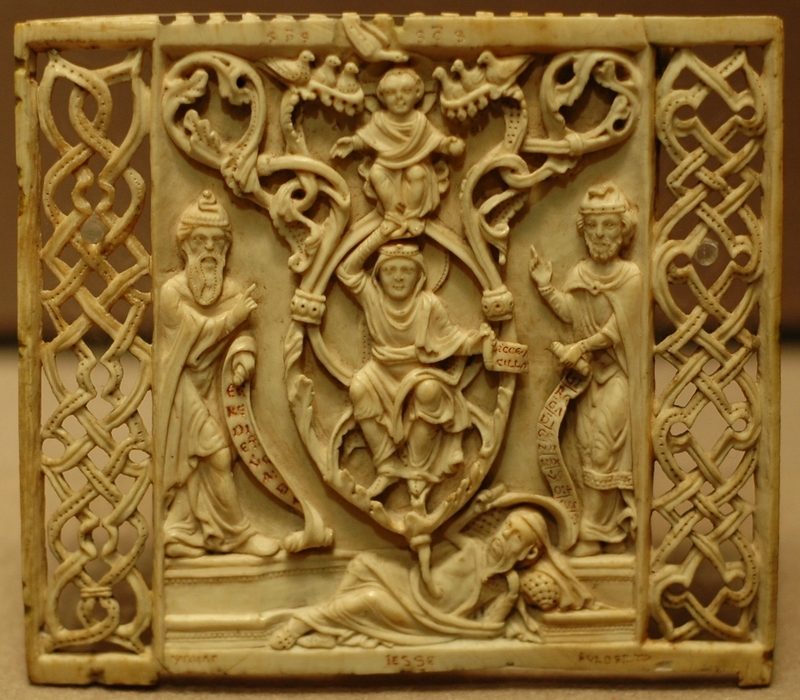
Picture attribution: Tree of Jesse, a Bavarian ivory panel., from Art in the Christian Tradition, a project of the Vanderbilt Divinity Library, Nashville, TN. http://diglib.library.vanderbilt.edu/act-imagelink.pl?RC=27238 [retrieved November 26, 2018]. Original source: Wikimedia.

Robert Cornwall is the Pastor of Central Woodward Christian Church in Troy, Michigan. He holds the Ph.D. in Historical Theology from Fuller Theological Seminary. He is the author of a number of books including Out of the Office (Energion, 2017), Marriage in Interesting Times (Energion, 2016), and Freedom in Covenant (Wipf and Stock, 2015) and blogs at Ponderings on a Faith Journey.

Living Under God’s Rule — Lectionary Reflection for Reign of Christ Sunday (2 Samuel 23)

2 Samuel 23:1-7 New Revised Standard Version (NRSV)
 
23 Now these are the last words of David:
The oracle of David, son of Jesse,
the oracle of the man whom God exalted,
the anointed of the God of Jacob,
the favorite of the Strong One of Israel:
The spirit of the Lord speaks through me,
his word is upon my tongue.
The God of Israel has spoken,
the Rock of Israel has said to me:
One who rules over people justly,
ruling in the fear of God,
is like the light of morning,
like the sun rising on a cloudless morning,
gleaming from the rain on the grassy land.
Is not my house like this with God?
For he has made with me an everlasting covenant,
ordered in all things and secure.
Will he not cause to prosper
all my help and my desire?
But the godless are all like thorns that are thrown away;
for they cannot be picked up with the hand;
to touch them one uses an iron bar
or the shaft of a spear.
And they are entirely consumed in fire on the spot.
 
*******************
            
    The liturgical year ends with Christ the King or Reign of Christ Sunday. With the age of monarchy passing into history, this might seem a rather anachronistic way to end the church year. Most modern monarchs serve as ceremonial heads of state, but the real power is left to elected officials. So, is Christ a ceremonial figure? Despite the fading of monarchies, the idea of monarchy may still have some relevance to our spiritual conversations. Of course, there have been conversations about shifting metaphors to more modern possibilities, but none of them have truly caught fire as descriptors. Some have shifted to speak of the realm and reign of God rather than kingdom, but the basic concept remains the same, though the shift allows us to recognize that king and kingdom have patriarchal edges. While monarchies have become more ceremonial, contemporary western leadership positions such as president and prime minister are elective in nature. The question then becomes, in what way is Christ elected as our ruler? So, it appears for now we’re left with monarchical imagery.
                With Christ the King Sunday at hand, and because we are working through the readings from the Hebrew Bible, we have before us the reading from 2 Samuel 23, which enshrines the “Last Words of David.” The lectionary has taken us on a quick jump from Hannah’s song (1 Samuel 1), in which a woman goes to the Temple at Shiloh and makes a deal with God, promising that if God redeemed her from the shame of barrenness, she would bring her son (she asked for a son) to the Temple to be raised there. Lo and behold, she has a son, whom she names Samuel, and she fulfills her side of the bargain. In the end Samuel is called by God to be prophet and judge over Israel. In that position, he anoints first Saul and then David to be kings over Israel. From that song, we jump to another. The two songs frame the rise of monarchy, the fall of Saul and the rise of David. Although there are more stories to be told of David’s exploits, these words are placed here, immediately following David’s song of Thanksgiving (2 Sam. 22).
David is envisioned in Scripture and in our imaginations as Israel’s greatest king. He was the one who united the people and set them on a proper course. Solomon’s kingdom might have been larger in area, and Solomon may have built the Temple, but it was David who set the course. It was David whom God exalted, anointed, and favorited. And as Paul declared, David is to God “a man after my heart, who will carry out all my wishes” (Acts 13:22), and thus a precursor to Jesus, the Messiah.
Of course, the story of David’s reign and that which follows is much more complex than this would suggest. David’s reign not without its scandals, and yet over time David took on a messianic mantle that was passed on to Jesus by early Christians. David’s kingdom would before long fall into realms, one of which disappeared in the eighth century BCE. The smaller portion of his realm, the one that continued under a Davidic dynasty would last until Nebuchadnezzar brought the kingdom and the monarchy to an end in the early sixth century BCE. When the exile ended in the closing third of the sixth century, the former Judean kingdom existed only as a province of the Persians and then of the Greeks. There would be a brief return to monarchy under the Hasmoneans in the second century BCE, but it would be subsumed under Roman rule before too long. By the first century of the Common Era, during the time of Jesus, a messianic fervor erupted in the former realm of David, now under Roman domination, either direct (Pilate) or through vassal kingdoms (Herod Agrippa). The early Christians came to interpret the ministry of Jesus in messianic terms, understanding Jesus to be the chosen heir of David, though the nature of his realm was reenvisioned into a spiritual realm.
                In light of Christ the King Sunday, we might read these “Last Words of David” with the proclamation of Revelation 1 in mind, as this passage marks the second reading for the day. 
Grace to you and peace from him who is and who was and who is to come, and from the seven spirits who are before his throne, and from Jesus Christ, the faithful witness, the firstborn of the dead, and the ruler of the kings of the earth.

To him who loves us and freed us from our sins by his blood, and made us to be a kingdom, priests serving his God and Father, to him be glory and dominion forever and ever. Amen. (Rev. 1:4b-6).

Considering this affirmation of Christ’s kingly rule, how might we understand David’s words as words to us?
                The word we have before us come, is said to be an oracle of God, a prophetic word that is delivered through David. These last words begin with a description of David as being the one who is “exalted of God,” “anointed of God,” and the “favorite of the Strong One of Israel.” These three descriptors of David exalt him to an honored place in the heart of God. What he speaks comes from God and might be understood to be his testament, his words of guidance to those who would follow him. Consider that David, as God’s oracle, speaks of the covenant God has made with the house of David, a covenant that is everlasting. If heard in the light of the exile or its aftermath, it’s not surprising that there would be those who would claim this mantle and seek to restore Israel to its former glory. After all, hasn’t God pledged loyalty to the covenant?
So, here is the message of God revealed to us through David:
One who rules over people justly,
ruling in the fear of God,
is like the light of morning,
like the sun rising on a cloudless morning,
gleaming from the rain on the grassy land.
(2Sam. 23:3-4).
One would assume that David is the one who rules justly in the fear of God. As to David’s position in the eyes of God, he is “like the light of morning, like the sun rising on a cloudless morning, gleaming from the grassy land.” You might say that David is the apple of God’s eye. A just ruler is a blessing to a nation. One who rules in the fear or awe of God, who understands the position of ruler in relationship to the overall rule of God, “is like the light of morning, like the sun rising on a cloudless morning, gleaming from the rain on the grassy land.” It is a message of blessing. We can see it. We can feel it. We can smell it. Yes, “morning has broken, like the first morning.” In the words of the third verse of the song, “Mine is the sunlight! Mine is the morning born of the one light Eden saw play! Praise with elation, praise everyone morning, God’s recreation of the new day!” [Eleanor Farjeon, Chalice Hymnal, 53]. 
 
                If a just ruler brings blessing, then the godless, the one who fails to abide by the covenant, is like a thorn that must be thrown away. The contrast is stark. The thorn must be removed, but removal is not easy. You can’t just pick them out by hand. You must use an iron bar or spear shaft, and then when removed they must be consumed by fire “on the spot.” Why? I would assume that if they are not, they might take root once again.
                There is in these words of David an affirmation of covenant but also of judgment. We bring the liturgical year to a close with difficult words. Then, when we regather on the first Sunday of Advent, and light those candles, we prepare to receive a different kind of king. Yet, these words do seem to speak of the need for judgment, of refining, as a pathway to justice. There is here a word of promise and a word of warning to take with us, as we move toward a new season with Christ the King.


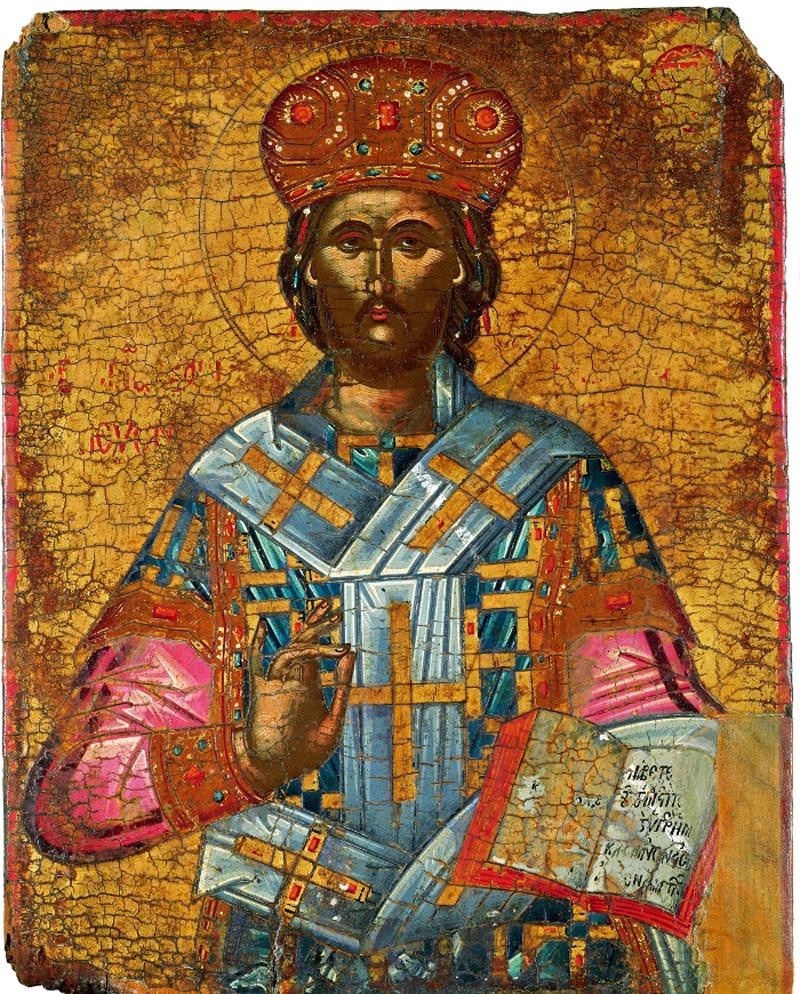
Picture Attribution: Christ the King of Kings, from Art in the Christian Tradition, a project of the Vanderbilt Divinity Library, Nashville, TN. http://diglib.library.vanderbilt.edu/act-imagelink.pl?RC=55319 [retrieved November 19, 2018]. Original source: http://commons.wikimedia.org/wiki/File:Christ_King_of_Kings_(Greece,_c._1600).jpg.


Robert Cornwall is the Pastor of Central Woodward Christian Church in Troy, Michigan. He holds the Ph.D. in Historical Theology from Fuller Theological Seminary. He is the author of a number of books including Out of the Office (Energion, 2017), Marriage in Interesting Times (Energion, 2016), and Freedom in Covenant (Wipf and Stock, 2015) and blogs at Ponderings on a Faith Journey.
A Soul Poured Out -Lectionary Reflection for Pentecost 26B (1 Samuel 1)

1 Samuel 1:4-20 New Revised Standard Version (NRSV)
On the day when Elkanah sacrificed, he would give portions to his wife Peninnah and to all her sons and daughters; but to Hannah he gave a double portion, because he loved her, though the Lord had closed her womb. Her rival used to provoke her severely, to irritate her, because the Lord had closed her womb. So it went on year by year; as often as she went up to the house of the Lord, she used to provoke her. Therefore Hannah wept and would not eat. Her husband Elkanah said to her, “Hannah, why do you weep? Why do you not eat? Why is your heart sad? Am I not more to you than ten sons?” 
After they had eaten and drunk at Shiloh, Hannah rose and presented herself before the Lord. Now Eli the priest was sitting on the seat beside the doorpost of the temple of the Lord. 10 She was deeply distressed and prayed to the Lord, and wept bitterly. 11 She made this vow: “O Lord of hosts, if only you will look on the misery of your servant, and remember me, and not forget your servant, but will give to your servant a male child, then I will set him before you as a nazirite until the day of his death. He shall drink neither wine nor intoxicants, and no razor shall touch his head.”


12 As she continued praying before the Lord, Eli observed her mouth. 13 Hannah was praying silently; only her lips moved, but her voice was not heard; therefore Eli thought she was drunk. 14 So Eli said to her, “How long will you make a drunken spectacle of yourself? Put away your wine.” 15 But Hannah answered, “No, my lord, I am a woman deeply troubled; I have drunk neither wine nor strong drink, but I have been pouring out my soul before the Lord. 16 Do not regard your servant as a worthless woman, for I have been speaking out of my great anxiety and vexation all this time.” 17 Then Eli answered, “Go in peace; the God of Israel grant the petition you have made to him.” 18 And she said, “Let your servant find favor in your sight.” Then the woman went to her quarters, ate and drank with her husband, and her countenance was sad no longer. 

19 They rose early in the morning and worshiped before the Lord; then they went back to their house at Ramah. Elkanah knew his wife Hannah, and the Lord remembered her. 20 In due time Hannah conceived and bore a son. She named him Samuel, for she said, “I have asked him of the Lord.”

*****************
                The Revised Common Lectionary takes us from the story of Ruth, the Moabite woman, who would be ancestor to King David (and by Christian extension ancestor of Jesus) to the story of Samuel, who would anoint Saul and then David as kings of Israel, after serving a lifetime as priest and judge in Israel. One story line that runs through Scripture is that God has a special concern for the one who is for whatever reason marginalized. That includes women who are unable to conceive in cultures that prize a woman’s ability to bear children. To be barren was considered cursed, or at very least a subject of shame. We see this with Sarah, Rachel, and Hannah. Moving into the New Testament there is Elizabeth, mother of John the Baptist. In each of these stories, God intervenes, and takes away a woman’s “shame” as a child is born who will be used by God to further the biblical story.  But what about those women who do not share in this relief?
                Here in 1 Samuel 1, we encounter Hannah, the second wife of Elkanah (remember that there is no one biblical marriage pattern and that polygamy was common), who is beloved of her husband, but who suffers the ignominy of experiencing the reality that in the words of Scripture, “the Lord closed her womb.” Despite her husband providing her a double portion of his Temple offerings during their annual pilgrimage to the Temple at Shiloh, because he loved her, that doesn’t seem enough. This is due in part to the fact that Elkanah’s other wife, Peninnah, would constantly provoke her, causing Hannah great irritation, and no doubt deep pain, reminding her of her shame as one who was considered barren. While Hannah’s story might differ from many modern versions of infertility, it might resonate with those who struggle with difficulties conceiving. As Rich Voelz notes in his book Tending the Tree of Life, a book on preaching emerging out of the struggles he and his wife had at conceiving a child, the church often struggles to provide words of comfort and encouragement in the face of infertility and reproductive loss. In his book he seeks to break up “the silences and unhelpful practices that make people like me feel as if we are the shadows of faith communities, and to begin moving individuals, families, and communities of faith toward better understanding, healing, wholeness, and faithfulness” [Voelz, p. 8.].  
 
                In our day, a couple might go to stead of going to a fertility specialist, but Hannah goes to the Temple at Shiloh to pray. We’re told that “she was deeply distressed and prayed to the Lord, and wept bitterly.” Note that she not only cried out to God in prayer, but her prayers were accompanied by bitterness. There is frustration inherent in this prayer. There is a feeling of injustice. She wants vindication. That vindication, in her mind, involves conceiving and bearing a son who would redeem her in the eyes of her rival and perhaps her husband (even though he professes his deepest love, she is not ready to accept this reassurance). Here is her prayer:

“O Lord of hosts, if only you will look on the misery of your servant, and remember me, and not forget your servant, but will give to your servant a male child, then I will set him before you as a nazirite until the day of his death. He shall drink neither wine nor intoxicants, and no razor shall touch his head.” (1 Sam. 1:11).

If God will remember her, she will offer her son up to God as a nazirite; as one who is wholly committed to God. He will not drink intoxicating beverages and he won’t cut his hair. Paul once took a vow like this, but only for a time, not for a life. Hannah promises that her son would take such a vow over a lifetime. I know parents like to live out their dreams through their children, but this might be taking things a bit too far, but her prayers are heard and affirmed.
                As she prays in the temple, Eli the priest overhears her prayers, but he thinks she’s drunk. Remember she’s crying out to God bitterly. So, what’s he to do with this hysterical woman. But she’s not hysterical, she’s in the midst of negotiating with God. She wants to make a deal with God. If God will answer her prayer, she’ll bring her son to the temple to be raised (I expect she made this promise before checking with Eli). It is a great sacrifice on her part, but in her mind her shame would be removed. As we see, her prayer is answered. Eli assures her, once he understands the situation, that she has been heard and that she will receive what she has asked for. The narrator tells us: “Then the woman went to her quarters, ate and drank with her husband, and her countenance was sad no longer.” Yes, she went home, had a party with her husband, and she moved from sadness and bitterness to joy.
Once she returns home, we’re told that Elkanah knew his wife, which means they had sex. One thing leads to another, and she conceives. Why? Because God remembered. Yes, God kept God’s side of the bargain. As for Hannah, she names her child Samuel, which means “I have asked him of the Lord.”  The lectionary reading ends there, but the lectionary writers have assumed that we know that if God kept God’s side of the bargain, Hannah would do the same, and she does.  
 
As to what happens next, Rich Voelz notes:

The relationship between Hannah, Samuel, and Eli might be called a type of “open adoption.” Hannah is never fully out of contact with Samuel, bringing him a handmade robe every year when she returned to Shiloh to offer her yearly sacrifice (1 Samuel 2: 19). Samuel becomes the one who is the mouthpiece of God for Israel and the one who oversees the establishment of Israel’s monarchy.  [Richard Voelz, Tending the Tree of Life, p. 80.]

Samuel will prove to be an important figure in the life of the people of Israel, thus the prayer of Hannah was fortuitous. While this birth will prove to be a blessing to Israel, we should not forget the challenge in life faced by Hannah, whose infertility placed a stigma on her. Having that stigma removed was important.
                As we ponder this passage, it is worth noting that the stigma can still be present in our day.  How might we as church break the hold of silence, so that persons, couples, families, who face infertility or reproductive loss know that God hears and responds? Eli was insensitive at first, and might not have been the greatest parent, but he does ultimately provide true pastoral care for Hannah.

Picture attribution: Malnazar and Aghap’ir. Hannah before Eli the High Priest, from Art in the Christian Tradition, a project of the Vanderbilt Divinity Library, Nashville, TN. http://diglib.library.vanderbilt.edu/act-imagelink.pl?RC=56672 [retrieved November 12, 2018]. Original source: https://commons.wikimedia.org/wiki/File:Malnazar_-_Hannah_before_Eli_the_High_Priest_-_Google_Art_Project.jpg. 

Robert Cornwall is the Pastor of Central Woodward Christian Church in Troy, Michigan. He holds the Ph.D. in Historical Theology from Fuller Theological Seminary. He is the author of a number of books including Out of the Office (Energion, 2017), Marriage in Interesting Times (Energion, 2016), and Freedom in Covenant (Wipf and Stock, 2015) and blogs at Ponderings on a Faith Journey.
 

That It May Be Well with You – A Lectionary Reflection for Pentecost 25B (Ruth 3-4)

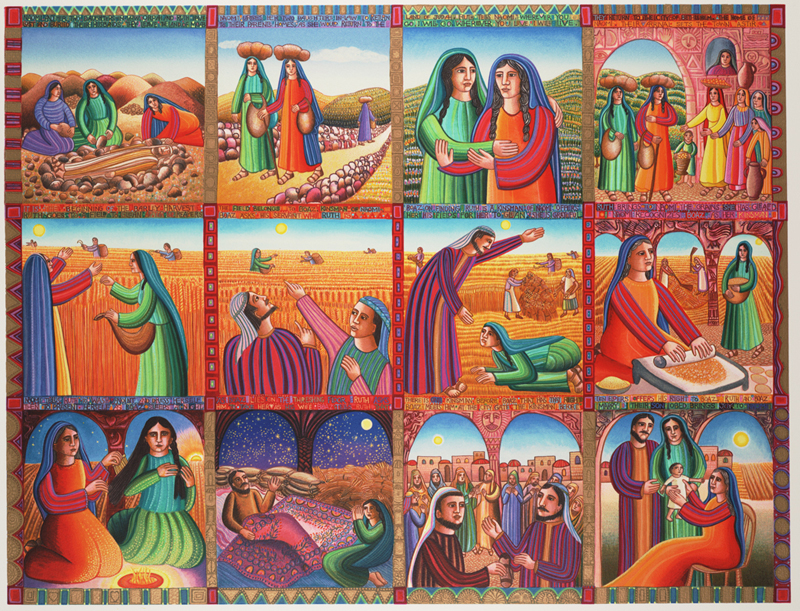
The Story of Ruth by John August Swanson
3:1 Naomi, her mother-in-law, said to her, “My daughter, I need to seek some security for you, so that it may be well with you. 2 Now here is our kinsman Boaz, with whose young women you have been working. See, he is winnowing barley tonight at the threshing floor. 3 Now wash and anoint yourself, and put on your best clothes and go down to the threshing floor; but do not make yourself known to the man until he has finished eating and drinking. 4 When he lies down, observe the place where he lies; then, go and uncover his feet and lie down; and he will tell you what to do.” 5 She said to her, “All that you tell me I will do.”
4:13 So Boaz took Ruth and she became his wife. When they came together, the Lord made her conceive, and she bore a son. 14 Then the women said to Naomi, “Blessed be the Lord, who has not left you this day without next-of-kin; and may his name be renowned in Israel! 15 He shall be to you a restorer of life and a nourisher of your old age; for your daughter-in-law who loves you, who is more to you than seven sons, has borne him.” 16 Then Naomi took the child and laid him in her bosom, and became his nurse. 17 The women of the neighborhood gave him a name, saying, “A son has been born to Naomi.” They named him Obed; he became the father of Jesse, the father of David.
*************
                When Naomi decided to return home from Moab after the death of her husband and sons, Ruth the Moabite wife of one of her two sons decided to follow Naomi to Judah, making Naomi’s people her people, and Naomi’s God her God. Making this choice wasn’t easy, as the two women had no guarantee of support. Naomi might find some support as she was older and might find family who would take her in. Ruth, however, presented a problem. Not only was she as a Moabite a foreigner, she was a much younger woman. In other words, she might live on for some time after Naomi. Why might this be a problem? Remember there wasn’t any form of Social Security or Medicare. The only safety net was the family, and if the family couldn’t provide you were on your own. Ruth’s only hope was marriage, but who would be willing to marry her? After all, she was a foreigner. Naomi had one possibility up her sleeve. There was a custom, even a law, which said that one’s nearest kinsman had a responsibility to marry a woman who had lost her husband and produce an heir for that person. It’s called Levirate marriage.  It may be a foreign practice to us, much like arranged marriages are in the West. We prefer to make our own matches (with the help of computers or not). For Naomi, however, this seemed to be the only way of providing for Ruth and herself. So, she began plotting a strategy for Ruth. That strategy is in play in this reading that excerpts parts of chapters 3 and 4 of Ruth.
                In this story, we learn that Naomi has a relative named Boaz. He seems to be wealthy. He’s not married. He doesn’t have children. He’s a close relative. In other words, he’s available, and fits the criteria. By the time we get to chapter 3, Boaz already seems interested in the welfare of Ruth and Naomi, allowing Ruth the opportunity to glean from within the fields and not just the edges. He makes sure the other men do not bother Ruth when she comes to the fields. Remember a lone woman would be vulnerable (chapter 2). It would seem odd that he didn’t know Naomi and Ruth’s story, since Bethlehem is not a large town. He may have already known that he was among the nearest kinsmen, if not the closest. And, perhaps he was interested in settling down and found Ruth a possible mate. That’s just reading between the lines, but it’s possible.
                The first excerpt, from chapter 3, finds Naomi directing Ruth to prepare herself to go a-courting. She has Ruth wash up, put on her best clothes, and then go out to the threshing floor and wait until Boaz goes to sleep. Then, while sleeping, she is to uncover his feet and then lie down next to him. Boaz will then tell her what to do next. I should note that uncovering feet is a euphemism. Naomi has a different body part in mind, but by doing this, Ruth will signal to Boaz that she is willing to be his wife (if he’s willing). Naomi is putting Ruth in a vulnerable position but seems to know what she’s doing. All of this seems well choreographed, as if this is a normal form of courtship. As for modern day application, I wouldn’t recommend it. Apparently, as we see in chapter 4, it works. Boaz marries Ruth. They have a son, named Obed, who is the father of Jesse, who is the father of David. The Gospels pick this up, of course, in the genealogies of Jesus, though only Matthew mentions Ruth, along with Rahab and Tamar (Matt. 1:1-17). This final piece isn’t in the book of Ruth, of course, but it’s worth mentioning, because Matthew thinks it’s important information.
 
                All of this is a rather nice story about the deliverance of two women in difficult circumstances. As the women of the village declared to Naomi:

Blessed be the Lord, who has not left you this day without next-of-kin; and may his name be renowned in Israel! 15 He shall be to you a restorer of life and a nourisher of your old age; for your daughter-in-law who loves you, who is more to you than seven sons, has borne him.

All’s well that ends well!  But is there more to this than meets the eye?
                Ron Allen and Clark Williamson remind us that the Book of Ruth, though the story takes place during the time of the Judges, was postexilic. It would have appeared at a time when the Jewish community was having serious conversations about marrying Gentiles. Both Ezra and Nehemiah, which focus on the period of rebuilding Judah after the return to Jerusalem by the exiles, call for Jews to divorce their non-Jewish spouses. While it may seem harsh to us, these calls for separation emerged at a time when the Jewish people were reforming their community. Allen and Williamson write: “In the days of Ezra and Nehemiah, Jewish leaders sought to restore the vitality of the community. Intermarriage may have led some Jewish people to bring foreign gods and practices into Jewish homes, and some in the community sought to rid the community of such compromises with the culture and thereby to invoke God’s blessing on the restoration of the land” [Preaching theOld Testament, pp. 200-201]. Contextually, it’s understandable. But not all were of the same opinion. Ruth offers an alternative viewpoint and connects Ruth and Naomi to Israel’s greatest king.
                Allen and Williamson suggest that Ruth offers a challenge to this restriction on intermarriage in two ways. First, we’re told that Ruth demonstrated covenant loyalty (hesed) to Naomi, and thus to Israel. You might say she converted. Secondly, Boaz is an exemplary Israelite. Besides, “how could the community forbid relationship with the people of David’s grandparent” (Preaching the Old Testament, p. 201). As we consider this passage today, we might think here in terms of the challenges and possibilities of intermarriage. On the racial/ethnic side, the challenges are different than the religious ones. In one sense the religious challenge was resolved here by conversion—Ruth committed herself to Naomi’s God and to her people. To do so meant that she would have put aside her former religious beliefs. Granted, in the ancient world this worked much differently than it does today in a pluralistic culture like ours.
While Ruth does offer an opportunity for intermarriage, it is in the context of conversion. Marvin Sweeney offers some clarity here:

Although Ezra– Nehemiah stipulates no procedure for conversion of a foreigner to Judaism, there is no indication in the book that foreigners who adhere to YHWH were an issue. Again, the book of Ruth steps in to fill the gap by specifying how a foreigner would become a part of Israel, specifically by swearing adherence to YHWH and living as part of the nation of Israel as Ruth does in Ruth 1: 16– 18. Furthermore, Ruth is also in dialog with Num 25: 1– 9, which portrays the apostasy of the men of Israel with the women of Moab. Rather than viewing Moabite women monolithically as a source of apostasy, Ruth counters the image of Num 25: 1– 9 by stipulating that Moabite women can adhere to YHWH. [Sweeney, Marvin A. Tanak: A Theological and Critical Introduction to The Jewish Bible (Kindle Locations 11955-11960). Fortress Press. Kindle Edition.]

I believe that Allen and Williamson would concur with Sweeney on this, that Ruth isn’t offering a blanket response on intermarriage, but might be filling in a gap in the Ezra-Nehemiah trajectory.
                Whenever we engage conversations like this, it is always important that we do not fall into anti-Semitic and anti-Jewish paradigms, which paint Judaism in negative light to paint our own faith in better light. Intermarriage without conversion is always a challenging idea. Yes, it’s becoming common in our day, but it is not without its problems, especially when it comes to the children. Living in pluralistic America offers the opportunity, but we should beware of offering a cafeteria form of religion, that doesn’t affirm the integrity of religious traditions. Christians, Muslims, and Jews share certain features, but they also have significant differences that can’t be easily washed away.
                What Ruth can do, however, is open a conversation about the role of religion in family and community life. To be uncomfortable with religious intermarriage doesn’t make one a bigot. At the same time, our views shouldn’t be left unexamined. What is the issue? Is it spiritual or is it something else? Remember that Ruth was a “foreigner,” but she became a full member of the community and that is what was deemed most important. In the end, everyone was blessed!

Picture attribution: Swanson, John August. Story of Ruth, from Art in the Christian Tradition, a project of the Vanderbilt Divinity Library, Nashville, TN. http://diglib.library.vanderbilt.edu/act-imagelink.pl?RC=56561 [retrieved November 5, 2018]. Original source: http://www.JohnAugustSwanson.com – copyright 1991 by John August Swanson.

Robert Cornwall is the Pastor of Central Woodward Christian Church in Troy, Michigan. He holds the Ph.D. in Historical Theology from Fuller Theological Seminary. He is the author of a number of books including Out of the Office (Energion, 2017), Marriage in Interesting Times (Energion, 2016), and Freedom in Covenant (Wipf and Stock, 2015) and blogs at Ponderings on a Faith Journey.

Your People Are My People – Lectionary Reflection for Pentecost 24B (Ruth 1)

Your People Are My People – Lectionary Reflection for Pentecost 24B (Ruth 1)

Ruth 1:1-18 New Revised Standard Version (NRSV)
In the days when the judges ruled, there was a famine in the land, and a certain man of Bethlehem in Judah went to live in the country of Moab, he and his wife and two sons. The name of the man was Elimelech and the name of his wife Naomi, and the names of his two sons were Mahlon and Chilion; they were Ephrathites from Bethlehem in Judah. They went into the country of Moab and remained there. But Elimelech, the husband of Naomi, died, and she was left with her two sons. These took Moabite wives; the name of the one was Orpah and the name of the other Ruth. When they had lived there about ten years, both Mahlon and Chilion also died, so that the woman was left without her two sons and her husband.
 
Then she started to return with her daughters-in-law from the country of Moab, for she had heard in the country of Moab that the Lord had considered his people and given them food. So she set out from the place where she had been living, she and her two daughters-in-law, and they went on their way to go back to the land of Judah. But Naomi said to her two daughters-in-law, “Go back each of you to your mother’s house. May the Lord deal kindly with you, as you have dealt with the dead and with me. The Lord grant that you may find security, each of you in the house of your husband.” Then she kissed them, and they wept aloud. 10 They said to her, “No, we will return with you to your people.” 11 But Naomi said, “Turn back, my daughters, why will you go with me? Do I still have sons in my womb that they may become your husbands? 12 Turn back, my daughters, go your way, for I am too old to have a husband. Even if I thought there was hope for me, even if I should have a husband tonight and bear sons, 13 would you then wait until they were grown? Would you then refrain from marrying? No, my daughters, it has been far more bitter for me than for you, because the hand of the Lord has turned against me.” 14 Then they wept aloud again. Orpah kissed her mother-in-law, but Ruth clung to her.
 
15 So she said, “See, your sister-in-law has gone back to her people and to her gods; return after your sister-in-law.” 16 But Ruth said,
 
“Do not press me to leave you
or to turn back from following you!
Where you go, I will go;
where you lodge, I will lodge;
your people shall be my people,
and your God my God.
17 Where you die, I will die—
there will I be buried.
May the Lord do thus and so to me,
and more as well,
if even death parts me from you!”
 
18 When Naomi saw that she was determined to go with her, she said no more to her.
*****************
                The story of Ruth and Naomi is powerful. Here are two women, left adrift by the deaths of their husbands. One is from the Hebrew people and the other a Moabite. We shouldn’t overlook a third woman, Orpah, Naomi’s other daughter-in-law. Orpah chose to return home at the urging of Naomi, who was concerned about what the future held. Orpah is sometimes vilified for her choice, but it was probably a good decision, especially considering where the story leads. While we can’t forget Orpah, this is the story of Naomi and Ruth
The story of Ruth begins with an act of migration. A famine has hit the land of Judah, forcing Elimelech, his wife Naomi, and two sons to seek a more secure life in the neighboring land of Moab. Historically Moabites and Israelites were enemies, so this was a difficult decision. But they immigrated to Moab and apparently found enough welcome to make their home in this foreign land. Their story is a story that has been told and retold down through the millennia. As for the family, the two sons took wives from among the Moabites, an act that might have gotten them in trouble back home. But, it appears they were planning on staying put for the long term. Then tragedy strikes. The three men die suddenly, leaving three women without any support. Ruth and Orpah probably made a difficult decision to marry outside the community, and probably cut themselves off from family (just speculating). As for Naomi, she had family back home in Judah, and so she decides to return. But what about the two daughters-in-law?
We see in the text that there is deep affection among the three women. They want to go with Naomi. Naomi is gratified by this show of affection, but she’s not sure that she can provide for them back in Judah. It would be best if they returned home, made amends if necessary, and hopefully find new husbands who could provide for them. At least they would be with their own people. Orpah, tearfully decides to follow this path. Ruth, on the other hand, refuses to return home. She is ready to share Naomi’s fate, come what may.
The reading for this week is the first of two drawn from Ruth. The story might be brief, but it does a message that resonates with our time for it speaks of immigrants and the challenges they face. People migrate for various reasons, but most are hoping to find something better than what was left behind. It might be economic, or it might be fear of violence and persecution. There might be salvation in the foreign land, but one might not find a welcome there. Migrants might contribute to the community, but they might also soil it.
 
As we hear the story of Ruth, perhaps the stories of modern migrants and refugees come to mind. We know people are on the move. There is that caravan moving across Mexico, composed of men, women, and children who have left Central America seeking safety and perhaps a better life in the north. There are the refugees fleeing wars in Iraq and Syria and Yemen. Even people in our own country have been moving from one region to another hoping to find a better life. It’s easy to vilify migrants. It’s commonplace to fear the stranger. Yet, if we look back through our own histories we will probably see evidence of migration. My ancestors came here from various places in Europe. Most came before there were immigration offices and quotas. Did they come legally? In answer, I would say, there was no policy on legal or illegal. They came, they settled, and became part of the fabric of society. If we’re to understand Ruth, we need to keep this in mind.
Naomi was insistent that the two women return to their families. She makes it clear that she couldn’t provide them the security of a husband. Without a husband they would be without stability.  The future was uncertain for Naomi, who wasn’t marriage material. All she could hope for was the mercy of her family, whom she and her husband had left behind years before. She might not receive a warm welcome, and the daughters-in-law even less of one. After all, they were foreigners, about whom they had been warned. Ruth, however, won’t go back. She insists on following her mother-in-law, no matter what happened. She was all in!
Ruth’s response is expressed through song. She sings: “Where you go, I will go; where you lodge, I will lodge.” Whatever the future holds for you, she tells Naomi, I am willing to share it. Not only that, but “your people will be my people.” And where you’re buried, I’ll be buried. Ruth is so committed, she’s willing to sacrifice everything. This is love, that is expressed in spite of the challenges, but also because of her love of her mother-in-law, so she’s willing to come alongside here and share her future. The remainder of the book tells that story.
There are several ways of engaging this passage. We could speak of the relationship between family. Sometimes we make light of in-law relationships, but this one is stronger than most “blood” relations. Considering the times, I hear in it a word about migration and welcoming strangers, who make choices they hope will better their lives. My ancestors did this. They came from Europe, mostly the British Isles, hoping to find a better life. Those who migrate today do so for the same reasons, only we have made the process more difficult (and costlier). The story of Ruth and Naomi might offer us a path forward, so that we might welcome the strangers in our midst. When we hear immigration stories, may we hear with hearts informed by God’s love and grace the difficult choices made along the way. When Ruth tells Naomi “your people will be my people” may we hear in these words a commitment not to assimilate so as to lose one’s identity, but to come a contributing member of the community, as Ruth will do.  Of course, this has important implications for the stories that follow, for Ruth is counted among the ancestors of David and of Jesus. You never know who is in your family tree! They too may have once been strangers in a strange land.

Picture attribution: Chagall, Marc, 1887-1985. Ruth and Naomi, from Art in the Christian Tradition, a project of the Vanderbilt Divinity Library, Nashville, TN. http://diglib.library.vanderbilt.edu/act-imagelink.pl?RC=55328 [retrieved October 29, 2018]. Original source: http://www.flickr.com/photos/clicks2006/4150846200/.

10646937_10204043191333252_4540780665023444969_nRobert Cornwall is the Pastor of Central Woodward Christian Church in Troy, Michigan. He holds the Ph.D. in Historical Theology from Fuller Theological Seminary. He is the author of a number of books including Out of the Office (Energion, 2017), Marriage in Interesting Times (Energion, 2016), and Freedom in Covenant (Wipf and Stock, 2015) and blogs at Ponderings on a Faith Journey.