Category: revised common lectionary

Come to the Waters of the Lord – Lectionary Reflection for Lent 3C (Isaiah 55)

Isaiah 55:1-9 New Revised Standard Version (NRSV)
 
55 Ho, everyone who thirsts,
come to the waters;
and you that have no money,
come, buy and eat!
Come, buy wine and milk
without money and without price.
Why do you spend your money for that which is not bread,
and your labor for that which does not satisfy?
Listen carefully to me, and eat what is good,
and delight yourselves in rich food.
Incline your ear, and come to me;
listen, so that you may live.
I will make with you an everlasting covenant,
my steadfast, sure love for David.
See, I made him a witness to the peoples,
a leader and commander for the peoples.
See, you shall call nations that you do not know,
and nations that do not know you shall run to you,
because of the Lord your God, the Holy One of Israel,
for he has glorified you.
Seek the Lord while he may be found,
call upon him while he is near;
let the wicked forsake their way,
and the unrighteous their thoughts;
let them return to the Lord, that he may have mercy on them,
and to our God, for he will abundantly pardon.
For my thoughts are not your thoughts,
nor are your ways my ways, says the Lord.
For as the heavens are higher than the earth,
so are my ways higher than your ways
and my thoughts than your thoughts.
*************
                The prophet whom the majority of scholars call Second Isaiah spoke words of hope to a people living in exile. The words of Second Isaiah are found in chapters 40 to 55, which means this reading for the Third Sunday of Lent comes from the closing chapter of that “book” (in the remainder of this reflection I will simply refer to the prophet as Isaiah). To live in exile is to live a life of uncertainty. You don’t have full control over your lives. The land on which you live is not your own. It can be taken from you in a moment’s time, along with sources of food, shelter, and employment. Though not mentioned here, Isaiah’s audience may remember that Jacob went down to Egypt with the promise of refuge from famine, but in the end the people were enslaved. At the same time, exile can be a time of soul-searching and self-discovery. Such is the case with the nation of Judah. In many ways the exile was a moment of refining the nation’s identity and its relationship with its God.
For a people who defined their relationship with God in terms of a covenant, exile proved to be a reminder that YHWH is not a geographically bound deity. God was with them in the land to which they longed to return, but God was also with them in exile. It is this God who calls out to them, inviting all who thirst to come to the waters and be refreshed.  Indeed, the invitation goes out to those who lack resources, inviting them to come and share in God’s abundance. Come and drink and eat and be filled. Indeed, come and drink even if you don’t realize you’re thirsty.  
 
                Lent is usually understood as a season of fasting not feasting, but Isaiah invites us to share in God’s abundance. This bounty Isaiah speaks of is both material and spiritual in nature. In both Jewish and Christian theology, the spiritual and the material are not separate realities. There is a temptation to embrace a spiritualized version of the faith, but the message of the Gospel is that God became incarnate. That is, the Word of God took on flesh and dwelt among us (John 1:14). The early Christians resisted attempts to spiritualize the faith. They wanted to keep the two together.  
 
Asceticism is often product of an overly spiritualized faith. The body, the material, is considered a hindrance to the spiritual. So we should suppress it. Or course it is not inappropriate to fast. Moses fasted and so did Jesus. But Jesus was also known for sharing table, which means he wasn’t an ascetic. We may choose to spend Lent as a season of fasting, as a way of reflecting more clearly on our relationship with the living God, but as we do so we hear an invitation to join in the feast. Come and drink and eat and enjoy rich food, even if you do not have the means to pay for the meal. Come and join the feast. While you partake of this feast, lend your ear to hear the word of the Lord. Ultimately, it is this word that will be truly filling.
                The word given by the prophet is that God is faithful to God’s covenant. In this case the covenant partner is David, which hearkens back to the monarchy, when Israel dwelt secure in the land. By reflecting on David, we see the hope that exile will give way to the security that the Land provides. But the return to the security that the Land provides, the security that David symbolized, will come only terms set by God. Indeed, any glory that shall come to the nation will come from God. But before we get there, we need to acknowledge that we are thirsty people. Once we do this, we’ll be in a position to seek the LORD while the LORD can be found.
It is also important to remember, as Isaiah reminds us, that God’s ways are not our ways. God’s thoughts are not our thoughts. In other words, we are not God. We cannot control God. We cannot even define God in God’s full nature. We see and hear and experience only what God has revealed. The good news is that God has not left us without a witness. Indeed, Israel itself, even in exile, was a witness to God’s faithfulness.
The message of Isaiah 55 during this Lenten season, with its invitation to come to the waters and drink, is call to find refreshment, in the presence of God. We are physical beings, who require physical sustenance. But as Jesus reminds us, we do not live by bread alone (Lk. 4:4). There is more than one form of thirst, as Jesus reminded the Samaritan woman, with whom he spoke of the living water, that if one drank of, would never thirst. This is the water of eternal life (Jn. 4:7-15). Such things are, of course, beyond our full comprehension. To receive the abundance that is God’s there is need of faith, and faith involves trust. Trust requires a certain level of knowledge. We don’t just trust anyone. We trust those who have demonstrated reason to be trusted. Such is the case for Judah. It is the reason the story of the ancestors continued to be told. Such is true for us. We put our faith in God who is revealed in the person of Jesus, who by his life, death, and resurrection offers us a word off assurance that God is faithful.  So, come to the waters, and drink freely of living water.    



Standing On the Promises – Lectionary Reflection for Lent 2C (Genesis 15)

Vincent Van Gogh, Starry Night
Genesis 15:1-18 New Revised Standard Version (NRSV)

15 After these things the word of the Lord came to Abram in a vision, “Do not be afraid, Abram, I am your shield; your reward shall be very great.” But Abram said, “O Lord God, what will you give me, for I continue childless, and the heir of my house is Eliezer of Damascus?” And Abram said, “You have given me no offspring, and so a slave born in my house is to be my heir.” But the word of the Lord came to him, “This man shall not be your heir; no one but your very own issue shall be your heir.” He brought him outside and said, “Look toward heaven and count the stars, if you are able to count them.” Then he said to him, “So shall your descendants be.” And he believed the Lord; and the Lord reckoned it to him as righteousness. 

Then he said to him, “I am the Lord who brought you from Ur of the Chaldeans, to give you this land to possess.” But he said, “O Lord God, how am I to know that I shall possess it?” He said to him, “Bring me a heifer three years old, a female goat three years old, a ram three years old, a turtledove, and a young pigeon.” 10 He brought him all these and cut them in two, laying each half over against the other; but he did not cut the birds in two. 11 And when birds of prey came down on the carcasses, Abram drove them away. 

12 As the sun was going down, a deep sleep fell upon Abram, and a deep and terrifying darkness descended upon him. 13 Then the Lord said to Abram, “Know this for certain, that your offspring shall be aliens in a land that is not theirs, and shall be slaves there, and they shall be oppressed for four hundred years; 14 but I will bring judgment on the nation that they serve, and afterward they shall come out with great possessions. 15 As for yourself, you shall go to your ancestors in peace; you shall be buried in a good old age. 16 And they shall come back here in the fourth generation; for the iniquity of the Amorites is not yet complete.” 

17 When the sun had gone down and it was dark, a smoking fire pot and a flaming torch passed between these pieces. 18 On that day the Lord made a covenant with Abram, saying, “To your descendants I give this land, from the river of Egypt to the great river, the river Euphrates.


*****************
                A popular hymn of the church, at least in days gone by, invites to sing boldly:

Standing, standing, standing on the promises of God my savior; standing, standing. I’m standing on the promises of God.  [R. Kelso Carter, 1891].

Scripture declares that Abraham stood on the promises of God, and it was credited to him as righteousness. Whether it is Paul in Romans 4 or the author of Hebrews 11, Abraham is lifted up as an example of a person who stood strong in his faith despite the lack of evidence to support that trust. Abraham simply stands on the promises of God, and in time his faith, his trust, bears fruit.

                The reading from Genesis 15 marks another conversation about covenant. At this point in the story, Abram’s name has yet to be changed. The promise is made, again, that Abram will have many descendants, beyond the ability to count. This is a challenging proposition, as to this point Abram’s only heir is a slave. He has no children of his own, and God makes it clear that the promise will go through Abram’s descendants. God is intending to work through Abram’s biological descendants, who will be as uncountable as the stars in the sky. Despite everything, we’re told that Abram believed God, and this was credited to him as righteousness.


Abram will stand on the promises of God, but not without a word of lament. In fact, the chapter begins with God telling Abram not to be afraid, because God has his back. Abram responds, well that’s great, but what have you done for me lately? (my paraphrase). Abram is, after all, still childless and has as his heir a slave (regarding slavery, we should always remember that while widespread in the ancient world and not racially rooted, references to slaves in the Bible were used to defend modern slavery). He’d followed God’s lead from his homeland and still nothing.


I appreciated what Rolf Jacobson writes concerning the power of lament that’s present in this passage and in the rest of Scripture.

In the Bible, God does not desire followers who are meek and mild, compliant and quiet—at least not in relationship to God. God wants sufferers who fight back. God invites us to own and be in touch with the deepest hurts and brightest hopes in our souls. For Abram, this hope was to have a child.  And after all, the Lord has promised.  

Abram will stand on this promise, but not before making clear that God understood what is involved in a truly covenant relationship.


                Having heard Abram’s lament, God says to Abram: “I am the Lord who brought you from Ur of the Chaldeans, to give you this land to possess.” In response to Abram’s question as to how he will know this to be true, God proposes a ritual to seal the deal. The directions are simple. Abram is told by God: “Bring me a heifer three years old, a female goat three years old, a ram three years old, a turtledove, and a young pigeon.” Abram does as he’s told, cutting each of the sacrifices in half, with the exception of the two birds. He lays them out as instructed and waits for God to act.


                The Revised Common Lectionary omits verses 13 to 16, though it retains verse 12, which seems to introduce verses 13 to 16. In verses 12 to 16, Abram falls asleep and has a bad dream. Though he is told he will die peacefully and have many descendants, he’s also told that his descendants will be forced to live in exile and experience slavery for four hundred years, though in the end, they will be blessed with an abundance of gifts. If verses 13-16 are omitted, it would be probably be best to omit verse 12, as there is some discontinuity between verses 12 and 17. On the other hand, there is a message here that is worth remembering—the covenant will be fulfilled, but not without times of trouble.

               If we choose to omit verses 12-16, we can move from the ritual in verse 11 to the culmination of the conversation about covenant in verse 17, we watch as the sun sets and a torch passes between the sacrificed animals, as a sign of divine acceptance of this offering of Abram. With that God makes the covenant with Abram, promising: “To your descendants I give this land, from the river of Egypt to the great river, the river Euphrates.” It is worth noting that God requires nothing of Abram at this point. Normally, covenants involve mutual declarations and actions, but nothing is required of Abram. Abram does do anything to obligate himself. It is YHWH who self-obligates. It’s YHWH who makes the promises.

               Of course, this is not the end of the story. The author of Genesis will revisit this issue. As the story continues, Abram and Sarai will try to fulfill this promise through a surrogate. An heir is produced—Ishmael—and then rejected. Finally, Sarai will give birth in old age to a son, Isaac, who will be the accepted heir (at least in the biblical story, the Quran will hold on to Ishmael). While the promise of an expansive realm is made, Israel’s boundaries never reached the extent promised. Nonetheless, the descendants of Abram can claim that they are the fruit of God’s promise to Abram. They are the covenant people, though the promise isn’t repeated here, Abram’s descendants are to be a blessing to the nations (Gen. 12:1-3). What this covenant promise means will be a subject of ongoing interpretation, as we see in the way in which the New Testament writers make use of God’s covenant with Abraham. The covenant made in Jesus is clearly rooted in the covenant made with Abraham.


              The question for us has to do with the nature of our faith. Lent gives us the opportunity to reflect on the nature of our faith journey. In what ways do we resist the promises of God, and in what ways do we cooperate. As the Psalmist implies, there is the possibility of living in fear, especially when enemies assail us. As with the promise made to Abram, we can take comfort in the presence of the Lord. After all, as the Psalmist declares: “The Lord is my light and my salvation; whom shall I fear?” (Ps. 27:1). With that old hymn, which I took note of at the beginning, we can stand with Abram on the promises of God. 


Picture Attribution:  Gogh, Vincent van, 1853-1890. Starry Night, from Art in the Christian Tradition, a project of the Vanderbilt Divinity Library, Nashville, TN. http://diglib.library.vanderbilt.edu/act-imagelink.pl?RC=55396 [retrieved March 11, 2019]. Original source: http://commons.wikimedia.org/wiki/File:Van_Gogh_-_Starry_Night_-_Google_Art_Project.jpg.


First Fruits of Liberation – Lectionary Reflection for Lent 1C (Deuteronomy 26)

Deuteronomy 26:1-11 New Revised Standard Version (NRSV)

26 When you have come into the land that the Lord your God is giving you as an inheritance to possess, and you possess it, and settle in it, you shall take some of the first of all the fruit of the ground, which you harvest from the land that the Lord your God is giving you, and you shall put it in a basket and go to the place that the Lord your God will choose as a dwelling for his name. You shall go to the priest who is in office at that time, and say to him, “Today I declare to the Lord your God that I have come into the land that the Lord swore to our ancestors to give us.” When the priest takes the basket from your hand and sets it down before the altar of the Lord your God, you shall make this response before the Lord your God: “A wandering Aramean was my ancestor; he went down into Egypt and lived there as an alien, few in number, and there he became a great nation, mighty and populous. When the Egyptians treated us harshly and afflicted us, by imposing hard labor on us, we cried to the Lord, the God of our ancestors; the Lord heard our voice and saw our affliction, our toil, and our oppression. The Lord brought us out of Egypt with a mighty hand and an outstretched arm, with a terrifying display of power, and with signs and wonders; and he brought us into this place and gave us this land, a land flowing with milk and honey. 10 So now I bring the first of the fruit of the ground that you, O Lord, have given me.” You shall set it down before the Lord your God and bow down before the Lord your God. 11 Then you, together with the Levites and the aliens who reside among you, shall celebrate with all the bounty that the Lord your God has given to you and to your house.

**************
          We have begun the Lenten journey. In the reading from the Gospel, Jesus has begun his sojourn in the Wilderness, where he will be tested (Luke 4:1-11). The people of Israel had been a wandering people and they two were tested.
          The people of Israel wandered in the wilderness for forty years. That is the scriptural message, whether we take it literally or not. As the people of Israel draw near the river that separates them from the Promised Land, they are given instructions by God through Moses. The word we hear in Deuteronomy 26 envisions the people settling in, putting down roots, planting crops, and then harvesting the crops. With this assumption in mind, the call for first fruits is given. When the time comes to beginning harvesting the crops, the people are to take the first fruits of that harvest, put it in a basket and then bring it to the designated place where the priest will receive it. In doing this the people honor the God who liberated them from bondage, the God who was with them throughout the years of wandering and is now with them as they settle into life in the Land.
As we begin the Lenten journey, might we hear this word that comes to us from the Hebrew Bible as a call to worship and a call to stewardship? There is a liturgy involved, which reminds us that stewardship is an act of worship and not merely the means of paying bills. While it is a call to stewardship, it is also a call to share the proceeds of the harvest with others, most specifically the Levites (priestly class) and the “aliens who reside among you,” the bounty that God provides. Stewardship, it seems has something to do with sharing. It’s a concept we were supposed to learn in kindergarten, if not before, but a concept that is easily forgotten. Thus, instructions must be given.
As the offerings are brought to the altar, the people make a declaration of faith. They are called upon to remember from whence they came. Who am I? That is a question that continue to get asked. It’s a question that leads us to do genealogical work and check our DNA. In this confession, the people acknowledge that “A wandering Aramean is my ancestor.” The people of Israel, having finally found a place to settle in, are reminded by this confession that they have been a nomadic people. Their DNA is rooted in the tribes and people of Aram, which is the land of Syria and Southeastern Turkey.
So, who is this ancestor? Is it Abraham and Sarah? Yes. Is it Isaac and Rebecca? Yes. Is it Jacob and his family? Yes. In fact, it’s Jacob and his family who went down to Egypt and settled, only to discover that there was to be no security in that land. The initial benefits of living in Egypt proved fleeting. In time the wandering Aramean and family, though small in number, became a great nation. That led the Egyptians to feel threatened. They feared that a time would come when this tribe could gain enough strength to change the nature of Egyptian society. Does that sound familiar? Could it be a reason why some wish to build walls to keep “those people” from adding to their numbers? Is it a reason why there is a growing resistance to welcoming refugees to our shores? One scholar has even translated the opening declaration as “A wandering Syrian refugee is my ancestor.” So, as we contemplate this reading, could there be something of Egypt in our souls?
The confession remembers that Jacob’s descendants were treated harshly. They were sentenced to hard labor. When the descendants of this wandering Aramean cried out to God, their voices were heard. God saw the people being oppressed, and so God acted to liberate the people, bringing them into the Promised Land. Now, it is time to honor that God by bringing offerings to God as a sign of gratitude.
This reading from Deuteronomy speaks of a land that will be filled with milk and honey, a land of abundance. The confession serves as a reminder that the people of Israel are themselves immigrants and descendants of immigrants. They may have found a home, where they can settle in, put down roots, plant crops, but it is not a land to be possessed. It is a land to be received as a gift of God, to be shared. William Greenway writes of this concern: “by anchoring Israelite identity in an immigrant, a ‘wandering Aramean’; by reminding the Israelites that they were themselves poor, marginalized, oppressed strangers in a strange land; and by urging them to share their bounty ‘together with the Levites and the aliens who reside among you’ (so, no ritual or ethnic sectarianism; all attend to the basic needs of and break bread with all).” [Joel B. Green, Thomas G. Long, Luke A. Powery & Cynthia L. Rigby. Connections:A Lectionary Commentary for Preaching and Worship: 2 (Kindle Locations 1143-1146)].  Do we remember from whence we came? Do we come to the altar bearing expressions of first fruits, or what is left over from our abundance? Are willing to share, and what does that mean?
As you read this confession, you may notice that the person is to speak this confession as if experiencing the whole. This is a community confession that identifies the person with the community, and not just the present community, but the historical community. One’s current identity is rooted in one’s ancestry. What happened to Jacob and his descendants matters. We who are part of the family of Jesus, by adoption, have been brought in to this ancient tribe. We too are called to bring first fruits and acknowledge that our ancestors are wanderers, and thus we too should tread lightly on the land that is not ours but belongs to God. With this reminder that we are in many ways, spiritually, on journeys that involve a lot of wandering. We may have settled in and put down roots, but it is important that we continue to honor the one who liberated us, and we do this by being good stewards of God’s abundance.


Reflecting God’s Glory — Lectionary Reflection for Transfiguration Sunday (Exodus 34)

Exodus 34:29-35 New Revised Standard Version (NRSV)
29 Moses came down from Mount Sinai. As he came down from the mountain with the two tablets of the covenant in his hand, Moses did not know that the skin of his face shone because he had been talking with God. 30 When Aaron and all the Israelites saw Moses, the skin of his face was shining, and they were afraid to come near him. 31 But Moses called to them; and Aaron and all the leaders of the congregation returned to him, and Moses spoke with them. 32 Afterward all the Israelites came near, and he gave them in commandment all that the Lord had spoken with him on Mount Sinai. 33 When Moses had finished speaking with them, he put a veil on his face; 34 but whenever Moses went in before the Lord to speak with him, he would take the veil off, until he came out; and when he came out, and told the Israelites what he had been commanded, 35 the Israelites would see the face of Moses, that the skin of his face was shining; and Moses would put the veil on his face again, until he went in to speak with him.
**********************
                It is Transfiguration Sunday, which is a day that calls us to reflect on Jesus’ ascent to the top of the mountain, taking with him Peter, James, and John. When the group arrives on the mountain top, Jesus meets with Moses and Elijah, whom many assume represent the Law and the Prophets. As the conversation continues, Jesus begins to glow, the divine radiance shining forth. As they watch this scene unfold, Jesus’ companions are overwhelmed by what they see. You might say that they are in awe of what they see. Not knowing what else to do, they ask Jesus for permission to erect tents for the three figures. As they ask this question, Moses and Elijah disappear from the scene, leaving Jesus alone with his disciples. At that moment a voice from the heavens rings out declaring, much like at his baptism: ““This is my Son, my Chosen; listen to him!” (Lk. 9:28-36).
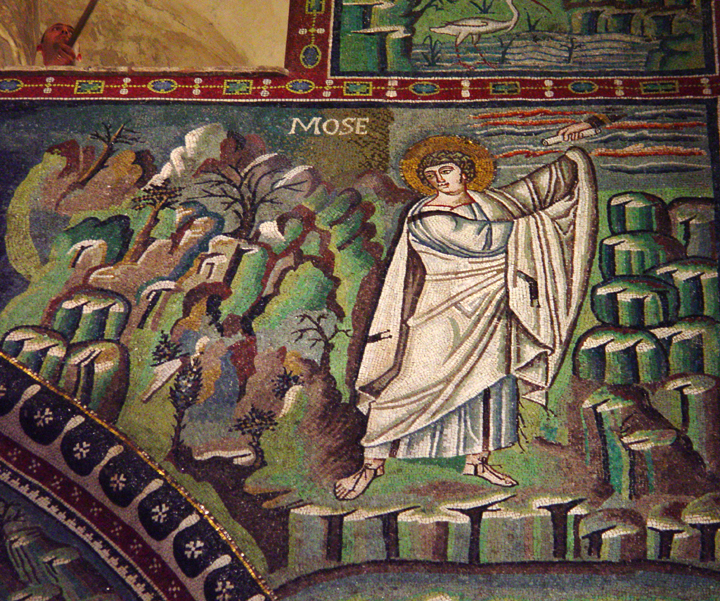
                The first reading from the Scriptures takes us to Exodus 34. Here again we go to the mountain top, and when we do, we see another divine encounter. In this scene Moses has gone up to the top of Mount Sinai to speak with YHWH. This is the second time he has done this. When we pick up the story, Moses is descending the mountain, carrying with him the two tablets that define the covenant God desires to make with Israel.  This is the second set of tablets, since Moses broke the first set after discovering that Aaron and the people had created a golden calf while he was on the mountain speaking with God (Ex. 32). This is the second opportunity for Israel to make covenant with YHWH, which occurs after Moses intercedes with God (Ex. 33:12-23). Once again Moses spends forty days and forty nights on the mountain, neither eating nor drinking. Communion with God, apparently, was sufficient (Ex.34:27-28). Having been on the mountain for forty days and nights, it’s time for Moses to return to where Israel camped out in Sinai.
When he arrives with the tablets in hand, his face shone with the glory of God, only he did not know this. That is, until he realized that Aaron and Israel were afraid to approach him because his face shone so brightly. In time he was able to convince them to come and hear his words, words given to him by God on the mountain. When he was finished, he put a veil over his face, until his next visit with YHWH. The fact that his face reflected the glory of God’s presence was a sign to the people that God was with them, and that God was guiding them through the auspices of Moses. The moment of transfiguration described in the Gospels, is an unveiling of God’s presence in the person of Jesus. The three disciples were drawn into the divine presence and saw how Jesus radiated with that presence. As for Moses, he reflected the divine presence by his countenance. It was a bit off-putting to the people, who didn’t know what to make of it. Thus, because the radiance of his face was so great, he covered his face with a veil, so as not to overwhelm his fellow Israelites.
The reading from the epistle, which comes from 2 Corinthians, has a bit of a different take on the situation. Paul saw the veil as a means by which Moses hid the fact that the glow was fading with time. He saw this as symbolic of the inability of Israel to discern the identity of Jesus as its Messiah. Only in Christ, Paul believes, is the veil set aside so we can see the glory of God present in Jesus so that we might be transformed (2 Cor. 3:12-18). Paul and Luke have this Mosaic encounter in mind. We have to be careful here not to read this story in a supersessionist mode, so that this becomes a word about God’s rejection of Israel. Instead, may we read this as an invitation to perceive the glory of God present in Jesus, a glory that Moses encountered as well. He experienced that transformation that Paul spoke of, but as a human being, he like us, must continually return to God’s presence lest the glory that is God fade. It’s not a one-time occurrence. For Luke, the presence is found within Jesus, and it is revealed through a momentary unveiling. For us, like Moses, we must continually return to God’s presence so we might increase in our reflecting of God’s glory. As Paul reminds us, we may have veils over our faces, which not only hide the fact that the glory of our encounters with God are fading, but these veils may prevent us from seeing what is true and what is right. So, maybe what was designed to protect is now a hindrance.
                How should we read and respond to this story? In both the Exodus encounter with the Divine and the transfiguration of Jesus, we learn something about the central figure. Moses had been dealing with a rather recalcitrant community, that questioned his authority. Having this sign of his encounter with God reflected in his face reinforced his claim to leadership in the community. As for Jesus, the unveiling, together with the heavenly voice, confirmed in the three disciples that Jesus was one to be listened to, even if they didn’t share the news broadly. But there is also a sense here of wonder or awe at being in the presence of God, even if you must hide in the cleft of the rock (Ex 33:17-23).
                There are many times and places where we can gain a sense of God’s presence. Being in nature can create within us a sense of wonder or awe, and if we’re attentive we will recognize in nature a reflection of God’s creative presence. Although our experiences of worship don’t always create within us a sense of awe at the presence of God, there are times when such occurs. We might even glow with the love and glory of God reflecting off our faces, while we sing something like “Shine Jesus Shine.”

Picture Attribution: St. Vitale – Moses Receiving the Law on Mt. Sinai, from Art in the Christian Tradition, a project of the Vanderbilt Divinity Library, Nashville, TN. http://diglib.library.vanderbilt.edu/act-imagelink.pl?RC=32149 [retrieved February 25, 2019]. Original source: Images donated by Patout Burns, Vanderbilt University.


God Provides, Reconciles, and Redeems – Lectionary Reflection for Epiphany 7C (Genesis 45)

bourgeois_joseph_recognized_by_his_brothers

Genesis 45:3-15 New Revised Standard Version (NRSV)
3 Joseph said to his brothers, “I am Joseph. Is my father still alive?” But his brothers could not answer him, so dismayed were they at his presence.

4 Then Joseph said to his brothers, “Come closer to me.” And they came closer. He said, “I am your brother, Joseph, whom you sold into Egypt. 5 And now do not be distressed, or angry with yourselves, because you sold me here; for God sent me before you to preserve life. 6 For the famine has been in the land these two years; and there are five more years in which there will be neither plowing nor harvest. 7 God sent me before you to preserve for you a remnant on earth, and to keep alive for you many survivors. 8 So it was not you who sent me here, but God; he has made me a father to Pharaoh, and lord of all his house and ruler over all the land of Egypt. 9 Hurry and go up to my father and say to him, ‘Thus says your son Joseph, God has made me lord of all Egypt; come down to me, do not delay. 10 You shall settle in the land of Goshen, and you shall be near me, you and your children and your children’s children, as well as your flocks, your herds, and all that you have. 11 I will provide for you there—since there are five more years of famine to come—so that you and your household, and all that you have, will not come to poverty.’ 12 And now your eyes and the eyes of my brother Benjamin see that it is my own mouth that speaks to you. 13 You must tell my father how greatly I am honored in Egypt, and all that you have seen. Hurry and bring my father down here.” 14 Then he fell upon his brother Benjamin’s neck and wept, while Benjamin wept upon his neck. 15 And he kissed all his brothers and wept upon them; and after that his brothers talked with him.

****************

If you grew up learning the stories of the Bible you will have heard the stories of Joseph and his brothers. You would know that Joseph was Jacob’s favorite son, for he was the first-born child of Jacob’s favorite wife (Rachel). You may know that Joseph was a bit arrogant, especially after his father gave him a coat of many colors. In his arrogance he told his brothers that they would bow down to him and serve him. This arrogance on Joseph’s part so angered his older brothers, that they sold him into slavery in Egypt. Once in Egypt he made his mark and rose in stature, but then ended up in prison after Potiphar’s wife tried, unsuccessfully, to seduce him, and subsequently crying attempted rape. Joseph was arrogant, but not a rapist. His ability to interpret dreams got him freed from prison and eventually brought to the attention of Pharaoh, who had a dream he couldn’t understand. Joseph interpreted the dream, telling Pharaoh that a famine was coming, and that Pharaoh should plan for that eventuality. Pharaoh decided that it would be wise to give responsibility for this project to the one who interpreted the dream. Thus, Joseph moved from slavery to prison to chief minister. Not bad for an arrogant brat! Then again, his father was something of a trickster who always seemed to come out on top!

Joseph fulfilled his responsibilities, and provision was made for the time when famine arrived, not only in Egypt but as far away as Canaan, the land of his father and mother. When Jacob heard that there was food to be had in Egypt, he sent his sons to purchase supplies. This they did, not knowing that the one who would provide for them was their long-lost brother. They may not have recognized him, but he recognized them. So he played a trick on them, to test them. He had a silver cup he used for divination (yes Joseph practiced divination) placed in Benjamin’s belongings, and then sent his guards after them. That episode, leads to the reading for the seventh Sunday of Epiphany. It’s rare to make it seven Sundays in Epiphany, but here we are with this encounter between estranged brothers, which serves as another manifestation of God’s presence.

In the chapter prior, Joseph sets up a test (trap) to see, apparently, where the heart of their brothers was? Had they changed over the many years of separation. And, what would they do about their brother Benjamin? Would they ransom him or not? Judah does so. He pleads for his brother’s life. This leads to the moment of revelation.

When Joseph could no longer keep up the act, having been satisfied that his brothers had changed, and wanting to provide for his long-lost father, he identifies himself as their brother. Now, you can just imagine the first thoughts of his older brothers. Here was the brother they first tried to kill, then sold into slavery. They figured he was dead by now. Instead, he had risen to be the second most important person in the land. He could easily have them killed. So, what would he do to them?

Joseph, who desired to be reconciled, quickly let them know they had nothing to fear. They may have meant him harm many years before, but things sometimes have a way of working out for the benefit of all, even when they are entered into with the wrong motives. There is a bit of a theological challenge here. Joseph, in trying to allay their fears, tells them that while they meant him harm, “God sent me before you to preserve life.” This episode raises a question that is worth exploring. Does God cause bad things to happen, so good can come of it? Or, does God work with us to bring good out of bad situations? In other words, did God orchestrate all of this, or did God partner with Joseph to bring a blessing out of a difficult situation? As for me, I affirm the second position.

Tom Oord takes up this episode in his book God Can’t. He suggests that “God took what God didn’t want and squeezed good from it. God brought good from bad, positive from negative, health from hate. God redeemed.” God did this in Joseph’s situation. The brothers may have intended harm for Joseph, but God didn’t. Nevertheless, God did bring good out of bad. [God’ Can’t, p. 115].

Having revealed himself to his brothers and suggesting that God had brought good out of bad, he invited his brothers to bring their father to Egypt so they could settle in Goshen and enjoy the bounty that was God’s provision. They do so. They gather their father and settle in Goshen. And all is good, or so it seems.

It’s interesting that the brothers remain suspicious of Joseph’s motives. Once their father has passed from the scene, they begin to worry. Maybe Joseph hasn’t really forgiven but didn’t want to his father. Now that the father is dead, well Joseph might decide to exact revenge. Joseph, who was good at reading things, realized his brothers were worried, so he reassured them. He told them, “Do not be afraid!” He assured them that “even though you intended to do harm to me, God intended it for good, in order to preserve a numerous people, as he is doing today. So have no fear; I myself will provide for you and your little ones.” (Genesis 50:15-21).

What we see in this final episode of Genesis is a reminder that God is committed to the covenant God made with Abraham and Sarah and their descendants. God will continue to be with them, even when a time will come when there will arise in Egypt a Pharaoh who knew not Joseph. (Exodus 1:8). This new Pharaoh grew frightened of this “foreign presence” in the land. But that’s another story, except that it too is part of the covenant story. God will not forget God’s people. God is always on the lookout for partners, whether Abraham, Jacob, Joseph, or Moses.

As for the relationship of estranged brothers, Joseph’s actions presaged the words of Jesus as recorded in Luke regarding loving one’ enemies:

37 “Do not judge, and you will not be judged. Do not condemn, and you will not be condemned. Forgive, and you will be forgiven. 38 Give, and it will be given to you. A good measure, pressed down, shaken together and running over, will be poured into your lap. For with the measure you use, it will be measured to you.” (Luke 6:37-38 NIV).

And the covenant people kissed, wept, and made up—though it took more than once before everyone was truly convinced! This is a good reminder that forgiveness is not easy. Sure, Jesus tells us not to judge or condemn. Forgive, and we’ll be forgiven. Yet, we know the difficulties involved. Joseph learned some important lessons during his sojourn in Egypt. It took some time for him to come to the point of forgiveness. It took longer for his brothers to believe him. Reconciliation is not easy. But it is possible, when we join with God in the act of redemption. This act of reconciliation that took place here is one small part of a larger story or redemption, which we are invited to share in. Thanks be to God!

Picture Attribution: Bourgeois, Leon Pierre Urbain. Joseph recognized by his brothers, from Art in the Christian Tradition, a project of the Vanderbilt Divinity Library, Nashville, TN. http://diglib.library.vanderbilt.edu/act-imagelink.pl?RC=55355 [retrieved February 17, 2019]. Original source: http://commons.wikimedia.org/wiki/File:Bourgeois_Joseph_recognized_by_his_brothers.jpg.

Trust in the Lord and Live Abundantly – A Lectionary Reflection for Epiphany 6C (Jeremiah 17)

Jeremiah 17:5-10 New Revised Standard Version (NRSV)
 
Thus says the Lord:
Cursed are those who trust in mere mortals
and make mere flesh their strength,
whose hearts turn away from the Lord.
They shall be like a shrub in the desert,
and shall not see when relief comes.
They shall live in the parched places of the wilderness,
in an uninhabited salt land.
Blessed are those who trust in the Lord,
whose trust is the Lord.
They shall be like a tree planted by water,
sending out its roots by the stream.
It shall not fear when heat comes,
and its leaves shall stay green;
in the year of drought it is not anxious,
and it does not cease to bear fruit.
The heart is devious above all else;
it is perverse—
who can understand it?
10 I the Lord test the mind
and search the heart,
to give to all according to their ways,
according to the fruit of their doings.
**************
 
                Having encountered the calls of first Jeremiah and then Isaiah to their respective prophetic ministries, we now turn to the word of the Lord, given to us through the prophet Jeremiah. He calls on us to our trust in God and not in our own strength. Trust is the key word. In whom or in what do you put your trust? Is it God? Or is it someone or something else? By trust we do not mean belief but commitment. To whom will you commit yourself? There are consequences attached to our choices.
Jeremiah’s message was one the kings of Judah found difficult to hear and abide. The same was true of the general populace. As for the kings, perhaps it takes a bit of hubris to be a leader, especially a national leader. As such, there is a human tendency to trust in one’s own strength. However, this can prove disastrous, as the kings of Judah discovered. The invitation is to put our trust in God, but you don’t have to be a king to find this to be difficult. It can be difficult even for devout people of faith. I will admit this being true for me, as a pastor of a church. Don’t worry, I’ve got this!  But remember, choices have consequences.
Putting your trust in God sounds good, but is it practical?  In answer to that question, we raise armies and build walls. We do this, hoping to protect ourselves, because how can really trust a God whom you cannot see? As it turned out, when it came to Judah, Jeremiah was correct. Disaster would come Judah’s way. Jerusalem would be destroyed and with it the Temple. The leading citizens would be carted off to Babylon, where they would live in exile for a couple of generations. Yes, the heart is devious, but what takes place in the mind and the heart can’t be hidden from the Lord. Maybe we know this (I think we do), but we ignore the fact!
 So, “cursed are those who trust in mere mortals and make mere flesh their strength, whose hearts turn away from the Lord.” Their fate will be difficult. They will be like a shrub in the desert. I’ve watched enough nature programs to know that there is life in the desert, but it is not an easy life. You have to be hardy to survive. This past summer, my son and I drove across a couple of deserts in our trek west. This wasn’t my first desert crossing, but it’s the most recent. The vision of small shrubs and scrub brush covering the desert floor is fresh in my mind. These bushes hug the ground hoping to find sufficient moisture in the ground to survive. In Jeremiah’s vision those who trust in human strength are like that desert shrub, which holds for dear life.  
 
Jeremiah offers a contrasting vision to the desert shrub. This second simile speaks of a tree planted by the waters. The tree has a steady source of nourishment, so it doesn’t fear the possibility of drought. When a drought comes, it has the ability to draw moisture through its deep root structure. The result isn’t just survival, but the ability to continue producing fruit. Again, I’ve watched plenty of nature programs, so I know that when trees have access to water they flourish. Water is the essence of life. It is the key to abundant life.
Such is the case for us when we put our trust in God.  That is, when we put our roots down into soil that is able to draw from the waters. When I hear these words of Jeremiah concerning to tree planted by the water, I think of Jesus offering living water to the Samaritan woman at the well (Jn. 4:10-16). If we draw upon this water, we will never thirst again. Now, we needn’t wait for Jesus to offer us living water. Jeremiah also speaks of living water. All we need to do is move down a few verses in chapter 17. Then we will hear Jeremiah declare on behalf of God: “O hope of Israel! O Lord! All who forsake you shall be put to shame; those who turn away from you shall be recorded in the underworld, for they have forsaken the fountain of living water, the Lord” (Jer. 17:13). With that declaration concerning the fountain of living water, Jeremiah prays: Heal me, O Lord, and I shall be healed; save me, and I shall be saved; for you are my praise” (Jer. 17:14).
This is the good news. Put your trust in God. Put down roots so you can tap into the living water. Then, as Jesus reminds the woman at the well, you will never thirst again. It is the reason why, people came to Jesus seeking healing (Luke 6:17-19). 
 
Unfortunately, the heart is devious, or as James Howell translates it, the heart is “fickle” [Feasting on the Word, p. 341]. Yes, we are a fickle lot, and so we find it difficult to stay true to the path set before us. We think we know the way to the water, and yet we find ourselves wandering in the desert, with no water in sight. If only we would put our trust in the Lord and sink our roots down by the riverside, so that we might find nourishment, then we will thrive. That is, we will bear fruit, even when drought comes our way. But we have to let go, and that’s not easy.  
 
The passage seems to hold out a vision of divine retribution – curses are pronounced – but perhaps it would better to understand this as a recognition that choices have consequences. When we put our trust in ourselves, we find ourselves in the desert, with no nourishment available to us. One of the consequences that emerges with this choice is fear. Yes, is given a chance to take hold of our lives. We see this in this time of our lives. As a result, we find ourselves putting up walls—some of which are literal in nature, but many more are metaphorical. It’s the latter that we need to recognize, and tear down, because there is no safety to be found in these walls. So, allow yourself to be planted by the waters, so you can flourish and bear fruit.
The question then is: in whom will we put our trust? Living as we do in an increasingly secular age, where traditional understandings of reality are set aside, this is not an easy question to answer. Yet, it is the one that Jeremiah poses to us. With the question posed, may we put our trust in the Lord, so that we might drink of the living water, and thus live abundantly and bear much fruit.

Robert Cornwall is the Pastor of Central Woodward Christian Church in Troy, Michigan. He holds the Ph.D. in Historical Theology from Fuller Theological Seminary. He is the author of a number of books including Out of the Office (Energion, 2017), Marriage in Interesting Times (Energion, 2016), and Freedom in Covenant (Wipf and Stock, 2015) and blogs at Ponderings on a Faith Journey.
Prophetic Callings — Lectionary Reflection for Epiphany 4C (Jeremiah 1)

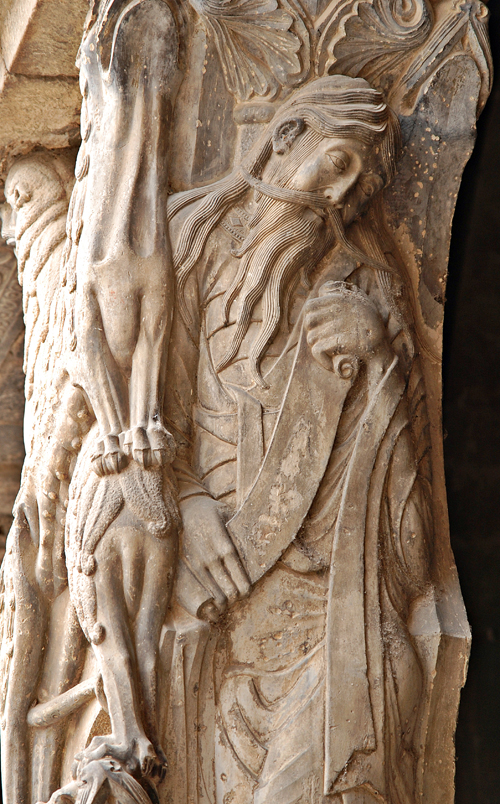
Jeremiah (South Portal, Moiaasic Abbey, France)
Jeremiah 1:4-10 New Revised Standard Version (NRSV)
 
Now the word of the Lord came to me saying,
 
“Before I formed you in the womb I knew you,
and before you were born I consecrated you;
I appointed you a prophet to the nations.”
 
Then I said, “Ah, Lord God! Truly I do not know how to speak, for I am only a boy.” But the Lord said to me,
 
“Do not say, ‘I am only a boy’;
for you shall go to all to whom I send you,
and you shall speak whatever I command you.
Do not be afraid of them,
for I am with you to deliver you,
says the Lord.”
 
Then the Lord put out his hand and touched my mouth; and the Lord said to me,
 
“Now I have put my words in your mouth.
10 See, today I appoint you over nations and over kingdoms,
to pluck up and to pull down,
to destroy and to overthrow,
to build and to plant.
 
********************
                The prophet Jeremiah was born into the priestly caste. That he would a priest was a given. On the other hand, nothing about his birth suggested God would call him to be a prophet. Yet, that would be his calling. When the moment came for him to receive his prophetic calling, like other prophets, Jeremiah asks of God “Who? Me? Are you sure you got the right person?” That’s a bit of a paraphrase, but I think it captures Jeremiah’s initial response. He had no problem with the priestly calling, he was born to it. But the prophetic one was very different. It wasn’t something he expected, and if we read this literally, he was rather young when the call came. I’m not given to theologies that assume God predestines our lives in unchangeable ways, though I do believe the Spirit gifts us for ministry, perhaps from the womb. I do believe that even prophets, like Jeremiah, have the freedom to say no to God. On the other hand, it’s not easy saying no to God, especially when God says to you, this is what I created you for.  In the end, Jeremiah says yes to the call, though as is revealed in the book of Jeremiah his message didn’t make him popular with the governing authorities or the people. His counsel challenged the arrogance of the leadership. Indeed, just a few verses following this statement of call, the word of the Lord came to him, and he declared that “out of the north disaster shall break out on all the inhabitants of the land.”  God tells Jeremiah that the people will fight against him, but they will not prevail (Jeremiah 1:14-19).
                As we continue the journey through Epiphany, reflecting on the ways in which God is made manifest in the world, shedding light into darkness, it is appropriate to take notice of a prophetic call. According to what we read here Jeremiah the call came to Jeremiah when he was only a child. He would be called upon to speak words of judgment on his own people, though he would also offer them words of hope. While called to speak to own nation, his ministry would have a wider berth. He would speak to the nations as well as Judah. His calling comes at a time when reform was underway in the land of Judah. This was the time of Josiah’s reign. Josiah was one of the righteous kings of Judah. They were few in number, but they arose from time to time. Things were looking up, at least for a while (2 Kings 23:1-27). Unfortunately for Judah, Josiah died in battle, fighting against Pharaoh Neco of Egypt (2 Kings 23:28-30). Things went from bad to worse after Josiah died. His son, Jehoahaz succeeded him, and as is often declared in these books of the Kings, the new king “did evil in the sight of the Lord, just as his ancestors had done” (2 Kings 23:32). From there one son of Josiah took the throne until Nebuchadnezzar stepped in, leading to captivity.
The time frame for Jeremiah’s ministry is noted in the opening frame (verses 1-3), which tells us the Word of the Lord came to the prophet in the thirteenth year of the reign of Josiah (627 BCE) and would continue until the time of the exile that took place when Zedekiah was king (587 BCE). Jeremiah didn’t accompany the exiles to Babylon. Instead he was taken to Egypt, where we assume he died.  
 
                Taking just the text before us, what we have is a word concerning prophetic (and perhaps ministerial) callings. In light of the season of Epiphany, this calling would be a manifestation of God’s presence. Jeremiah is called and consecrated to this ministry from his conception—when God formed him in the womb. We often take note of the word concerning God forming Jeremiah and knowing him before birth, while neglecting the reference to his consecration. Prophets generally were not consecrated. They were called and empowered, but consecration was something that applied to priests (and kings). It has to do with anointing, and in Israel’s case heredity. Jeremiah didn’t choose to be a priest, he was born a priest. Apparently, he descended from the line that goes back to Abiathar, David’s priest, and from Abiathar back to Eli, mentor to Samuel who consecrated David as king. That Jeremiah comes from the town of Anathoth is important for understanding his prophetic ministry, which takes a rather anti-monarchical position. This is perhaps due in part to the fact that his priestly line was itself in exile. Abiathar, who had been priest during David’s reign was sent away by Solomon, who backed Zadok (who unlike Abiathar had backed Solomon’s claim over that of Adonijah – see 1 Kings 2:26).
                Even if Jeremiah’s family didn’t serve in the Temple, we can expect that he understood what it meant to be a priest. He was born to that. His father would have informed him early on. He might have heard stories of Samuel, who as a boy apprenticed in the Temple during the priesthood of their ancestor Eli. He would have also been taught the story of his people, going back to the Exodus. He understood the covenant God made with Israel. That background would have informed his ability to speak for God in times of crisis. Having that background informed his prophetic calling, but the prophetic call is different than the priestly one. You’re not generally born to it. It requires a separate, unique call. A priest can be a prophet, but you needn’t be a priest to be a prophet. I wonder how that reality might be understood today. What might it mean to be prophetic in our context? Nevertheless, as we move forward, it would seem that Jeremiah operates not as a priest, but as a prophet.
                God has a specific word for him to share with the world: 
 
“Now I have put my words in your mouth.
10 See, today I appoint you over nations and over kingdoms,
to pluck up and to pull down,
to destroy and to overthrow,
to build and to plant.”
(Jer. 1:9-10).
Jeremiah was appointed by God with authority over the nations. He will pluck up and pull down. He will destroy and overthrow. That is, he will pronounce God’s judgement on the nations. However, he will also build and plant. This is Jeremiah’s message, throughout the book, which is often universal in scope. Yes, he will speak to Judah—rather strongly—but the message is much broader than simply the fate of Judah. This gives us a reminder that the God who speaks to and through Jeremiah is not a parochial god. This God is not limited by borders. After all, Jeremiah will end up in Egypt, while much of Israel’s elite will find themselves living in Babylon. In a letter to the exiles in Babylon, probably written from Egypt, he encourages them to settle down and make a life there, praying for the communities in which they find themselves. After all, they’re going to be there for a while (Jeremiah 29:1ff).
God may care a great deal about the covenant people, but God is also the God of the nations. God will deal with both as is appropriate. Jeremiah brings words of judgment, but also words of hope. After all there will be a new covenant, one written on the heart rather than stone (Jeremiah 31:31-34). It is this promise of a new covenant that Jesus takes up in his ministry. While Jeremiah likely has the aftermath of the exile in mind here, it found echoes in the ministry of Jesus, whose own calling is celebrated during this season of Epiphany. We see this calling of Jesus, one that spoke not only to Israel, but to the nations, in the visit of the Magi (Matt. 2:1-11) and in his baptism (Lk. 3:21-22). In the reading from the Gospel of Luke designated for this, the fourth Sunday after Epiphany, Jesus speaks of his own calling in terms of an anointing of the Spirit. While Jesus draws from Isaiah rather than Jeremiah, there is a similarity in their visions.
18 “The Spirit of the Lord is upon me,
because he has anointed me
to bring good news to the poor.
He has sent me to proclaim release to the captives
and recovery of sight to the blind,
to let the oppressed go free,
19 to proclaim the year of the Lord’s favor.”
(Lk 4:18-19).
And the Word of the Lord goes forth!
                As we hear this word, we who live millennia later might ask the question: to what is God calling us? What message do we have to share? The reading from 1Corinthians 13 invites us to inhabit the love God. Is this not our calling, at this moment in time?  Jeremiah doesn’t mention the love of God often, but this word is worth hearing as we consider Jeremiah’s calling and that of our own:

23 Thus says the Lord: Do not let the wise boast in their wisdom, do not let the mighty boast in their might, do not let the wealthy boast in their wealth; 24 but let those who boast boast in this, that they understand and know me, that I am the Lord; I act with steadfast love, justice, and righteousness in the earth, for in these things I delight, says the Lord. (Jer. 9:23-24).

Picture attribution: Jeremiah, from Art in the Christian Tradition, a project of the Vanderbilt Divinity Library, Nashville, TN. http://diglib.library.vanderbilt.edu/act-imagelink.pl?RC=55363 [retrieved January 28, 2019]. Original source: http://commons.wikimedia.org/wiki/File:Moissac,_Jeremiah.JPG.

Celebrating the Word of the Lord – Lectionary Reflection for Epiphany 3C (Nehemiah 8)

Nehemiah 8:1-10 New Revised Standard Version (NRSV)
all the people gathered together into the square before the Water Gate. They told the scribe Ezra to bring the book of the law of Moses, which the Lord had given to Israel. Accordingly, the priest Ezra brought the law before the assembly, both men and women and all who could hear with understanding. This was on the first day of the seventh month. He read from it facing the square before the Water Gate from early morning until midday, in the presence of the men and the women and those who could understand; and the ears of all the people were attentive to the book of the law. The scribe Ezra stood on a wooden platform that had been made for the purpose; and beside him stood Mattithiah, Shema, Anaiah, Uriah, Hilkiah, and Maaseiah on his right hand; and Pedaiah, Mishael, Malchijah, Hashum, Hash-baddanah, Zechariah, and Meshullam on his left hand. And Ezra opened the book in the sight of all the people, for he was standing above all the people; and when he opened it, all the people stood up. Then Ezra blessed the Lord, the great God, and all the people answered, “Amen, Amen,” lifting up their hands. Then they bowed their heads and worshiped the Lord with their faces to the ground. Also Jeshua, Bani, Sherebiah, Jamin, Akkub, Shabbethai, Hodiah, Maaseiah, Kelita, Azariah, Jozabad, Hanan, Pelaiah, the Levites, helped the people to understand the law, while the people remained in their places. So they read from the book, from the law of God, with interpretation. They gave the sense, so that the people understood the reading.
And Nehemiah, who was the governor, and Ezra the priest and scribe, and the Levites who taught the people said to all the people, “This day is holy to the Lord your God; do not mourn or weep.” For all the people wept when they heard the words of the law. 10 Then he said to them, “Go your way, eat the fat and drink sweet wine and send portions of them to those for whom nothing is prepared, for this day is holy to our Lord; and do not be grieved, for the joy of the Lord is your strength.”
**************

                The Nineteenth Psalm declares: “The law of the Lord is perfect, reviving the soul” (Ps. 19:7). On the Third Sunday of Epiphany, the first reading from Scripture comes to us from the book of Nehemiah. Nehemiah describes life in post-exilic Jerusalem. Nehemiah was a child of those members of the Jewish community who chose not to return to Jerusalem after Cyrus ended the exile in the sixth century BCE. Now, years later, we lean that Nehemiah was serving as a cup-bearer in the court of Artaxerxes (r. 465-525). While in this capacity, he learned of the situation of Jews living in Jerusalem and Judah. Things were looking bad, and Nehemiah grieved over this situation. Then, he asked his patron if he could go to Jerusalem and address the difficulties facing the people (Nehemiah 1-2). In other words, he was asking permission to rebuild the city of Jerusalem, including restoring its walls and gates. The exile had ended nearly a century earlier. A Temple had already been rebuilt, but the city was still largely in ruins. Nehemiah believed he could do something about the situation, and he received permission from the king. In fact, he was sent home with the title of governor.

                The first reading for this third Sunday of Epiphany speaks of a ceremony in which the people gather to renew the covenant between the people and God. It occurs after the walls have been rebuilt. As the people gathered at the Water Gate, the people asked that Ezra, the priest, who according to the Book of Ezra had also received permission from Artaxerxes to return to Jerusalem (Ezra 7), read from the Book of the Law of Moses. So, the gathered people— “men and women and all who could hear with understanding”—listened intently as Ezra read from the “book of the law of Moses, which the Lord had given to Israel.” It is this law of the Lord that the Psalmist declares to be perfect. Therefore, on the first day of the seventh month, Ezra read from the book of the law. He began reading early in the morning and continued until midday. According to the story before us, “the ears of all the people were attentive to the book of the law.” For hours upon hours, the people listened attentively to the reading of the Word of the LORD.

                The lectionary leaves out verse 4, which includes a listing of all those who stood with Ezra as he read the Word of the LORD to the people. This group of people served as witnesses to the message. For continuity sake, I have included the omitted verses, but have italicized them.

                In verse 5 we have what looks like a repeat of what has already come to pass. Ezra is standing on the platform when he opens the book in front of the people. When he opens the Book of the Law, which is probably in the form of scrolls, everyone rises to their feet. There is a tradition in some churches to rise for the reading of Scripture. It is deemed to be a sign of respect and honor to the Word of God. I believe that at least some faith communities with this practice point to this event in the life of the people of Judah as precedent. This is again a reminder that what is taking place at the gate of the city is an act of worship, even as the people are engaged in renewing the covenant God had made with Moses. We’re told that when Ezra blessed the Lord, the people answered him by declaring “Amen, Amen” as they lifted their hands, bowed their heads, and worshipped God with their faces toward the ground. Yes, hearing the Word of the Lord read in community is an act of worship. It involved their voices and their bodies. As we hear this word, we might turn again to Psalm 19 where the Psalmist, declares that “the precepts of the Lord are right, rejoicing the heart” (Ps. 19:8).

                Following this section of the story we encounter an omitted verse. Verse 7 of Nehemiah 8, like verse 4, includes a list of names. For readers of the Scripture these omissions are likely helpful. However, this omitted verse provides important information. We’re told that this group of people assisted Ezra in explaining the meaning of the Law. This is a good reminder that Scripture is not always self-interpreting nor is it so clear that anyone using common sense can read and understand what is being said. No, this verse reminds us of the importance of teachers of Scripture. This is reinforced by verse 8, which tells us that this group of assistants “gave the sense, so that the people understood the reading.” We might want to use our imagination here to envision the assistants going out into the crowd and gathering smaller groups so that interpretation can be given. With this word, the section beginning in verse 5 comes to a close.

                The final section of the reading begins in verse 9. To this point, Ezra is the lead actor. He’s the own who reads the Law and offers initial instruction. Here in verse 9, Nehemiah, the governor, appears in the story for the first time. He joins Ezra and the Levites on the platform and adds his blessing to the event. Reading between the lines, it appears that as the people had begun to weep as the listened to the reading from the Law. Maybe they had begun to realize that they may have forgotten the core foundations of their faith. Now, perhaps for the first time, they are learning what the covenant entails. You might say that they felt convicted by the message.

It’s at this point that Nehemiah stepped up and began to speak. He told the people: “This day is holy to the LORD your God, do not mourn or weep.” This is not a time for sack cloth and ashes. This isn’t Ash Wednesday. This is Easter Sunday! So instead of weeping and mourning, go home and celebrate. Eat the fat and drink sweet wine. Have a party. If you have more than enough for yourself, share with your neighbor who is lacking in resources so they too can celebrate.

Nehemiah’s word to the people is a good reminder that holy days needn’t be somber. Some holy days might be somber—consider Ash Wednesday—but not all holy days require such an attitude. Some holy days require celebration. That is because “the joy of the LORD is your strength.”  As we face difficult times—as did the people of Jerusalem living in the 5th century—may we find our joy in the LORD, who is our strength! Amen!


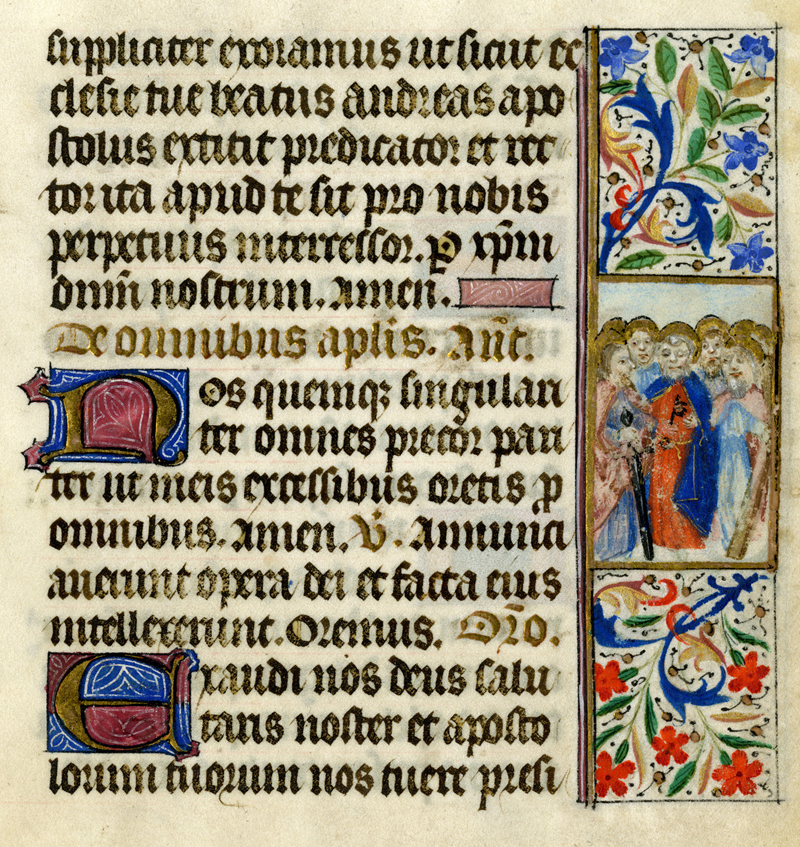
Picture Attribution: Nehemiah in the Liturgy from a book of hours, from Art in the Christian Tradition, a project of the Vanderbilt Divinity Library, Nashville, TN. http://diglib.library.vanderbilt.edu/act-imagelink.pl?RC=55356 [retrieved January 20, 2019]. Original source:

http://commons.wikimedia.org/wiki/File:Boise_State_MSS_122_2_crop.jpeg.

10646937_10204043191333252_4540780665023444969_nRobert Cornwall is the Pastor of Central Woodward Christian Church in Troy, Michigan. He holds the Ph.D. in Historical Theology from Fuller Theological Seminary. He is the author of a number of books including Out of the Office (Energion, 2017), Marriage in Interesting Times (Energion, 2016), and Freedom in Covenant (Wipf and Stock, 2015) and blogs at Ponderings on a Faith Journey.

Called by a New Name – Lectionary Reflection for Epiphany 2C (Isaiah 62)

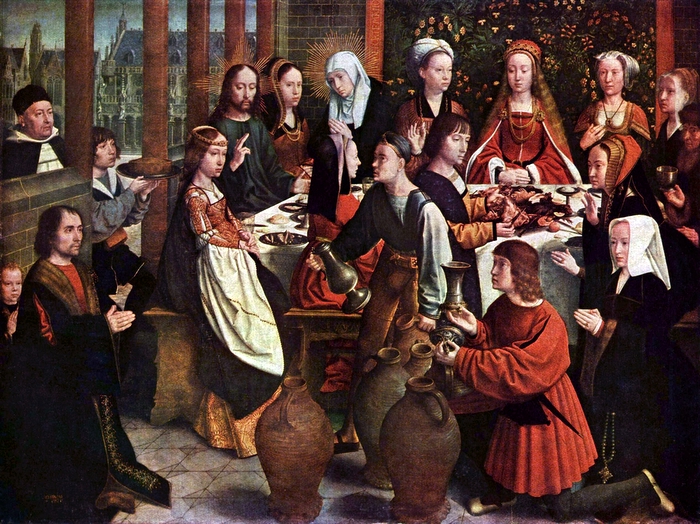
Gerard David, Miracle at Cana (16th century)
Isaiah 62:1-5 New Revised Standard Version (NRSV)
 
62 For Zion’s sake I will not keep silent,
and for Jerusalem’s sake I will not rest,
until her vindication shines out like the dawn,
and her salvation like a burning torch.
The nations shall see your vindication,
and all the kings your glory;
and you shall be called by a new name
that the mouth of the Lord will give.
You shall be a crown of beauty in the hand of the Lord,
and a royal diadem in the hand of your God.
You shall no more be termed Forsaken,
and your land shall no more be termed Desolate;
but you shall be called My Delight Is in Her,
and your land Married;
for the Lord delights in you,
and your land shall be married.
For as a young man marries a young woman,
so shall your builder marry you,
and as the bridegroom rejoices over the bride,
so shall your God rejoice over you.
*******************
                In a word spoken to a post-exilic community seeking to rebuild and create a new identity, the prophet, whom scholars identify as Third Isaiah (Isaiah 55-66), relays God’s message to the city of Zion-Jerusalem. The message is this: “For Zion’s sake I will not keep silent, and for Jerusalem’s sake I will not rest, until her vindication shines out like the dawn, and her salvation like a burning torch.”  In this message that is written using parallelisms we hear of God’s intense interest in the welfare of the covenant people of God who dwell in Jerusalem. The language is that of covenant, and the passage as a whole speaks of this covenant relationship in terms of the intimacy of a marriage relationship (even if it is couched in patriarchal terms).
In this scenario, God is the bridegroom, while Zion-Jerusalem is the bride. As the divine bridegroom, God has made a claim on Zion (and we might, perhaps, the whole people of Israel). It is clear that difficult times had preceded this announcement. Perhaps we could speak in terms of a prior divorce (exile) that involved a city laid waste and its Temple destroyed, while the leading citizens were taken away into exile to the faraway land of Babylon. The exile is now in the past, but it is still part of the people’s memory.  Memories of exile and displacement doesn’t dissipate quickly or easily. Congregations that have moved know this to be true. We might even think of the current age, where religious institutions struggle for survival as being a time of exile. We may wonder if there is hope of restoration. In this passage, Zion has emerged from exile, and has seen the covenant relationship restored. We can imagine hear the people who receive this word celebrating their vindication as seen in the rebuilding of the city (and perhaps the Temple as well).  Not only do the people of Zion witness this reality, but so do the kings of the nations, who bear witness to this vindication. As I pondered this message, I thought of the words of Paul in 2 Corinthians 5. While this passage is not one of the lectionary readings for the day, what the prophet describes is a day of new beginnings. The old is passed away, and the new has begun. It’s time to rejoice and be glad. Indeed, it’s time for a wedding feast.
                 This change of status is represented here by a name change, which is in keeping with biblical precedent. Throughout Scripture names get changed to reflect new realities. Such is the case here. Whereas once Jerusalem was known as “Forsaken” and “Desolate,” now the city shall be called “My Delight Is in Her” and “Married.” We know that some things get lost in translation, and that is in a sense true here. The meaning comes through with the translations, but we lose some of the poetics of the passage in this translation. When we look at the names in Hebrew, we see their rhythmic qualities. Thus, Azubah and Hephzibah become Shemamah and Beulah. Although things have been changing in recent years, when two people get married, it has been tradition for the wife to take the husband’s name. [See discussion by Julie Faith Parker in Connections, p. 181].And, when we name our children, those names often have some significance for us as well. They represent something about who we are. The name might be that of a friend or a relative, or a player of one’s favorite baseball team. I am named after my father. Sometimes we look at baby name books and pick out one that sounds good to the ear. Or, we might just want to break with conformity and choose something out of the ordinary. Whatever we choose reflects on our identity, and unless we change our names, we’re stuck (for good or ill).
Jerusalem got a name change due to the marriage covenant God made with the city. It went from “Forsaken” and “Desolate” to “My Delight Is in Her” and “Married.” If we understand the context of this word, we understand the power of this name change. It represents the move from exile to return. In marriage terms we could see this as a move from divorce to remarriage. It is a rekindling of a broken relationship. This is represented by the move from the city being abandoned and destroyed to be repopulated and rebuilt after the exile.  With this name change God affirms the reestablishment of a relationship with the people that had been broken, and thus a reaffirmation of the covenant God had made long ago.  
 
When we read passages like this, we will need to address the patriarchal background of the biblical imagery. At least in my circles, there has long been a move from patriarchalism, where the husband rules and the wife submits, to one of equal partnership. The move to mutuality in our interpretation of this passage will need to be done with great care so as not to either reinforce patriarchalism or miss important points of the passage. It is important to recognize the covenant language present here. It’s not the language of an equal partnership. God is the claimant, the protector, and the city is the recipient of this care, for God is like the bridegroom who rejoices over his bride. In this, the city is vindicated. The nations affirm God’s act of vindication.      
   
       
                As we ponder these words, we must acknowledge the patriarchal realities that stand behind these words, even as we seek to hear a word concerning our own relationship with God. We might, for instance, read this through the lens of liberation theology. God is the one who has stepped in and liberated the people from their oppressors. In this case it would have been the Babylonians. This is a hopeful word to those who struggle against injustice and oppression in our day. The covenant language that is present here also reminds us of the intimacy with which we relate to the God who will not remain silent, but who will vindicate God’s people. The word we hear is that we are called by a new name. We have gone from Forsaken to Marriage (Beulah). With that promise of a restored relationship with God our vindicator, we can join the festivities. After all, didn’t Jesus himself bless a wedding party? That is the message of John 2, where Jesus makes wine at the wedding in Cana! With that promise, may we rejoice in God’s protective presence, even as we refrain from embracing the patriarchal vision of marriage that is present in the passage.   


Picture Attribution: David, Gérard, ca. 1460-1523. Miracle at Cana, from Art in the Christian Tradition, a project of the Vanderbilt Divinity Library, Nashville, TN. http://diglib.library.vanderbilt.edu/act-imagelink.pl?RC=46657 [retrieved January 14, 2019].

Robert Cornwall is the Pastor of Central Woodward Christian Church in Troy, Michigan. He holds the Ph.D. in Historical Theology from Fuller Theological Seminary. He is the author of a number of books including Out of the Office (Energion, 2017), Marriage in Interesting Times (Energion, 2016), and Freedom in Covenant (Wipf and Stock, 2015) and blogs at Ponderings on a Faith Journey.


Be Not Afraid. You Are Mine – Lectionary Reflection for Baptism of Jesus Sunday (Isaiah 43)

Baptism of Jesus – Jacopo Tinteretto (Cleveland Museum of Art)
Isaiah 43:1-7 New Revised Standard Version (NRSV)
 
43 But now thus says the Lord,
he who created you, O Jacob,
he who formed you, O Israel:
Do not fear, for I have redeemed you;
I have called you by name, you are mine.
When you pass through the waters, I will be with you;
and through the rivers, they shall not overwhelm you;
when you walk through fire you shall not be burned,
and the flame shall not consume you.
For I am the Lord your God,
the Holy One of Israel, your Savior.
I give Egypt as your ransom,
Ethiopia and Seba in exchange for you.
Because you are precious in my sight,
and honored, and I love you,
I give people in return for you,
nations in exchange for your life.
Do not fear, for I am with you;
I will bring your offspring from the east,
and from the west I will gather you;
I will say to the north, “Give them up,”
and to the south, “Do not withhold;
bring my sons from far away
and my daughters from the end of the earth—
everyone who is called by my name,
whom I created for my glory,
whom I formed and made.”
********************
                This is Baptism of Jesus Sunday, a day on which we remember that Jesus came to the Jordan, was baptized by John, and in some form or another, heard God speak from the cloud, declaring of him: “You are my son, the Beloved, with you I am well pleased!” (Lk. 3: 21-22). In other words, “I have called you by name, you are mine!” This the word revealed to us by the exilic prophet we call Second Isaiah. The word here in this reading is addressed to exiles, who may be wondering whether God has forgotten them. The answer we hear from the prophet is no, God has not forgotten. Israel is God’s creation. God will redeem. So, be not afraid because you belong to me! 
 
                Other than a reference to passing through the waters, hoping the rivers will not overwhelm them, there is little that ties the text to baptismal waters. It might seem as if this is a reference to the Exodus, which gets connected to baptism on occasion, but there is little evidence here that Isaiah is thinking of the crossing of the sea. Nevertheless, maybe there is more here than meets the eye. Maybe it’s not the reference to water itself that represents baptism, but rather the claim made by God on the people. Consider that on the day of Jesus’ baptism, God made a claim on him. God called Jesus in baptism to fulfill his purpose as God’s son, the beloved. Is not the same true for our baptisms? Do we not receive a new identity as a member of God’s family in Christ?
When it comes to baptism, I’m a “believer’s baptism” adherent. Although I was baptized as an infant, during my teen years I was rebaptized. As I grow older, and hopefully wiser, I wonder whether or not God’s claim was first placed upon me as an infant, when I was baptized at St. Luke’s of the Mountains in LaCrescenta, California. That may well be, but to make sure it took, I redid my baptism in a creek at a summer camp. While I didn’t hear the voice of God speaking to me in either circumstance, I believe that in baptism God makes a claim on us, redeeming us, and making us part of the family. So again, what word does Isaiah have to say to us on this particular Sunday?
Contextually, these verses speak of a change of situation. Judah, otherwise known as Israel, has returned home from exile. The word the people hear as they experience this change of situation is “Do not fear.” That is because God has called them by name, declaring “you are mine.” (vs. 1). This is where the waters come in, along with fire. Both water and fire suggest dangers faced by the people, whether literal or metaphorical. Don’t be afraid when faced with flood and fire, for I am with you. I love you. I will not abandon you. I have ransomed you. This word ransom appears in the Gospel of Mark (Mk. 10:45) in connection with Jesus’ impending death on the cross. Here in Isaiah, the ransom involves Egypt, Ethiopia, and Seba. The context is likely the defeat of Egypt by Cyrus the Persian king, that allowed the exiles to return home. In the context of the Gospels, Peter Stuhlmacher suggests that “Jesus was prepared to perform a ‘substitution of existence’ for Israel, or more precisely for the ungodly who were supposed to be handed over for Israel’s salvation in the final judgment” [Stuhlmacher, Biblical Theology of the New Testament, pp. 148-149]. In whatever we understand the nature of this ransom, it is clear that in the life, death, and resurrection of Jesus, a way through the water and fire has been provided, so that we might find a place to reside, and therefore move beyond the life of fear.  
 
If this is the word that emerges from Isaiah today, what is it that causes fear in our lives so that we need a word of assurance? I look around at the world in which I live. There are many challenges facing us. There is political dysfunction in the United States. Authoritarianism is on the rise globally. Climate change is becoming a matter of great worry. Then there is the challenge of migration, often due to violence in the homelands of those who are on the move. There is good reason to be afraid. Yet, in the midst of these challenges, we hear a word from the prophet: “Do not be afraid.” Having said this, the prophet is not saying that there is nothing to be afraid of, only that God has made a claim on us. Hearing this word of assurance doesn’t mean we ignore the challenges of the day. In fact, we should name them. We should get them out in the open, so that they can be addressed.
Returning to our context, which is Baptism of Jesus Sunday, we hear this word from Isaiah. So, as we hear these words, we ask how Jesus’ baptism, and with it his call, inform our own self-understanding? How might his baptism support us as we face the fear-producing challenges of the day?  David Schlafer writes:

On this day, it is worth noting that he who went through fire and water for us began his ministry in a baptism of blessing—being named as cherished by the one from whom he came. The Gospel writer employs Isaiah’s words to describe, not the inoculation of Jesus from all possible fears, but the available antidote to them. For those “named as Christ’s own forever” in baptism on this day, in the presence of a faith family all bearing God’s name, this can be a tangible act of being identified and strengthened for going “through” fear.   [Connections, p. 164].

In his baptism, God declared Jesus to be God’s son the beloved. In our baptisms we too are embraced by God, drawn into the family, so that we might walk together, encouraging one another, knowing that Jesus, the beloved Son of God, is the Suffering Servant who has ransomed us through his own death, walks with us through water and fire. We need not fear, for we have been called in the name of Jesus, and therefore, in Christ, having been baptized, we have heard the voice of God say to us: “You are mine!”  Indeed, we have been created for God’s glory.  


Robert Cornwall is the Pastor of Central Woodward Christian Church in Troy, Michigan. He holds the Ph.D. in Historical Theology from Fuller Theological Seminary. He is the author of a number of books including Out of the Office (Energion, 2017), Marriage in Interesting Times (Energion, 2016), and Freedom in Covenant (Wipf and Stock, 2015) and blogs at Ponderings on a Faith Journey.