Month: September 2019

It’s a Ghost Town – A Lectionary Reflection for Pentecost 17C (Lamentations 1)

 
How lonely sits the city
that once was full of people!
How like a widow she has become,
she that was great among the nations!
She that was a princess among the provinces
has become a vassal.
She weeps bitterly in the night,
with tears on her cheeks;
among all her lovers
she has no one to comfort her;
all her friends have dealt treacherously with her,
they have become her enemies.
Judah has gone into exile with suffering
and hard servitude;
she lives now among the nations,
and finds no resting place;
her pursuers have all overtaken her
in the midst of her distress.
The roads to Zion mourn,
for no one comes to the festivals;
all her gates are desolate,
her priests groan;
her young girls grieve,
and her lot is bitter.
Her foes have become the masters,
her enemies prosper,
because the Lord has made her suffer
for the multitude of her transgressions;
her children have gone away,
captives before the foe.
From daughter Zion has departed
all her majesty.
Her princes have become like stags
that find no pasture;
they fled without strength
before the pursuer.
 
 
***********

                My first thought when reading this took me back to my childhood visits to “Ghost Towns” like Virginia City, Nevada. All through the American West one will find “Ghost Towns,” towns that are now abandoned or largely abandoned that once thrived on Gold and Silver strikes. Virginia City today is a tourist site, but once it was a thriving metropolis with mansions, saloons, and even a couple of churches, serving a fairly large population. Other such towns haven’t had the same luck as Virginia City in becoming a tourist mecca, but the image seems appropriate. Jerusalem has become a Ghost Town. What was once a thriving city, full of people, commerce, and glory, is now abandoned.

The words that begin the Book of Lamentations, words that are traditionally attributed to the prophet Jeremiah, invite us to consider the fate of Jerusalem as it experienced destruction, desolation, and the exile of its leading people. It is unlikely that Jeremiah is the author (while it follows Jeremiah in the Christian canon, in the Hebrew Bible it is found in the third section, The Writings (Kethuvim). Most likely the poet/prophet who wrote these powerful words was reflecting on the exile of Judah and grieving the destruction of the city and state.

The book begins with the words “How lonely sits the city” (NRSV). In the Tanakh (JPS) the phrase is “Alas! Lonely sits the city.” That word “alas” might be more powerful than “how.” It carries a sense of grief and mourning. The tone is that of a sigh. Yes, “alas! Lonely sits the city.” Ron Allen and Clark Williamson note that the Hebrew eka “is frequently used in laments to signal a tragic change of circumstance from joy to sorrow.” [Preaching the Old Testament, p. 275]. With this opening word we get drawn into the grief of the moment. We might even begin to connect it with our own moments of tragedy and grief. Might we think of the events of September 11, 2001, and all that has followed? Is this not a moment where the word “alas” fits? Have we not experienced a fall from glory and a season of exile that seems unending? Do we not still sing the laments, liturgies of grief on anniversaries or as we ponder the unending wars in Afghanistan and Iraq, which likely spawned the war in Syria. “Alas! Lonely sits the city.”

In the words of the poet, Jerusalem is a princess who has become a widow who weeps bitterly in the night. Not only does she weep, but there is no one there to comfort her. All her lovers, her allies, have abandoned her. She is all alone in this city once filled with people. She feels betrayed by former friends who have betrayed her. In other words, her allies have turned against her and sided with her enemy—Babylon.

Now that she is in exile, living among the nations, finding no rest, with her pursuers overtaking here, she cries out in anguish. Indeed, we’re told that “Zion’s roads are in mourning, Empty of festival pilgrims; all her gates are deserted” [Lam. 1:4 Tanakh]. Allen and Williamson comment that the poet is reflecting here “an ancient Jewish view that nature itself was animated, ‘the roads to Zion mourn’ because the Temple is destroyed and people no longer come for the major religious observances.” Thus, “the priests groan not only because of the loss of vocation but because they depended upon the Temple offerings for food and livelihood.”  Even the young women grieve. [Allen and Williamson, p. 275]. It’s good to remember that Jerusalem was not only a political center—Judah’s capital—but it was a sacred site. It was the center of the universe, where God’s Temple could be found, and thus God could be encountered in tangible ways. All of this is now gone, and those who sing the lament do so wondering why. What sins had transpired that led to this situation where the sacred city is now ruled by its enemies. The answer must be that the Lord “has afflicted her for her many transgressions” (Lam. 1:5 Tanakh).


Our passage doesn’t end on a positive note. After all, this is a lament. It is meant to give voice to one’s grief, confusion, and possibly repentance. The future now lives in exile and its “young male rulers have become like stags without pasture, that is, without sources to sustain fullness of life and procreation (1:6)” [Allen and Williamson, p. 275]. We conclude with this sense that the future is uncertain at best. So, what do we make of our situation?

Laments like this are generally used in times of national crisis, and lectionary wise that situation might not always coincide. So, as we ponder the text, we might use this as an opportunity to reflect on grief and how we deal with it in personal and corporate ways. On the other hand, we may find ourselves in times where lament seems to be the appropriate response to the situation we find ourselves in. As I write this reflection, the United States has entered a period of uncertainty as the House of Representatives begins impeachment proceedings against the President. No matter how you feel about the President there is nothing about this situation that should give one glee. Indeed, this is a moment of lament for the nation. We might cry out that “gone from Fair Zion are all that were her glory.” The challenges of gun violence, whether mass shootings at schools and places of worship or simply random violence in cities and towns across the nation—these could give rise to laments. What of climate change and the continuing extinction of species? Yes, there is much to lament.

The lament begins: “How lonely sits the city that once was full of people! How like a widow she has become, she that was great among the nations!” My first thought upon reading these words was the ghost towns I visited as a youth—towns like Virginia City—but these are symbolic of other cities. We might see this word as an invitation to consider the way we process grief, and that would be a worthy effort. We can turn to Lamentations as an invitation to lament national tragedies, whether a mass shooting at a school or a shopping center or a moment of national despair when it seems as if our government is failing. These would be good, but the lament begins with a word about the city.

If my first thought was the ghost towns of my youth, my second thought when I read this was the great cities of this country that are struggling today, as well as the great cities of the world that are facing myriads of challenges, including the devastation of war. Think of Aleppo in Syria or Kabul in Afghanistan. Closer to home, I’m reminded of the challenges faced by the city of Detroit, a city that once had nearly two million residents and now has less than 700,000. It’s not a ghost town, but vast swathes of the city are abandoned. Detroit is not alone. Flint to the north has lost half its population. I think of my own hometown of Klamath Falls. The population has remained somewhat constant but the lumber mills are gone along with most of the major employers of my youth. I’ve not been back in over a dozen years, but everyone says it’s not the same. I hear the laments for once was a great city.

We ask why? Why has Detroit lost so many people? We know that one reason for Detroit’s slide was “white flight” that began in the late 1950s and picked up steam in the 1960s and 1970s. As the city declined, the suburbs flourished. Yet, we lament. The church I serve as pastor had its glory years in the city of Detroit, but like most predominantly white congregations in the city, it eventually followed its people to the suburbs, but not without a great deal of grief. Whether it is Detroit, Youngstown, Klamath Falls, or Aleppo, the laments continue. We ask why? Could it be as William McClain suggests: “When people are oppressed, desolation comes. Those who should be prospering have been betrayed by corrupt political systems and have become slaves of the very system that should give them hope. But God speaks to us in exile, and God has not abandoned the city. The city is the place where the temple of God has always been—the center of things, at the heart of the people.” [Preaching God’s Transforming Justice, p. 412].

How do we find hope in the lament? Although Jeremiah isn’t like the author of this lament, we might find a word of hope and purpose in Jeremiah’s word of guidance to the exiles in Babylon, whom he called upon to “seek the welfare of the city where I have sent you into exile, and pray to the Lord on its behalf, for in its welfare you will find your welfare” (Jer. 29:7). Thus, William McClain writes:

When we begin to understand that our future is tied to the future of the city, we will welcome the strangers (foreigners, visitors) and invite them to gather with us around a common table, a community bound by a common Creator, Redeemer, and Host! And the table will be the “Welcome Table” that my grandmother believed in and sang about. In these in-between times, it is a table where all of God’s children can gather around in one Communion, at a common earthly meal aw a rehearsal for the eschatological banquet. [Preaching God’s Transforming Justice, pp. 412-413].

It is good and right to grieve what has been lost, but it is also important to embrace the present and future by praying for the city and thus gather together at the welcome table of restoration.


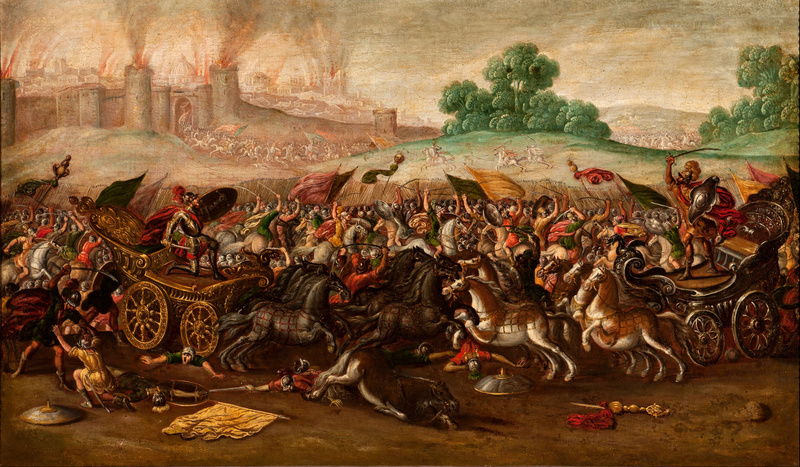
Picture attribution:   Circle of Juan de la Corte, 1580-1663. Burning of Jerusalem by Nebuchadnezzar’s Army, from Art in the Christian Tradition, a project of the Vanderbilt Divinity Library, Nashville, TN. http://diglib.library.vanderbilt.edu/act-imagelink.pl?RC=55724 [retrieved September 27, 2019]. Original source: http://commons.wikimedia.org/wiki/File:Circle_of_Juan_de_la_Corte_-_The_Burning_of_Jerusalem_by_Nebuchadnezzar%E2%80%99s_Army_-_Google_Art_Project.jpg.

 

I Wanna Be In Control: Pentecost 16 (Narrative Lectionary)

Narrative Lectionary Reflection

September 8, 2019

Read: Exodus 1:8-14 [15–2:10]; 3:1-15

Reflection

It’s impossible to read this week’s text and not think about what is happening right now in the United States. The tale of a Pharaoh “who didn’t know Joseph” that fears the descendants of Jacob reminds us of a US President that fears a modern immigrant community, treating them rather harshly.

But, let’s slow down first. If you rush talk about a current crisis through this text, you might forget this actual story. Of course, we should do as the theologian Karl Barth tells us, to preach with the Bible in one hand and the newspaper in the other. In order to do that, we need to focus on the Scripture at hand first.

So, just what is going on here? There are a few things to focus on.

First, it’s important to know that the Pharoah didn’t know Joseph. Joseph was one of the sons of Jacob who was initially sold into slavery in Egypt and rose to become the Prime Minister of the kingdom. The rest of his family came as guests of the Pharaoh and lived as resident aliens for years and years.

Why didn’t Pharaoh know this history? Surely someone was keeping track of the royal history. For whatever reason, the king is ignorant of the facts. Instead he views the Israelites with fear. He fears that if Egypt goes to war, the nation will have traitors in their midst. He views them not just with simple suspicion, but out and out xenophobia. He has a plan to try to draw down their numbers. Pharaoh makes the Israelites slaves in the hopes that this will kill off a few, but this doesn’t happen. Then he asks the midwives to kill the male children. But two midwives, Shiprah and Puah are God-fearing women who refuse. They lie to the Pharoah that the Israelite women are so strong, they give birth before they arrive.

When that second idea fails, the Pharoah orders that all first born babies were thrown into the Nile to drown. One woman decides to send her son in a basket down the river. None other than the Pharaoh’s daughter sees, the child and claims the baby called Moses as her own. The Pharaoh is thwarted again, this time by his own flesh and blood.

We then skip to a grown up Moses, raising sheep far away from Egypt. He’s been on the run after killing an Egyptian beating up a Hebrew. He is contacted by God and chosen to lead the Israelites out of Egypt and back to the promised land. But Moses doesn’t immediately say yes. He wants to know God’s name but God never gives him the answer he wanted. Moses goes to free God’s people never getting God to reveal God’s name.

Pharaoh and Moses both want to control a situation. Pharaoh is scared of the Israelites, so much so that he sees them as potential traitors. Moses is called to speak for his people in front of Pharaoh, but he wants to know who is this God that is sending him. In Pharoah’s case each time he tried to get rid of the Israelites, he is thwarted. What’s interesting is that in two occasions he is thwarted by women. The text is never clear that Shiprah and Puah are themselves Hebrews. For all we know, they could be Egyptians. What we do know is that they feared God and chose to disobey Pharaoh’s demands. The baby Moses is sent down the Nile and is picked up by the daughter of the Pharaoh. She and Moses’ mother are able to sabotage Pharaoh’s efforts.

Pharaoh and to a lesser extent, Moses want to be in control. But they are unable to get the control they want. The Pharaoh is the leader of a great nation and felt he could do anything he desired. When he didn’t know Joseph, it could also mean he didn’t know God. Because if he had known God, he would know of how Joseph’s God saved the nation so long ago. But he didn’t and thought Egypt was mighty and what God would stop him.

These early chapters of Exodus remind us that God is the one in control in the world even when it might not look like that is possible. May we have the faith of Shiprah and Puah and not the arrogance of the Pharaoh.

Dennis Sanders is the Pastor at First Christian Church of St. Paul in Mahtomedi, Minnesota. He’s written for various outlets including Christian Century.

There Will Be a Future — A Lectionary Reflection for Pentecost 16C

32 The word that came to Jeremiah from the Lord in the tenth year of King Zedekiah of Judah, which was the eighteenth year of Nebuchadrezzar. 2 At that time the army of the king of Babylon was besieging Jerusalem, and the prophet Jeremiah was confined in the court of the guard that was in the palace of the king of Judah, 3 where King Zedekiah of Judah had confined him.

6 Jeremiah said, The word of the Lord came to me: 7 Hanamel, son of your uncle Shallum, is going to come to you and say, “Buy my field that is at Anathoth, for the right of redemption by purchase is yours.” 8 Then my cousin Hanamel came to me in the court of the guard, in accordance with the word of the Lord, and said to me, “Buy my field that is at Anathoth in the land of Benjamin, for the right of possession and redemption is yours; buy it for yourself.” Then I knew that this was the word of the Lord

9 And I bought the field at Anathoth from my cousin Hanamel, and weighed out the money to him, seventeen shekels of silver. 10 I signed the deed, sealed it, got witnesses, and weighed the money on scales. 11 Then I took the sealed deed of purchase, containing the terms and conditions, and the open copy; 12 and I gave the deed of purchase to Baruch son of Neriah son of Mahseiah, in the presence of my cousin Hanamel, in the presence of the witnesses who signed the deed of purchase, and in the presence of all the Judeans who were sitting in the court of the guard. 13 In their presence I charged Baruch, saying, 14 Thus says the Lord of hosts, the God of Israel: Take these deeds, both this sealed deed of purchase and this open deed, and put them in an earthenware jar, in order that they may last for a long time. 15 For thus says the Lord of hosts, the God of Israel: Houses and fields and vineyards shall again be bought in this land.


********
 

            At first glance, this is an odd text. Preachers will wonder what to do with it. We know the context. Jeremiah is essentially in jail at the request of the king, Zedekiah, the last of the kings of Judah. He was himself placed on the throne by Nebuchadnezzar, who according to Jeremiah 32 is besieging Jerusalem. That is because Zedekiah had rebelled against the Babylonian ruler (2 Kings 25:1). In fact, according to 2 Kings 25:1ff., Zedekiah had his eyes put out before being taken to Babylon in chains. It was after Zedekiah’s fall that the city and the Temple were destroyed. At this point in the story of Jeremiah, Zedekiah was still “ruling” but in rebellion. Jeremiah had warned him that things would not work out well for him. In the passage omitted by the lectionary creators, Zedekiah is told that he shall be taken to Babylon. His rebellion will not succeed (vs. 4-5). That is the setting for our passage designated for the first reading for the Sixteenth Sunday after Pentecost (Year C). So, what would a preacher do with a text like this?


            We are told that Jeremiah received a word from the Lord, and this word involved a person named Hanamel, the son of Shallum, who apparently is Jeremiah’s uncle. Hanamel will come to Jeremiah and offer him a piece of land in Anathoth because Jeremiah is next in line to purchase the property. That is, he has first right of refusal. Just like the Lord had said to Jeremiah, Hanamel came to him with the proposition to buy the land. Now, remember, Jeremiah is currently in custody and Nebuchadnezzar’s troops are at the gate. Hanamel is a bit insistent, it would seem. He suggests that Jeremiah has a duty to purchase the land (assumedly to keep it in the family). Jeremiah recounts that when he heard this, he knew it was a word from the Lord.


            Jeremiah purchases the property for seventeen shekels of silver. This is a prophetic action. It’s meaning will be revealed shortly, but Jeremiah takes it as a sign from God. It might seem odd to us—it may have seemed odd at first to Jeremiah—but it was a prophetic sign and Jeremiah couldn’t say no. Thus, he purchased the land. He took the deed and gave it to his assistant Baruch in the presence of Hanamel, who was one of the witnesses to the deed. It seems so run-of-the-mill. How is it prophetic?


            The answer comes in the instructions given to Baruch. Jeremiah told him to go and place the sealed deed in an earthen jar so they might be preserved over time. They needed to last a long time. Why? Because it would be a while before things got better for Judah. Yet, there is a word of hope here: “For thus said the Lord of Hosts, the God of Israel: “Houses, fields, and vineyards shall again be purchased in this land.” (Jer. 32:15). That is it. This is the promise of this passage. It alone makes some sense of the story.


            There are times when the future looks dark. I recently read a biography of Franklin Roosevelt. As President, he faced difficult times (and I’m not talking about World War II). He became President as the country was mired in the Great Depression. While he created a variety of programs to put people back to work, most important was giving the people a sense of hope for the future. You can imagine the fear that permeated the land. FDR had a different position in the world than did Jeremiah, but Jeremiah wanted to give the people a sense of hope for the future. Buying a piece of land from a family member, and then placing the deed in an earthen jar that would preserve it, served as a sign that as bad as things might be at the moment, there will come a time when things will get better. People will again buy land. This piece of property, which I’m assuming Jeremiah didn’t live to see bear fruit, was just that sign of hope for the exiles in Babylon and those living in the besieged city.

           We should note that this word of the Lord follows the one in Jeremiah 31:31-34 that speaks of a new covenant. This is but one more reminder that God will fulfill the promise of a new covenant, a time when the people will be restored to the land. Still, what word do we hear in the world in which we live?


            I was flying home from Europe. We passed over Greenland—just the southern tip, but enough to get a sense of the land. I saw lakes and the ice sheet. I wondered, are these lakes the result of climate change. Will Greenland’s ice sheet turn into a great lake? Or is this just the natural order of things. I don’t really know, but it did make me think about the future of our planet. Should we purchase land for our descendants? Is there any hope? When it comes to climate change and the warming of the planet, there are grave concerns. Is it too late? Have we reached the point of no return? Should we purchase that piece of property, so it stays in the family for future generations?


            Jeremiah’s word of hope is given to exiles. They will return home someday. They will have the opportunity to again buy property in the land of their ancestors. But, remember that the jar must last a long time. It will be some time before things return to their previous state. But there is hope! Leonora Tubbs Tisdale notes that “it is often easier in prophetic witness to criticize the old order than it is to come up with creative avenues for purchasing and planting fields of hope in the very communities where we live and work. Jeremiah calls us to do both—even if our hope-filled acts seem absolutely foolish to the rest of the world.” [Connections, p. 340].


So, what prophetic actions might we take as signs of hope in our time? How might we embody hope for the future? What might be our down payment?


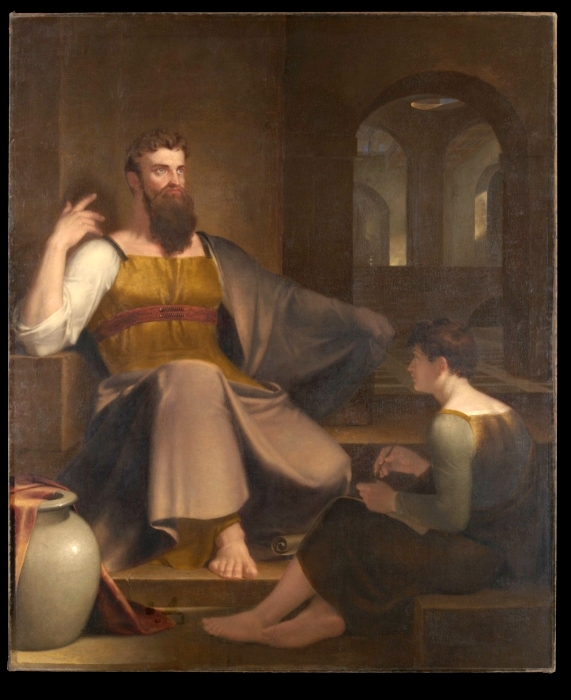
  Allston, Washington, 1779-1843. Jeremiah Dictating His Prophecy of the Destruction of Jerusalem to Baruch the Scribe, from Art in the Christian Tradition, a project of the Vanderbilt Divinity Library, Nashville, TN. http://diglib.library.vanderbilt.edu/act-imagelink.pl?RC=55713 [retrieved September 23, 2019]. Original source: http://commons.wikimedia.org/wiki/File:Jeremiah_Dictating_His_Prophecy_by_Washington_Allston_1820.jpeg.


A Prophet of Doom? A Lectionary Reflection for Pentecost 14C (Jeremiah 4)


Jeremiah 4:11-12, 22-28 New Revised Standard Version (NRSV)
 
11 At that time it will be said to this people and to Jerusalem: A hot wind comes from me out of the bare heights in the desert toward my poor people, not to winnow or cleanse— 12 a wind too strong for that. Now it is I who speak in judgment against them.
22 “For my people are foolish,
    they do not know me;
they are stupid children,
    they have no understanding.
They are skilled in doing evil,
    but do not know how to do good.”
23 I looked on the earth, and lo, it was waste and void;
    and to the heavens, and they had no light.
24 I looked on the mountains, and lo, they were quaking,
    and all the hills moved to and fro.
25 I looked, and lo, there was no one at all,
    and all the birds of the air had fled.
26 I looked, and lo, the fruitful land was a desert,
    and all its cities were laid in ruins
    before the Lord, before his fierce anger.
27 For thus says the Lord: The whole land shall be a desolation; yet I will not make a full end.
28 Because of this the earth shall mourn,
    and the heavens above grow black;
for I have spoken, I have purposed;
    I have not relented nor will I turn back.
*******

                Chicken Little was known for going around proclaiming that “the sky is falling.” He was proven wrong in his prognostication. The sky didn’t fall. Though plenty of so-called prophets of doom have arisen over time, no one really wants to be thought of as a version of Chicken Little. Nevertheless, messages of doom continue to be broadcast (now by way of social media). Sometimes these messages need to be ignored, but at other times they should be heeded. When the Weather Service forecasts a hurricane, you ought to take it seriously. Get out of the way, if you can.

The prophet Jeremiah, as we’ve seen in recent posts, had a penchant for his messages of impending doom. From the very beginning of the book, messages of judgment and impending destruction were revealed. If the people persist in their wickedness, they will perish (at least the nation as a nation will perish. That message proved correct. The Babylonians swept in, destroying the city of Jerusalem together with the Temple, after which they carted off into exile the king and leading members of society (along with, we’re assuming, lots of loot, especially gold from the Temple). These readings from Jeremiah are being heard, if chosen, as churches begin their fall seasons. So, are you ready to hear the word of the Lord as delivered by Jeremiah?

                A week past, the lectionary invited us to consider a reading from Jeremiah 18. Now, we find ourselves in chapter 4. It appears that we’re going backward. Why? I’m not sure, but such is the course set before us. As before, Jeremiah has a word of judgment to share with us. We’re not reading from verses 5 and 6 of Jeremiah 4, but it does set up what we’re about to consider. Jeremiah hears the word of the Lord: “Proclaim in Judah, announce in Jerusalem, and say: ‘Blow the horn in the land!’ Shout aloud and say: ‘Assemble, and let us go into the fortified cities!’ Set up a signpost: To Zion. Take refuge, do not delay! For I bring evil from the north, and great disaster” (Jer. 4:5-6 Tanakh). Yes, take cover, right now. Don’t wait any longer, for disaster is at hand.

When we come to the reading for the day from Jeremiah 4, we hear a word of judgment. The prophet, speaking for God, promises that a hot wind will come off the desert not to cleanse, but as a sign of judgment. What will that wind look like? Could it be the Babylonians? Having spent time in Jeremiah, we know that he promises judgment on the people if the nation doesn’t turn from evil. Though not part of the assigned reading, in verse 14, the word of the Lord declares: “Wash your heart clean of wickedness, O Jerusalem, that you may be rescued” (Jer. 4:14 Tanakh). Of course, we know the rest of the story. If there was repentance, it didn’t forestall the judgment that was visited upon Jerusalem and the nation.

                The core of our reading begins with the declaration “For my people are foolish,” therefore they don’t know God. In a parallel statement, Jeremiah declares on behalf of God “they are stupid children.” Yes, they are foolish and stupid, and thus don’t know or understand God. What they do seem skilled at, however, is doing evil. In other words, when God looks at the people, what he sees is a total mess. Foolish and stupid people who know not God but do know evil.

                Here the text takes a cosmic turn. Before this, the prophet is giving attention to Jerusalem, but now it’s creation. God has looked upon the earth and what God sees is something that is “waste and void.” The Hebrew is tohu wa bohu. These words are found at the beginning of Genesis 1, when the earth was “formless and void” (Gen. 1:2). The earth, it seems, has reverted to its original state. It is formless and void. The light has disappeared from the skies. The mountains are quaking. Not only that but humanity is gone, and the birds have fled. Farmland has turned to desert, while towns lay in ruin.  All of this is due to God’s “blazing anger.” Creation has reverted to its original state.  

                So, what word do we hear in this passage? Is there a call for repentance? When we read words of judgment, we often think of God acting unilaterally sending destruction down upon us. But might judgment come in the form of consequences? The judgment that came upon Jerusalem and Judah didn’t come in the form of lightning bolts. It came in the form of a conquering army. So, might the judgment coming upon us in our day be the consequences of our own actions?

                The word we hear in Jeremiah 4 is directed at foolish and stupid people who give no heed to God. Allie Utley responds that with regard to this word, “The reader must wrestle with the idea that when the people of God do not know God, all of creation will suffer.” Might we understand this word in light of the current climate crisis? Allie Utley invites us to use this passage as a “lens to think about ecojustice.” She writes that “our human actions have a direct impact on the earthly, both in our local communities and on a grand scale” [Connections, p. 306]. Hurricanes, floods, fires, drought. They are becoming more common. Island nations face the prospect that their islands could disappear in rising seas. Glaciers that feed river systems are shrinking. Unfortunately, there are those who wish to deny the message of the vast majority of scientists (this includes the current American administration and that of the president of Brazil, where fires are raging destroying the Amazon rainforests, which provide so much of the earth’s oxygen). They deny that the climate is changing, and seem hell-bent on rolling back every rule and regulation designed to protect the environment, and thus our future as a species. If we embrace these policies and the politicians who promise us good tidings if we ignore the warnings, should we not be counted among those whom Jeremiah calls stupid and foolish?

                There is no word of grace or hope in this passage as it lies before us, or so it seems. But then, isn’t that the point of a prophetic word like this?  If you don’t get your act together bad things will happen. The choice is yours. In this there is hope. If we heed the warnings of our contemporary prophets, perhaps we can avoid disaster.  

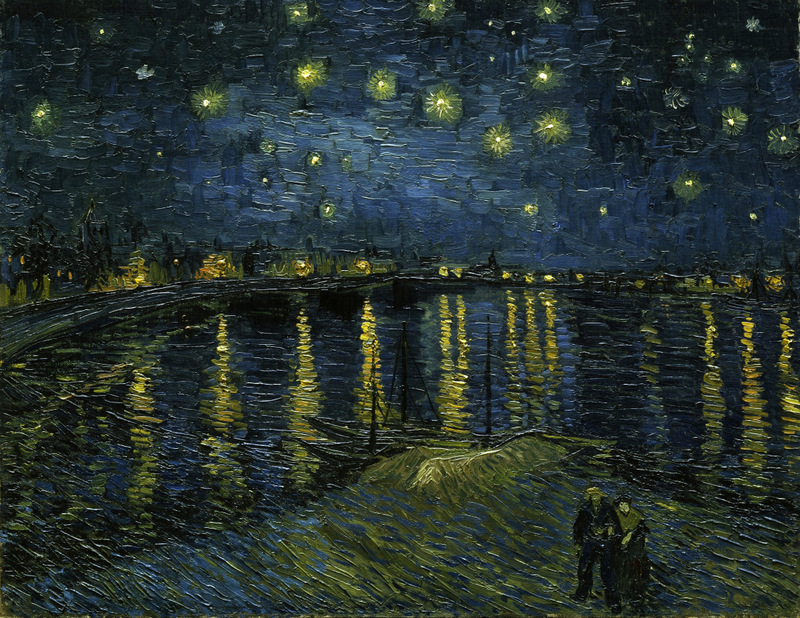
Picture attribution: Gogh, Vincent van, 1853-1890. Starry Night, from Art in the Christian Tradition, a project of the Vanderbilt Divinity Library, Nashville, TN. http://diglib.library.vanderbilt.edu/act-imagelink.pl?RC=55682 [retrieved September 7, 2019]. Original source: http://commons.wikimedia.org/wiki/File:Vincent_van_Gogh_-_Starry_Night_-_Google_Art_Project.jpg.


We Are Not Our Own: Pentecost 13 (Narrative Lectionary)

Narrative Lectionary Reflection

September 8, 2019

Read Genesis 2:4b-25 (CEB)

astronomy-dark-design-924824
Reflection

Happy New Year everyone!  This Sunday we start a new year in the Narrative Lectionary.  The gospel focus is on the book of Mark, but we will get to that later in the year.  Right now, we start at the beginning- the very beginning.

This week’s text begins with the second creation story.  Yes, I said second creation story.  Genesis 1 has the first story which is probably the most well-known.  Genesis 2 is a shorter story.  Genesis 1 is going step by step, telling us what God did on what day and it ends with God taking a rest.  Genesis two rushes past the rest of creation and focuses almost exclusively on humans.

This should give you a clue as to what this passage is will focus on, or should I say who this passage will focus on.  Verse 8 tells us that God created man from the earth.  The Hebrew word for humanity is adam.  Adam is related to another Hebrew word, adamah which means “dust of the ground.”  This story tells us that humans are related to the living environment, that we are in relationship with the rest of creation.

There is also a relationship established between God and adam.  In fact, the adam is given a vocation in naming the animals.  But God didn’t think it right that the adam is the only one of his kind.  This is where God causes Adam to go into a sleep, takes a rib and forms a companion, a woman.  When Adam says that Eve is bone of my bone, he is saying that woman and man are related to one another.  There is no hierarchy, but there is relating.

The first phrase of the New Creed of the United Church of Canada says “We are not alone,
we live in God’s world.”  We aren’t alone which can mean that life isn’t all about us.  We live in a world where we are called to be in community to each other.  God created a world that was designed for relationship, for mutuality.  The danger of our time, actually of any time, is that we are the center of everything. The second creation story reminds us that God world is about relationship, about caring for each other.

The hymn “We Are Not Our Own” by Brian Wren tells us that the world doesn’t revolve around ourselves.

We are not our own. Earth forms us,
human leaves on nature’s growing vine,
fruit of many generations,
seeds of life divine.

The last hymn tells that because we are in relation with God and God’s creation, we are called to welcoming to those who cross our path:

Let us be a house of welcome,
living stone upholding living stone,
gladly showing all our neighbors
we are not our own!

We aren’t our own. We are from adamah.  We belong to God.  Let’s act like it.

Words Copyright © 1989 by Hope Publishing Company, Carol Stream, IL (www.hopepublishing.com) for the USA, Canada, Australia and New Zealand; and Stainer & Bell Limited, London, England, (www.stainer.co.uk) for all other territories.

Dennis Sanders is the Pastor at First Christian Church of St. Paul in Mahtomedi, Minnesota. He’s written for various outlets including Christian Century.

Clay in the Potter’s Hand — A lectionary reflection for Pentecost 13C (Jeremiah 18)

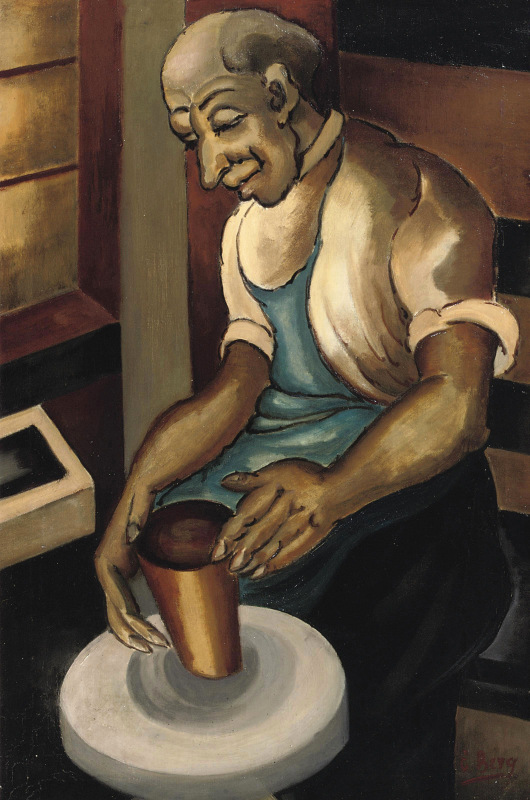
Potter by Else Berg
Jeremiah 18:1-11 New Revised Standard Version (NRSV)
 

18 The word that came to Jeremiah from the Lord: “Come, go down to the potter’s house, and there I will let you hear my words.” So I went down to the potter’s house, and there he was working at his wheel. The vessel he was making of clay was spoiled in the potter’s hand, and he reworked it into another vessel, as seemed good to him.

Then the word of the Lord came to me: Can I not do with you, O house of Israel, just as this potter has done? says the Lord. Just like the clay in the potter’s hand, so are you in my hand, O house of Israel. At one moment I may declare concerning a nation or a kingdom, that I will pluck up and break down and destroy it, but if that nation, concerning which I have spoken, turns from its evil, I will change my mind about the disaster that I intended to bring on it. And at another moment I may declare concerning a nation or a kingdom that I will build and plant it, 10 but if it does evil in my sight, not listening to my voice, then I will change my mind about the good that I had intended to do to it. 11 Now, therefore, say to the people of Judah and the inhabitants of Jerusalem: Thus says the Lord: Look, I am a potter shaping evil against you and devising a plan against you. Turn now, all of you from your evil way, and amend your ways and your doings.


******

                Most of us, at one point or another, have worked with clay. Perhaps when we were children we experienced playdough. It gave us an opportunity to express our creativity without making too much of a mess. When we were done, we could fold it all up and put it back in the can and try some different the next day. Later on, we might have worked with clay for a school art project. I have on my bookshelf a rather interesting-looking fish that my son created at some point. I can’t find a date so I’m not sure what he age he was, but I like it. Otherwise, I might not display it quite so prominently in my home study. Maybe, if we’re crafty enough, we might sit down at a potter’s wheel and create something beautiful and useful. As long as the clay is wet and malleable, we can do whatever we wish with it. If it doesn’t appear to be what we want, then we can throw it down and start over and create something else. The goal is to form something we find to be to our liking. We are the potter, and the clay is the material we use to create that item of delight.  According to Jeremiah, God is the potter and Judah is clay.

                Jeremiah doesn’t beat around the bush. He has a message for Judah. It’s a rather harsh word, but the times seemed to warrant it. When he delivered this word, it would do no good to suggest that all is well, when disaster is on the near horizon. It’s sort of like a hurricane warning. When you hear word that a hurricane is coming, you better figure out what you’re going to do quickly. Such is the case for Judah as the age of the Davidic monarchy is nearing its end.

Yes, God is the potter and Judah is the clay. God is attempting to form Judah into something that might lead to God’s delight. Unfortunately, this batch of clay resists God’s handiwork. It doesn’t want to be formed into something of beauty and value. If things don’t change soon, God may choose to throw it down and start over. Now, if Judah obliges God and lets God form it into something God desires, then all will be well. However, if Judah persists in doing evil, then God will throw it down and make something new. What do you think of that?

This is not the kind of message most preachers would want to take up (if it was me, I might choose a different lectionary passage).  Yet, it is a word to be considered. We can agree or disagree with the prophet. We might even decide to ignore the message. But, if we take it seriously, then what is the message God would have us hear?

We might want to start with Jeremiah’s context. He’s speaking to a community that is experiencing a traumatic moment. The nation of Judah is facing annihilation. Jeremiah was active in the closing years of Judah’s existence as a relatively independent nation. Before long everything will come crashing down as Jerusalem and its Temple are destroyed by the armies of King Nebuchadnezzar, while the leading members of society will be carted off into exile in Babylon. That things still hang in the balance suggests that Jeremiah and Judah are still experiencing that pre-fall position, but Jeremiah could see the writing on the wall. He sees what is coming, as do the people. They want to know why it’s about to happen.

The reading from Jeremiah is accompanied by a reading from Deuteronomy 30. Deuteronomy provides a context for understanding Jeremiah’s message to Judah. Consider this word from Deuteronomy:   


16 If you obey the commandments of the Lord your God that I am commanding you today, by loving the Lord your God, walking in his ways, and observing his commandments, decrees, and ordinances, then you shall live and become numerous, and the Lord your God will bless you in the land that you are entering to possess. 17 But if your heart turns away and you do not hear, but are led astray to bow down to other gods and serve them, 18 I declare to you today that you shall perish; you shall not live long in the land that you are crossing the Jordan to enter and possess.  [Deut.30:16-18 NRSV]

If you obey the covenant stipulations, then things will work out for you. If not, if you choose to do evil, then you will be cursed. Bad things will befall you. Now, we moderns tend to read this individualistically, but Jeremiah is speaking to the community as a whole. This is a corporate message. Depending on whether the community obeys or disobeys, it will either prosper or be cursed. It’s pretty straightforward, at least in theory. Of course, life rarely works this way. The rain falls on both the good and the bad, and so does famine. This Deuteronomic vision is comforting but it doesn’t always work. Fortunately, the makers of the biblical canon may have understood this, because they provided us a Bible with the Book of Job to offer us an alternate view of things.

                In this word from Jeremiah, it appears at one level that there are choices to be made. Do what is right, and you will prosper. If you do evil, you will be cursed. The problem is that Jeremiah uses the image of clay, and clay is a passive object. It can be molded by another, but it has no ability to define itself.  So, could this suggest that maybe God has some responsibility here? Joseph Clifford, notes that “it was God who brought Israel into being in the first place. Can the potter blame the clay for its shape?” [Connections, p. 287]. What is at this point is the clay remains malleable. It can be formed and reformed. Once it hardens, it will simply break, and all is lost. So maybe what is clay is not Judah, but God’s plans for Judah.

                Like I said before, Jeremiah was not one to pull punches. His words were often harsh. But, he had good intentions. His job was to warn Judah of their impending doom if they didn’t change their ways. This was a moment of crisis. The hurricane (a major hurricane is afoot as I write this reflection) is heading your way. Evacuate now. Don’t wait until the water is at your door. The word is strong and pointed because the Potter wants to shape Judah into a faithful and just people. As Barbara Lundblad suggests: “Like the potter, God’s intent is not to destroy the people but to reshape them in faithfulness and justice. The final words of this text can be heard as an invitation: ‘Turn now, all of you from your evil way, and amend your ways and your doings.’” [Preaching God’s Transforming Justice, p. 377].

                It is worth noting that the Psalm for today is Psalm 139:1-6, 13-18. It offers the word of comfort that’s not as apparent in Jeremiah. Reading from the Tanakh (Jewish Publication Society), verses 13-14 declare:

                It was You who created my conscience,
                                You fashioned me in my mother’s womb.
                I praise You,
                                For I am awesomely, wondrously made;
                                Your Work is wonderful;
                                I know it very well.
 

The Potter knows us well, and wants what is best for us, because as the Psalmist declares: “For I am awesomely, wondrously made.” The key is to do what is right before the Lord, to walk with God faithfully and with justice always abiding.

This is a word for us at this moment in time when the church is being tested. The world is watching to see what we will do in the face of the challenges of the moment. How will we deal with issues like racism, sexism, homophobia, immigration, health care? Yes, these are political issues, but they are also faith issues. As Jeremiah declares: “Turn back, each of you, from your wicked ways, and mend your ways and your actions!” [Jer. 18:11 Tanakh]. This is a word that is worth hearing. It is a reminder that God desires justice and mercy on our part. Besides, if we are created in the image of God, then we too are potters and there is clay set before us ready to be molded. What will we do with that clay?

                 
Picture Attribution: Berg, Else, 1877-1942. Potter, from Art in the Christian Tradition, a project of the Vanderbilt Divinity Library, Nashville, TN. http://diglib.library.vanderbilt.edu/act-imagelink.pl?RC=55636 [retrieved September 2, 2019]. Original source: http://commons.wikimedia.org/wiki/File:Else_Berg_A_potter.jpg.