Category: Uncategorized

The Bigger They Are, the Harder They Fall – Lectionary Reflection for Pentecost 5B (1 Samuel 17)

 32 David said to Saul, “Let no one’s heart fail because of him; your servant will go and fight with this Philistine.” 33 Saul said to David, “You are not able to go against this Philistine to fight with him; for you are just a boy, and he has been a warrior from his youth.” 34 But David said to Saul, “Your servant used to keep sheep for his father; and whenever a lion or a bear came, and took a lamb from the flock, 35 I went after it and struck it down, rescuing the lamb from its mouth; and if it turned against me, I would catch it by the jaw, strike it down, and kill it. 36 Your servant has killed both lions and bears; and this uncircumcised Philistine shall be like one of them, since he has defied the armies of the living God.” 37 David said, “The Lord, who saved me from the paw of the lion and from the paw of the bear, will save me from the hand of this Philistine.” So Saul said to David, “Go, and may the Lord be with you!”\
38 Saul clothed David with his armor; he put a bronze helmet on his head and clothed him with a coat of mail. 39 David strapped Saul’s sword over the armor, and he tried in vain to walk, for he was not used to them. Then David said to Saul, “I cannot walk with these; for I am not used to them.” So David removed them. 40 Then he took his staff in his hand, and chose five smooth stones from the wadi, and put them in his shepherd’s bag, in the pouch; his sling was in his hand, and he drew near to the Philistine.
41 The Philistine came on and drew near to David, with his shield-bearer in front of him. 42 When the Philistine looked and saw David, he disdained him, for he was only a youth, ruddy and handsome in appearance. 43 The Philistine said to David, “Am I a dog, that you come to me with sticks?” And the Philistine cursed David by his gods. 44 The Philistine said to David, “Come to me, and I will give your flesh to the birds of the air and to the wild animals of the field.” 45 But David said to the Philistine, “You come to me with sword and spear and javelin; but I come to you in the name of the Lord of hosts, the God of the armies of Israel, whom you have defied. 46 This very day the Lord will deliver you into my hand, and I will strike you down and cut off your head; and I will give the dead bodies of the Philistine army this very day to the birds of the air and to the wild animals of the earth, so that all the earth may know that there is a God in Israel, 47 and that all this assembly may know that the Lord does not save by sword and spear; for the battle is the Lord’s and he will give you into our hand.”
48 When the Philistine drew nearer to meet David, David ran quickly toward the battle line to meet the Philistine. 49 David put his hand in his bag, took out a stone, slung it, and struck the Philistine on his forehead; the stone sank into his forehead, and he fell face down on the ground.
****************************

                Most of us who grew up going to Sunday School heard the story of David and Goliath. It’s an action-packed story, that features a teenage boy armed only with a sling and five smooth stones taking on the Philistine champion, who is described as a giant. Here was a man who was so strong that an entire army couldn’t defeat him. While 1 Samuel suggests that Goliath is six cubits and a span in height, which is about ten feet tall (the Septuagint has four cubits and a span, which is around 6’6”), which is big, we are often given this picture of an even bigger man. While the author of 1 Samuel might be exaggerating Goliath’s height for effect, we have generally bought into that portrait. In fact, many pictures envision Goliath as being even bigger than the ten feet mentioned in 1 Samuel. It’s all very exciting, which is why we all seem to remember it. It is a story that is so memorable that it continues to be retold and reused year after year. There are, as one might expect, numerous animated videos and action figures. If you’re preaching on this passage, or teaching it in Sunday School, you might as well let the video tell the story.

                The lectionary invites us to focus on verses 32-49, though one might start with verse 1 to get the complete sense of the story. Saul and the Israelite army is engaged in battle with the Philistines. They can’t seem to achieve victory because the Philistines have this secret weapon, a huge warrior who is undefeatable (think the Incredible Hulk only bigger). This warrior, named Goliath, issues a challenge. Choose a champion to fight me. The side that loses will be the servant of the winner (Goliath is sure he will win, and the Israelites aren’t in disagreement). Saul asks for a champion, but no one steps forward. David happened to be in camp when Goliath issued his challenge, having been sent by his father to bring supplies to his older brothers who were serving in Saul’s army. David couldn’t go with them because he was too young and inexperienced (even though Samuel had already anointed him as king). David heard the taunts, saw that no one was stepping up to take on the Philistine champion, and so he offered to take on Goliath himself. Most assuredly this is the foolishness of youth, right? When we’re young we think we can take on the world and achieve victory. Only with time do we become more circumspect. In any case, Saul gets wind of David’s willingness to take on Goliath. I’m sure Saul wasn’t too thrilled about this volunteer, but no one else was willing to fight Goliath. Maybe the fact that this boy, who was too young to serve in his army, volunteered, might shame others into stepping forward. As for David, he is cock sure of himself. He has no fear of Goliath, for he has fought off lions and bears as he watched over the sheep. Goliath isn’t any different. Since no one else volunteers, Saul agrees to send the young sheepherder out to fight the greatest warrior of the day.   


                There is a critical point being made here. David volunteers to face Goliath, but not on Goliath’s terms. We see this in David’s decision not to wear Saul’s armor. While Goliath comes into battle armed with sword and lance, David chooses a sling and stones. This doesn’t seem to be a fair match, but this is the way David wants to approach the battle. Where does David’s confidence come from? It comes from God.

                When the two champions face each other. Goliath feels a bit insulted. Standing before him is this boy. He may be ruddy and handsome, but he’s not a warrior. Goliath taunts David, letting him know that the champion will feed him to the birds before too long. As for David, he responds with a confession of faith: “You have come to me with sword and spear and javelin: but I come to you in the name of the Lord of Hosts, the God of the armies of Israel, whom you have defied” (1 Sam. 17:45). David has his own secret weapon, and that is the Lord of Hosts. Sure enough, as the story goes, David’s aim is true, and Goliath falls dead. Now the reader knows something that neither Saul nor Goliath knows—David has been anointed Saul’s successor. So how can he fail? David might be the little guy, but he is destined to win, even as the biggie falls, whether that be Goliath or Saul.

                So, what should we make of this story? It is often used to illustrate the idea that just because something is big, doesn’t mean it can’t be tackled. There is a secular side to this principle. Just put your mind to it, and you can succeed. You might find support for this in David’s claim to have fought off lions and bears, and so Goliath is no different. You just have to have the right attitude and tools. There is the religious version of the principle, which suggests that no problem is too big to be handled, if you have God on your side. My sense is that this is truer to the text, but it presents its own set of problems. There is a further issue and that has to do with how we use stories tinged with violence. I am uncomfortable with the suggestion that Yahweh is a warrior God, as there is a tendency to divide Yahweh from the God of Jesus (Marcionism).

Perhaps we should be content with the concept that no problem is too big when we walk with God.  As Alphonetta Wines puts it: “The world loves the David and Goliath story and any victory when the longshot wins. What an awesome reminder that with God, we can be victorious, even in the most difficult situations.” Perhaps she is correct. We love the story because it offers encouragement to us when we face challenges that seem overwhelming. As for David, he had already experienced that presence as a shepherd, facing down lions and bears. Goliath might be bigger and better armed, but the situation isn’t all that different. We’re led to sing: “How firm a foundation, ye saints of the Lord, is laid for your faith in God’s excellent word!”

Robert Cornwall is the Pastor of Central Woodward Christian Church in Troy, Michigan. He holds the Ph.D. in Historical Theology from Fuller Theological Seminary. He is the author of a number of books including Out of the Office (Energion, 2017), Marriage in Interesting Times (Energion, 2016), and Freedom in Covenant (Wipf and Stock, 2015) and blogs at Ponderings on a Faith Journey. 

Do-Over Anointing — Lectionary Reflection (1 Samuel)

1 Samuel 15:34-16:13 New Revised Standard Version (NRSV)

34 Then Samuel went to Ramah; and Saul went up to his house in Gibeah of Saul. 35 Samuel did not see Saul again until the day of his death, but Samuel grieved over Saul. And the Lord was sorry that he had made Saul king over Israel. 
16 The Lord said to Samuel, “How long will you grieve over Saul? I have rejected him from being king over Israel. Fill your horn with oil and set out; I will send you to Jesse the Bethlehemite, for I have provided for myself a king among his sons.” Samuel said, “How can I go? If Saul hears of it, he will kill me.” And the Lord said, “Take a heifer with you, and say, ‘I have come to sacrifice to the Lord.’ Invite Jesse to the sacrifice, and I will show you what you shall do; and you shall anoint for me the one whom I name to you.” Samuel did what the Lord commanded, and came to Bethlehem. The elders of the city came to meet him trembling, and said, “Do you come peaceably?” He said, “Peaceably; I have come to sacrifice to the Lord; sanctify yourselves and come with me to the sacrifice.” And he sanctified Jesse and his sons and invited them to the sacrifice. 
When they came, he looked on Eliab and thought, “Surely the Lord’s anointed is now before the Lord.” But the Lord said to Samuel, “Do not look on his appearance or on the height of his stature, because I have rejected him; for the Lord does not see as mortals see; they look on the outward appearance, but the Lord looks on the heart.” Then Jesse called Abinadab, and made him pass before Samuel. He said, “Neither has the Lord chosen this one.” Then Jesse made Shammah pass by. And he said, “Neither has the Lord chosen this one.” 10 Jesse made seven of his sons pass before Samuel, and Samuel said to Jesse, “The Lord has not chosen any of these.” 11 Samuel said to Jesse, “Are all your sons here?” And he said, “There remains yet the youngest, but he is keeping the sheep.” And Samuel said to Jesse, “Send and bring him; for we will not sit down until he comes here.” 12 He sent and brought him in. Now he was ruddy, and had beautiful eyes, and was handsome. The Lord said, “Rise and anoint him; for this is the one.” 13 Then Samuel took the horn of oil, and anointed him in the presence of his brothers; and the spirit of the Lord came mightily upon David from that day forward. Samuel then set out and went to Ramah.
**************
                Israel wanted a king, just like all the other nations. They got their wish in the person of Saul. Apparently, Saul looked like a king, but ultimately the job was too big for him, and he was rejected by God. When God decided to start fresh, with a new king, God sent Samuel on a trek to find the right person to fill the job. If at first you don’t succeed, try, try again!
Before we move on to the next king, whom Samuel will anoint, we need to address God’s rejection of Saul. There were a couple of occasions where God, speaking through Samuel, was not happy with Saul’s leadership of the people. In the verses just prior to this week’s reading, God rejects Saul, because Saul spared the king of the Amalekites (and some sheep), even though God told Saul to exterminate them all (Samuel finishes the job by hewing Agag into pieces). Because Saul didn’t do as he was told, though he told Samuel he saved the sheep for a sacrifice, he was rejected, for God desires obedience not sacrifice! (1 Samuel 15).
I must confess, first, that the story of the Amalekite genocide has always bothered me, and it should bother all Christians and Jews. This is not representative of my theology. I must also confess that I have always felt sorry for Saul. Yeah, he made mistakes, but he’s human. He was also put into tricky situations. He seems to have been a successful general, especially with the help of his son Jonathan leading the troops. I don’t think that God was fair with him, especially after God abandons him, leaving him open to his own demons (as the story reveals going forward). Perhaps Saul wasn’t up to the job, but on whose shoulders does responsibility fall? After all, Samuel anointed him—at God’s direction. In any case, God regrets the choice, and wants to start fresh.
With this expression of regret, God sends Samuel out to look for a replacement. In fact, God reprimands Samuel for grieving over Saul. The deed is done, so move on. God has moved on, so Samuel needs to get moving. Samuel is sent to Bethlehem, to the house of Jesse. There he is supposed to find the person with the right stuff, someone different from Saul. Since Samuel was afraid that Saul might find out and kill him, God suggested a ruse. Take a heifer and go to Bethlehem, pretending you’re on your way to offer sacrifice, and invite Jesse and his sons to join you. Who knew that Yahweh was so good at deception. So, with that cover, Samuel headed to Bethlehem to find Jesse.
Samuel must have had a bad reputation with the people, because when he arrived in Bethlehem the people were not happy. In fact, they were afraid of him.   The word here is: “The elders of the city came to meet him trembling, and said, ‘Do you come peaceably?’” (1 Sam. 16:4, emphasis mine). Samuel assures them that he comes peaceably, and with that approaches Jesse.
The story that follows is well known. Samuel asks Jesse to gather his sons, so he can bless them. He goes down the line, blessing each one, but none of the seven sons of Jesse gets God’s approval. Samuel was impressed with Eliab, the oldest, but Yahweh simply told Samuel not to look on the outside appearance, for “the Lord does not see as mortals see; they look on the outward appearance, but the Lord looks on the heart.” Might Samuel wonder why God didn’t use this criterion the first time with Saul? After all, Saul looked like a king, but didn’t have a heart from God (or so it seemed). With seven sons rejected, Samuel must have been getting a bit concerned. So, he asks Jesse if he has any other sons not present. Jesse responds that there is one more, the youngest, who is out taking care of the sheep. One must assume that Jesse hadn’t thought about sending for the youngest son, when he had seven older sons who should have filled the bill. Why the youngest? Yes, we know, God often worked that way—think Jacob and Esau. God’s criteria might be different from ours.
When David arrives from the fields, smelling like sheep (I’m assuming), God reveals that this is the one. I find it interesting that while God told Samuel not to look on the outside, Samuel is impressed with his externals! We’re told that David was “ruddy, and had beautiful eyes, and was handsome.” He’s a good-looking kid, and he will grow up into a handsome man, whom women and men are attracted to. When God gives the okay, Samuel takes out the oil and anoints David the future king. We’re told that “the spirit of the Lord came mightily upon David from that day forward.” As for Saul, in verse 14 of chapter 16, we’re told that the Spirit left Saul. Stephen Chapman notes that these two verses suggest that the Spirit can “rest upon one leader at a time, that God’s investment of the spirit in David cannot occur without the removal of that spirit from Saul, an action resulting in bitter consequences” [Chapman, 1 Samuel as Christian Scripture, pp. 145-146].
               
This is a complicated story, because it raises uncomfortable questions about God. It is no help to simply chock this up to its being part of the Old Testament. As we’re often told, the New Testament vision is different. That is a Marcionite view of God and the two testaments, for it breaks Jesus from his context. There aren’t two Gods, one in the Old Testament and another in the New. There is but one God, who is understood in diverse ways—including within the first testament. So, it raises questions that need to be addressed regarding God’s character.
It also raises questions about how we look at leadership. I think we still look on the outside. Good looks. Charisma. They’re still important. Even if David has good looks, it’s not the reason for his being chosen. There is something inside him that makes him an appropriate choice. David seems to have the inherent capacity to be king, unlike his predecessor. I appreciate this word from Carolynne Hitter Brown regarding God’s way of raising up leaders:

God raises leaders from unexpected places. What better example is there than the quiet, middle-aged seamstress named Rosa Parks? Parks’s refusal to relinquish her bus seat to a Eurocentric person was the spark that led to the Montgomery bus boycott. Later she was deemed the “mother of the civil rights movement.” Her resolve to maintain dignity and resist unjust treatment set off a chain of events that altered race relations permanently. [Preaching God’s Transforming Justice, p. 283]

The fact that Rosa Parks was an activist doesn’t change the fact that her courage to take on the powers. She was raised up for this purpose, even as David unexpectedly was lifted up for this calling, and like Rosa Parks changed history.
   As for Samuel, having completed his work, he heads off to Ramah, while David goes back to his chores. It’s not time for the revelation of David’s anointing. Only the family knows—if that.  We will have to wait to see David take up the mantle of monarchy. He has the spirit, just not the throne. He has to be patient and wise, good qualities to have if one wishes to be a good leader. So, he bides his time, until he can take his place as the “do-over anointed” king of Israel. David makes his share of mistakes, but is remembered as one whose heart was close to God, and thus the right person for the job.


Robert Cornwall is the Pastor of Central Woodward Christian Church in Troy, Michigan. He holds the Ph.D. in Historical Theology from Fuller Theological Seminary. He is the author of a number of books including Out of the Office (Energion, 2017), Marriage in Interesting Times (Energion, 2016), and Freedom in Covenant (Wipf and Stock, 2015) and blogs at Ponderings on a Faith Journey.
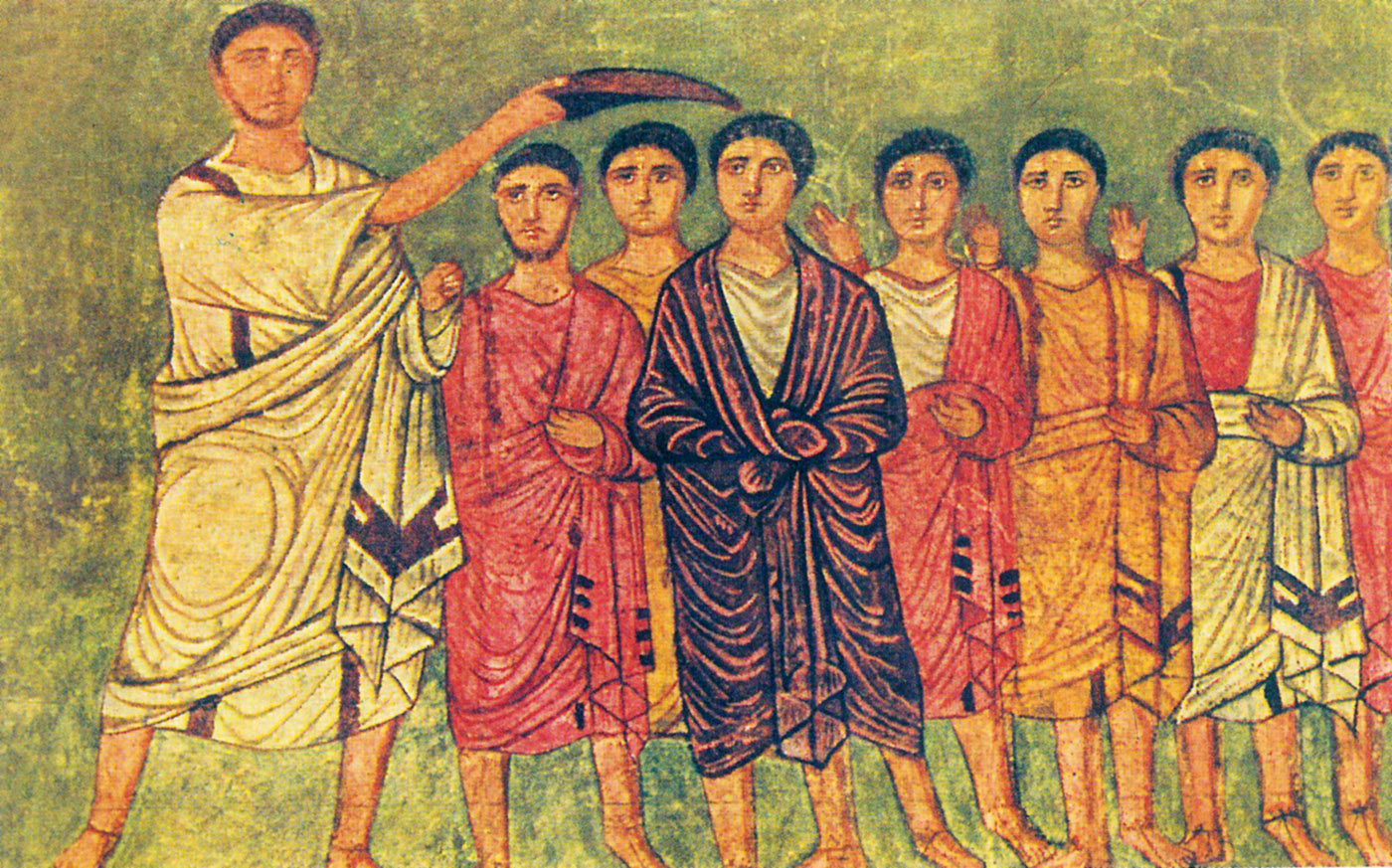

So, you want a King! – Lectionary Reflection for Pentecost 3B

Then all the elders of Israel gathered together and came to Samuel at Ramah, and said to him, “You are old and your sons do not follow in your ways; appoint for us, then, a king to govern us, like other nations.” But the thing displeased Samuel when they said, “Give us a king to govern us.” Samuel prayed to the Lord, and the Lord said to Samuel, “Listen to the voice of the people in all that they say to you; for they have not rejected you, but they have rejected me from being king over them. Just as they have done to me, from the day I brought them up out of Egypt to this day, forsaking me and serving other gods, so also they are doing to you. Now then, listen to their voice; only—you shall solemnly warn them, and show them the ways of the king who shall reign over them.”
10 So Samuel reported all the words of the Lord to the people who were asking him for a king. 11 He said, “These will be the ways of the king who will reign over you: he will take your sons and appoint them to his chariots and to be his horsemen, and to run before his chariots; 12 and he will appoint for himself commanders of thousands and commanders of fifties, and some to plow his ground and to reap his harvest, and to make his implements of war and the equipment of his chariots. 13 He will take your daughters to be perfumers and cooks and bakers. 14 He will take the best of your fields and vineyards and olive orchards and give them to his courtiers. 15 He will take one-tenth of your grain and of your vineyards and give it to his officers and his courtiers. 16 He will take your male and female slaves, and the best of your cattle and donkeys, and put them to his work. 17 He will take one-tenth of your flocks, and you shall be his slaves. 18 And in that day you will cry out because of your king, whom you have chosen for yourselves; but the Lord will not answer you in that day.” 

  19 But the people refused to listen to the voice of Samuel; they said, “No! but we are determined to have a king over us, 20 so that we also may be like other nations, and that our king may govern us and go out before us and fight our battles.”  

***********
                The prophetic call came to Samuel when he was a child. It was during the priesthood of Eli, and according to the narrative, Eli was old, ineffective, and his sons were untrustworthy (1 Samuel 3). Now, we move decades into the future. Samuel is now the one who is old. He’s still considered wise and trustworthy, but the same cannot be said for his sons.  Facing the prospect of the instability of an unknown future, to people decide it’s time for a change in political systems. What existed was the leadership of Judges, those charismatic leaders who emerged during times of trouble to lead the people. Samuel is but the most recent of these figures. That system which waits for God to provide a leader at the right time didn’t provide the stability that the people craved. The world around them was dangerous. They felt the need for a stronger leader; a military leader who could defend them and their lands against the encroachments of neighboring peoples. Since their neighbors had kings, why couldn’t they have a king? After all, the neighbors seemed to be in a better position militarily than was true for them. Why get beat up, when you could have a king to fight your battles for you.
The request made of Samuel, that he provide them with a king, didn’t sit well with him. Perhaps there was a bit of sour grapes here, but he felt the need to bring his concerns to God. He seems to feel as if his leadership was being rejected, but then maybe he should have seen it coming. After all, his predecessor was rejected because own sons weren’t prepared to lead the nation. The same seems to be true of Samuel. The question raised here, however, concerns whether monarchy is the course of action? More specifically, what does this request say about the people’s view of the covenant relationship that Yahweh had established with them?
                When Samuel takes his concerns to God, Yahweh tells Samuel that the people aren’t really rejecting Samuel as their leader, what they’re rejecting is God’s kingship. This doesn’t mean they were opting for a separation of church and state. The ancient peoples didn’t separate secular from sacred. Kingship was just as sacred as priesthood. Often these ancient monarchs were understood to have their own sense of divinity. Asking for a king could be seen as a transfer of loyalty from one God to another, with the king being a rival deity. Thus, by rejecting Samuel, the people were perhaps looking for a new deity. While Samuel isn’t happy, nor apparently God either, God tells Samuel to do as the people request. They want a king, then give them a king. However, let them know what this means. Warn them and witness against them. They think this will make things better, but it’s not true. The people will essentially place themselves in a position of slavery, something that Yahweh had rescued them from. In other words, by asking for a king, they were asking for Pharaoh.
                God sends Samuel to the people with a lengthy warning. It is clear that the point of having a king is to have a military form of government. Watch out, Samuel informs the people. The king will build a standing army by drafting your young men to drive the king’s chariots and horses. There will be commanders of troops established. Not only will there be soldiers in the service of the king, but the king will need people to tend his fields and make instruments of war. Not only will the king require the services of the young men, but the women as well who will serve as perfumers, cooks, and bakers. As Mel Brooks’ character declares in History of the World Part One, “it’s good to be the king.” You can also hear echoes of President Dwight D. Eisenhower’s warning about the “military industrial complex.” As we know, the “Defense” budget is the largest component of our nation’s governmental expenditures.
                Turning back to 1 Samuel, it is good to remember that it was written after the Exile. It was written from the perspective of a people who had experienced monarchy. While some of the kings were good, like Hezekiah and Josiah, but most were not wise or good. While we often think of Solomon as a great and wise king, it’s good to remember that the kingdom broke into two parts after his death, in large part due to the excesses of his rule. Perhaps he was not as wise as has been advertised. Stephen Chapman makes this point:

Here again it is likely that Samuel’s speech reflects Israel’s experience in later history. Not only were the excesses described by Samuel typical of subsequent Israelite kings, the same royal offenses were later viewed as responsible for the eventual downfall of both the monarchy and the Israelite nation. After the Exile, even after they had returned to their land, the Israelites continued to perceive themselves as “slaves” (Ezra 9:8-9; Neh. 9:36), a situation attributed to the errant leadership of the kings and other leaders within pre-exilic, society: “Even when they were in their own kingdom . . . they did not serve you” (Neh. 9:34-35). [Stephen Chapman, 1Samuel as Christian Scripture, 99].

The message to the returning Exiles is simple. Having a king isn’t all that it was cracked up to be. In exchange for protection you gave up your freedom. Was it worth it?
                Ultimately, as Chapman notes, Scripture doesn’t demonize monarchy, but it does point out the challenges. There are always trade offs when it comes to government. The charismatic leadership of the period of the Judges was not without its challenges. At least with the monarchy there was a sense of stability. Yet, there is also the reminder that this arrangement is not God’s best. It is simply the reality we live with.
                Living as we do in a time of political instability in the United States and elsewhere; at a time when authoritarianism is raising its head in our midst, what lesson do we glean? There are those in our midst—religious folk—who have put their hopes in the hands of a man who has demonstrated few qualities one would deem Christian. In the past, a person like the current President would have been rejected by those who now hail him as their protector. As we consider this passage, what might 1 Samuel tell us about putting our hopes in authoritarian leaders?
                A passage like this could serve as a reminder that as the people of God we are called upon to put our allegiance not in a human leader, whether monarch or president, but in God. The request for a king will lead to the call of Saul, a man who looks good on the outside, but who ultimately fails to fulfill his potential. While not demonizing the monarchy, or any governmental system, the passage does remind us that privilege often comes with office, and that privilege often comes at a cost, even in a democracy. Nonetheless, after Samuel bears witness to the dangers of monarchy, the people remain unswayed. They’re quite clear as to what they want, and they let Samuel what it is they want: “No! but we are determined to have a king over us, so that we also may be like other nations, and that our king may govern us and go out before us and fight our battles.” People want to get on with their lives. They want a ruler to tell them what to do and then go out and fight their battles. It would seem to me that little has changed over the millennia.
                As we consider this reading, what might it say to us about our current situation and the realm of God. What does it say about allegiance?

10646937_10204043191333252_4540780665023444969_nRobert Cornwall is the Pastor of Central Woodward Christian Church in Troy, Michigan. He holds the Ph.D. in Historical Theology from Fuller Theological Seminary. He is the author of a number of books including Out of the Office (Energion, 2017), Marriage in Interesting Times (Energion, 2016), and Freedom in Covenant (Wipf and Stock, 2015) and blogs at Ponderings on a Faith Journey

A Prophetic Calling — Reflection on 1 Samuel 3

Now the boy Samuel was ministering to the Lord under Eli. The word of the Lord was rare in those days; visions were not widespread. 

At that time Eli, whose eyesight had begun to grow dim so that he could not see, was lying down in his room; the lamp of God had not yet gone out, and Samuel was lying down in the temple of the Lord, where the ark of God was. Then the Lord called, “Samuel! Samuel!” and he said, “Here I am!” and ran to Eli, and said, “Here I am, for you called me.” But he said, “I did not call; lie down again.” So he went and lay down. The Lord called again, “Samuel!” Samuel got up and went to Eli, and said, “Here I am, for you called me.” But he said, “I did not call, my son; lie down again.” Now Samuel did not yet know the Lord, and the word of the Lord had not yet been revealed to him. The Lord called Samuel again, a third time. And he got up and went to Eli, and said, “Here I am, for you called me.” Then Eli perceived that the Lord was calling the boy. Therefore Eli said to Samuel, “Go, lie down; and if he calls you, you shall say, ‘Speak, Lord, for your servant is listening.’” So Samuel went and lay down in his place. 

10 Now the Lord came and stood there, calling as before, “Samuel! Samuel!” And Samuel said, “Speak, for your servant is listening.” 

****************
                In a few weeks I will celebrate the thirty-third anniversary of my ordination to ministry in the Christian Church (Disciples of Christ). I have an ordination certificate to remind me of the time and place at which the event occurred. I do remember that day, which followed a day after I received my M.Div. degree at Fuller Seminary. What I can’t remember is the exact moment or time at which I sensed a call to ministry. I can’t say that I had an extraordinary experience of God speaking directly to me, issuing a call to ministry. But, at some point along my life path I found myself moving toward that Sunday afternoon in June of 1985, when a gathering of elders from Temple City Christian Church and other clergy, both Disciples and non-Disciples, laid their hands on me and offered a prayer of consecration, setting me apart for ministry in the church. I will admit that at the time, I didn’t expect to spend my future years as an actual pastor. I assumed I would be a professor of some type. I would go on from there to pursue further education to support that dream. Here I am, some thirty-three years later, having spent the past twenty years serving as pastor of three different congregations.
When did the call really come? Could seeds have been planted back when I was a child, serving as an acolyte at St. Barnabas Episcopal Church in Dunsmuir, California (now in Mount Shasta)? Was it when I was asked to become a lay-reader as a teenager, because Fr. Green felt that I had the voice to lead portions of the liturgy?  Whenever the call came, I find myself in this position of service in the church. My story is probably like many others, including the possibility that seeds were planted in childhood.
                The prophetic call stories in the Hebrew Bible are intriguing. They are all somewhat different. In many of them, the one being called is reticent to say yes. As we saw in the reading from Isaiah 6 for Trinity Sunday, Isaiah confessed that he was “a man of unclean lips,” and therefore unworthy of being able to face God, let alone hear a call from God. In the end, however, his lips were purified when a seraph touched his lips with a live coal taken from the altar in the Temple. After this act of purification, Isaiah answered “here am I, send me.” Jeremiah responded to God’s call, including God’s declaration that God had formed him in the womb for this purpose, by telling God that he was a mere a child and didn’t know how to speak. God responded to Jeremiah’s resistance by touching his mouth and putting words in Jeremiah’s mouth so that God’s word might be proclaimed (Jer.1:4-10). This leads us to the story of the call of the prophet/judge Samuel. Samuel is living with the aged priest Eli. He’s helping to serve in the Temple at Shiloh. It was there that the Ark of the Covenant was being kept. It is in this context that Samuel receives his call from God.
                The background story to Samuel’s call to prophetic ministry parallels that of John the Baptist. Both prophets were born to older mothers who were considered barren, and therefore felt the shame of the community, but then by divine intervention their mothers conceived and bore sons who would grow up to be prophets. It is worth noting that in the ancient world, as well as some parts of our contemporary world, to not bear a child was considered a sign of divine judgment. Thus, the prayer of Hannah was for a child to be born, not so she could fulfill some maternal dream, but so her shame might be removed. This might not be our cultural dynamic, but it was true in the days of yore. So, when the desired child was old enough, Hannah brought her child to the Temple in fulfillment of a promise made to God. Again, this might not be our way of thinking, but it was the way things were. That is how Samuel came to live with an elderly priest whose sons were less than honorable. It is the reason why Samuel is in this position to hear the call of God while sleeping in the Temple.
                The call of Samuel is set up by the declaration that “the word of the Lord was rare in those days.” What might this mean? Could it be that the people were not in a frame of mind to hear that word? Could the reference to Eli’s eyesight—perhaps blindness—have a spiritual reference point? Could this be due to spiritual complacency? Could it be that there is no word, because no one is ready to hear it? That leads to the question: Is Samuel different? Is he, as the miracle child, the one person who is in a position to hear God’s voice?  

                As we ponder these questions we find Samuel asleep in the temple at Shiloh. As he sleeps, he hears a voice calling his name. Considering his job description, he is likely sleeping near the Ark of the Covenant. For those of us who have been influenced by Raiders of the Lost Ark, it’s probably easier to envision a voice speaking from the Ark. But, this isn’t Raiders of the Lost Ark, this is the Bible. When Samuel hears this voice, he goes to Eli and asks the priest what he wanted, at which time he’s sent back to bed. Just a child’s vivid imagination! After all, the word of God was rare in those days. This will happen two more times before Eli decides that something is up. Eli may not be the most faithful priest, but he knew that God could speak. So, after the third time, Eli tells Samuel to answer the voice with the words: “Speak, for your servant is listening.” As one reads further along in the story, we discover that Samuel has heard God’s voice and Samuel will speak for God to the people. He will even anoint kings.
                That Samuel could respond to this calling, serves as a reminder that God is not without witnesses, even when things look difficult. After all, the “lamp of God had not yet gone out.” There was hope that the flame of God would be carried on to the next generation through the call of Samuel.
                So, what might this say to us? Could it be that we should help young people, including small children listen for God’s voice? If so, how might we do this? For me, it might have been serving as an acolyte and then as a lay reader. For who knows when a call will come?

Bob Cornwall is a Disciples of Christ pastor, church historian, and author. He currently serves as Pastor of Central Woodward Christian Church (Disciples of Christ) of Troy, Michigan. He holds a Ph.D. in Historical Theology from Fuller Theological Seminary, along with an M.Div. from Fuller and a B.S. degree from Northwest Christian University in Eugene, OR. Bob has authored several books, as well as numerous articles and book reviews. He currently edits Sharing the Practice (Academy of Parish Clergy) and among the books already published, he has a number of books that have appeared with Energion Publications — Marriage in Interesting Times: A Participatory Study Guide, Unfettered Spirit: Spiritual Gifts for a New Great Awakening, Worshiping with Charles Darwin, Ultimate Allegiance: The Subversive Nature of the Lord’s Prayer and Ephesians: A Participatory Study Guide, and Faith in the Public Square (2012). He’s also the author of Freedom in Covenant (Wipf and Stock, 2015). For more on my books, see my Amazon Author Page: amazon.com/author/robertcornwall.

I Saw the Lord – Lectionary Reflection for Trinity Sunday (Isaiah 6)

Marc Chagall

Isaiah 6:1-8 New Revised Standard Version (NRSV)

6 In the year that King Uzziah died, I saw the Lord sitting on a throne, high and lofty; and the hem of his robe filled the temple. 2 Seraphs were in attendance above him; each had six wings: with two they covered their faces, and with two they covered their feet, and with two they flew. 3 And one called to another and said: 
      “Holy, holy, holy is the LORD of hosts;
       the whole earth is full of his glory.” 
4 The pivots on the thresholds shook at the voices of those who called, and the house filled with smoke. 5 And I said: “Woe is me! I am lost, for I am a man of unclean lips, and I live among a people of unclean lips; yet my eyes have seen the King, the LORD of hosts!”
6 Then one of the seraphs flew to me, holding a live coal that had been taken from the altar with a pair of tongs. 7 The seraph touched my mouth with it and said: “Now that this has touched your lips, your guilt has departed and your sin is blotted out.” 8 Then I heard the voice of the Lord saying, “Whom shall I send, and who will go for us?” And I said, “Here am I; send me!”

********************

As we move from Pentecost Sunday to Trinity Sunday, we find ourselves drawn into the heavenly realm (with the prophet Isaiah). While Easter celebrates the resurrection of Jesus and Pentecost the outpouring of the Spirit, Trinity Sunday lifts our attention to God in God’s fullness – as Father, Son, and Holy Spirit, Mother of us All. As to what we are attending to on Trinity Sunday, theologian Joe Jones writes that “the doctrine of the Trinity is simply that set of rules and concepts proposed for understanding of the self-revealing God witnessed to in the Bible” [A Grammar of the Christian Faith, 1:151]. The Trinity, then, is the term we use to speak of the way in which we encounter the one who covenanted with Israel, who was incarnate in Jesus of Nazareth, and who empowers the church as it carries out its mission in the world. The idea of the Trinity is related to the Christological question. As Joe Jones puts it: “Everything pivots around the issue of the divinity of Jesus Christ. If Jesus Christ is not essential to the identification of who God is, then the doctrine of Trinity is unnecessary” [Grammar, 1:151]. While the first reading from Isaiah 6 does not mention either Jesus or the Holy Spirit, as a Christian I read this passage in light of my affirmation of the doctrine of the Trinity. That is, the one whom Isaiah claims to see is the one Christians have understood in terms of our confession of the triune nature of God.

So, with that context-setting statement, we are ready to hear the word from Isaiah, the one who was drawn into the presence of God in the year that King Uzziah died (around 740 BCE). In the description of the vision, that prophet finds himself standing before the throne of God. The prophet reported “I saw the Lord sitting upon a throne, high and lifted up; and his train filled the temple.” Note the use of the term temple, which suggests that this is the location at which God is encountered. This is the location at which heaven and earth intersect. To make reference to Dr. Who’s Tardis, it is apparently larger on the inside than on the outside.

There is no explicit reference to the Trinity here, and yet the reading does draw our attention to the God Christians believe was incarnate in Jesus, and thus reveals to humanity the God who is unseen. In this vision, the unseen God is revealed to the prophet in the Temple, where the prophet sees seraphs (six-winged creatures) ministering before the throne of God. One seraph sings out: “Holy, Holy, Holy is the LORD of hosts; the whole earth is full of his glory.” In other words, while the Temple is a meeting place, it’s not just the Temple, but the whole earth that is filled with the glory of God. This is a magnificent sight, for what the prophet experiences is the holy, the sacred. That makes the prophet’s response understandable: “Woe is me!” I too would feel overwhelmed by such a sight.

This is not just a theophany—an appearance of the divine—it is the moment of a prophetic call. The prophet is invited into the presence of God not for voyeuristic reasons, but with a call in mind. It is also moment of transition in the life of Judah. The king is dead, a new king is set to come into power. So, Isaiah will have as his ministry focus, speaking to the new king on behalf of God who covenanted with Israel. It’s a recognition that even the most righteous of kings need some prodding from God’s prophets. With this transition in mind, God calls out from the throne: “Whom shall I send, and who will go for us?” Standing there before God’s throne, the Isaiah hears the call and responds. I’m wondering, based on the nature of the story, if Isaiah is not in the Temple at the time of the vision. So, the calls goes out, and Isaiah responds favorably. While this is true, the account also reveals Isaiah’s nature reticence to take up the call. Before even hearing the call, Isaiah has declared that he is unworthy to be in the presence of God. That confession is true for most true prophets.

Isaiah has made the claim that he is unfit for the task: “I am a man of unclean lips.” That may be true, but the problem is taken care of when one of the seraphs attending to the throne of God takes a pair of tongs, lifts a coal from the altar, and presses it against Isaiah’s lips. If it is a live coal, as the text suggests, it would be burning hot. In this case, it serves as a purifier. Having had his lips seared by this coal, he no longer has an excuse. He has been made ready to speak for God (for that is the purpose of a prophet). So, when the call comes, he simply declares “Here am I, send me.”

The call has been issued by God, whom we name using the grammar of the Trinity. Isaiah has answered: “Here am I, send me.” That same call has been issued time after time, and with fear and trepidation persons have answered the call. This June I will celebrate the thirty-third anniversary of my own ordination. I too have felt unworthy of the call, but the call has been issued, and I have answered—though I cannot say that I experienced a vision such as that of Isaiah.

The vision of Isaiah is a reminder that God may be unseen, but God is not unrevealed. Isaiah declares “I saw the Lord.” The doctrine of the Trinity is an expression of what is revealed here. We confess that God has been seen in the incarnate one, in Jesus. So, with the heavenly beings, we can sing “holy, holy, holy is the Lord of hosts, the whole earth is full of his glory.” We can add the refrain from the hymn: “God in three persons, blessed Trinity.”

Robert Cornwall

10646937_10204043191333252_4540780665023444969_nBob is a  Disciples of Christ pastor, church historian, and author.  He currently serves as Pastor of  Central Woodward Christian Church (Disciples of Christ) of Troy, Michigan. He holds a Ph.D. in Historical Theology from Fuller Theological Seminary, along with an M.Div. from Fuller and a B.S. degree from  Northwest Christian University in Eugene, OR.  Bob has authored several books, as well as numerous articles and book reviews.   He currently edits Sharing the Practice(Academy of Parish Clergy) and among the books already published, he has a number of books that have appeared with Energion Publications — Marriage in Interesting Times: A Participatory Study Guide, Unfettered Spirit:  Spiritual Gifts for a New Great Awakening, Worshiping with Charles Darwin, Ultimate Allegiance: The Subversive Nature of the Lord’s Prayer and Ephesians:  A Participatory Study Guide, and Faith in the Public Square (2012). He’s also the author of Freedom in Covenant (Wipf and Stock, 2015). For more on my books, see my Amazon Author Page:  amazon.com/author/robertcornwall.


Life-Giving Breath of God – A Lectionary Reflection for Pentecost Sunday

Life-Giving Breath of God – A Lectionary Reflection for Pentecost Sunday

Ezekiel 37:1-14 New Revised Standard Version (NRSV)

37 The hand of the Lord came upon me, and he brought me out by the spirit of the Lord and set me down in the middle of a valley; it was full of bones. He led me all around them; there were very many lying in the valley, and they were very dry. He said to me, “Mortal, can these bones live?” I answered, “O Lord God, you know.” Then he said to me, “Prophesy to these bones, and say to them: O dry bones, hear the word of the Lord. Thus says the Lord God to these bones: I will cause breath to enter you, and you shall live. I will lay sinews on you, and will cause flesh to come upon you, and cover you with skin, and put breath in you, and you shall live; and you shall know that I am the Lord.”
So I prophesied as I had been commanded; and as I prophesied, suddenly there was a noise, a rattling, and the bones came together, bone to its bone. I looked, and there were sinews on them, and flesh had come upon them, and skin had covered them; but there was no breath in them. Then he said to me, “Prophesy to the breath, prophesy, mortal, and say to the breath: Thus says the Lord God: Come from the four winds, O breath, and breathe upon these slain, that they may live.” 10 I prophesied as he commanded me, and the breath came into them, and they lived, and stood on their feet, a vast multitude. 

 11 Then he said to me, “Mortal, these bones are the whole house of Israel. They say, ‘Our bones are dried up, and our hope is lost; we are cut off completely.’ 12 Therefore prophesy, and say to them, Thus says the Lord God: I am going to open your graves, and bring you up from your graves, O my people; and I will bring you back to the land of Israel. 13 And you shall know that I am the Lord, when I open your graves, and bring you up from your graves, O my people. 14 I will put my spirit within you, and you shall live, and I will place you on your own soil; then you shall know that I, the Lord, have spoken and will act, says the Lord.”


***************
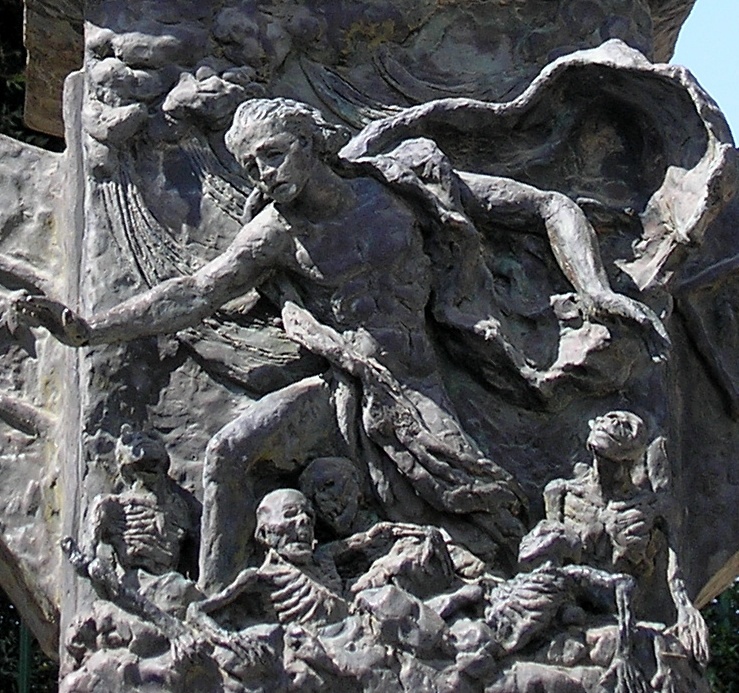
                When it comes to the church, the future can look bleak. At least in Europe and North America the church is retreating in the face of an ever more secular world. Christendom appears to be dead. While Christianity retains vestiges of the old ways, it has lost much of its cultural/social influence. There are those who cling to the stories of past glory and try to worm their way into positions of influence. It happens on the right and on the left. Where once the church was the religious face of empire, it has been replaced by other figures. Therefore, a more appropriate image for the church’s place in society might be exile. Thus, the words of prophets like Ezekiel can resonate, speaking words of hope to us in these challenging times.
The prophet Ezekiel is known for his imagery, and none of his images are as eye-catching as the valley dry bones. This image is an animator’s dream fulfillment. But what message does it convey? What did Ezekiel’s original audience take from it, and what does it offer to us as we gather on Pentecost Sunday? What word does it deliver concerning the life-giving presence of God, which blows into the community on Pentecost Sunday bringing life where once death seems to reign?
Pentecost Sunday is understood by many in the church to be the birthday celebration of the church. We wear red and perhaps make worship a little livelier. There’s no place on this day for sad faces. It’s a day to party, because the Spirit descends upon us, empowering our witness to the risen Christ, who now sits at the right hand of the Father. Life is restored, where death had reigned.
The story of Pentecost appears in the second chapter of the Book of Acts. It is a well-worn text that offers insight and encouragement. But what does Ezekiel offer us? What word does it speak to us? Perhaps the word it speaks is that there is life in the midst of exile. The word from Ezekiel challenges triumphalist visions, while providing us with a foundation to hear the promise of the life-giving Spirit that moves through the community empowering our witness.
The Pentecost story begins some ten days after the ascension of Jesus. The disciples (150 of them) are gathered in what we know as the “the upper room.” They appear to be praying, as they had been instructed by Jesus (Acts 1). Jesus had promised to send the Spirit, all they had to do was wait. When the Spirit came upon them, they would experience renewal and new life, and would be empowered to preach the good news to the world, moving from Jerusalem to the ends of the earth. All they had to do was wait. Finally, on the Day of Pentecost (a major Jewish festival), the Spirit fell upon the disciples. They began to preach. Revival broke out. People responded and were baptized (some 3000 according to Acts). Thus, the church is born, and their mission begins, one that extends to us (Acts 2).
                The first reading for Pentecost Sunday comes from Ezekiel 37 (unless you choose to read Acts 2 in this spot), which speaks to a people living in exile. They are discouraged, wondering if they will ever return home. In other words, they have experienced death. God gives to Ezekiel a word to share with the people of Judah in the form of a vision. He is taken in the Spirit to a valley filled with dry bones. This is Israel. It is a nation of dead, bleached bones. Would the nation be restored? Or would they live out their lives in exile, a people without a country. God says to Ezekiel—prophesy to these bones. Tell them to let God’s breathe enter them so that they might be restored to life. So, Ezekiel did as he was told. He called for the four winds to come and breathe life into the bones. The winds came, and the breath of the Spirit filled the bones. They began to come together. Life returned to the bones. To those who doubt that life can be restored to Israel, Ezekiel is directed to say to the people: “I will put my spirit within you, and you shall live, and I will place you on your own soil; then you shall know that I, the Lord, have spoken and will act, says the Lord.”
                What word do we hear from Ezekiel on this Day of Pentecost? Is there a word of hope here for the church that is, it would seem, experiencing exile? Christendom has died, at least in Europe and North America. Churches are experiencing difficult times, with aging congregations, declining attendance, and financial challenges. There is a sense of hopelessness creeping through the church. We see it expressed in a variety of ways, including grabs for power or sense of resignation. So, what work of the Spirit should we expect in our age? Are we that valley of dry bones? Is there a wind of the Spirit present that will fill us with the breath of God?
                The church may never again reach the levels of power it once wielded, but that does not mean that there is no hope. The days when the church defined the public square is over, but God has not been banished. We still have voices to proclaim the glory of God. We can call upon the four winds, inviting them to fill the valley of dry bones, bringing to life communities that can embody and declare the glory of God before the world. As John McClure puts it: “The story of dry bones takes place at the intersection of human weakness and divine power. It reminds us that God’s power is made great in our weakness, and that the power of the church wields is not the power of the sword, but the power of God’s Spirit working through the Word proclaimed” [Preaching God’s Transforming Justice, Year B, p. 255].

                The church is called to proclaim and embody the Gospel. We do this in a variety of ways, but ultimately this is about the Spirit, who empowers and guides us in this work of God. We are participants in the proclamation of the Gospel in word and deed, but ultimately this isn’t about us. It’s about the Spirit. Yes, Ezekiel played a role. He spoke the words. He called for the winds. But it was the Spirit and not Ezekiel that gave life to the bones. It is the Spirit who gave life to the church on Pentecost and on every day of every year. With that we go forth with hope.

Elkan, Benno, 1877-1960. Ezekiel in the Valley of the Dry Bones, from Art in the Christian Tradition, a project of the Vanderbilt Divinity Library, Nashville, TN. http://diglib.library.vanderbilt.edu/act-imagelink.pl?RC=55841 [retrieved May 14, 2018]. Original source: http://commons.wikimedia.org/wiki/File:Collantes,_Francisco_-_The_Vision_of_Ezekiel_-_1630.jpg.

10646937_10204043191333252_4540780665023444969_nRobert Cornwall is the Pastor of Central Woodward Christian Church in Troy, Michigan. He holds the Ph.D. in Historical Theology from Fuller Theological Seminary. He is the author of a number of books including Out of the Office (Energion, 2017), Marriage in Interesting Times (Energion, 2016), and Freedom in Covenant (Wipf and Stock, 2015) and blogs at Ponderings on a Faith Journey.

 

Final Instructions: Lectionary Reflection for Ascension Sunday

Final Instructions: Lectionary Reflection for Ascension Sunday

1 In the first book, Theophilus, I wrote about all that Jesus did and taught from the beginning 2 until the day when he was taken up to heaven, after giving instructions through the Holy Spirit to the apostles whom he had chosen. 3 After his suffering he presented himself alive to them by many convincing proofs, appearing to them during forty days and speaking about the kingdom of God. 4 While staying with them, he ordered them not to leave Jerusalem, but to wait there for the promise of the Father. “This,” he said, “is what you have heard from me; 5 for John baptized with water, but you will be baptized with the Holy Spirit not many days from now.” 
6 So when they had come together, they asked him, “Lord, is this the time when you will restore the kingdom to Israel?” 7 He replied, “It is not for you to know the times or periods that the Father has set by his own authority. 8 But you will receive power when the Holy Spirit has come upon you; and you will be my witnesses in Jerusalem, in all Judea and Samaria, and to the ends of the earth.” 9 When he had said this, as they were watching, he was lifted up, and a cloud took him out of their sight. 10 While he was going and they were gazing up toward heaven, suddenly two men in white robes stood by them. 11 They said, “Men of Galilee, why do you stand looking up toward heaven? This Jesus, who has been taken up from you into heaven, will come in the same way as you saw him go into heaven.”
************
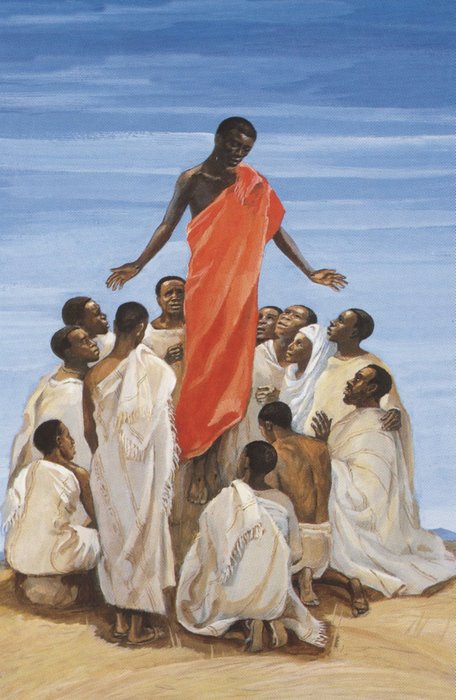
                Churches that follow the Christian Year will be either observing the Seventh Sunday of Easter or the day of Ascension (which does not fall on Sunday). In either case the first reading comes from Acts 1. The text for Ascension is the first eleven verses, while the Seventh Sunday texts come from Acts 1:15-26, which contains the call of Matthias to replace Judas Iscariot as the twelfth Apostle. The Matthias story is an intriguing one, but it is here in verse 8 of Acts 1 that the foundation for the Book of Acts is laid. So, I will address the first reading for the Day of Ascension.
                Luke invites us to imagine gathering with Jesus after forty days of post-Easter appearances for final instructions prior to Jesus’ physical departure from the disciples, which opens a new phase of Luke’s Gospel story. Chapter one of the Book of Acts marks a point of transition from Jesus’ earthly ministry to the Spirit-empowered mission of the church. The message for this moment in time is to “wait.” Now is the time for the Spirit of to come down upon the believers, so that they might bear witness to the Gospel, from Jerusalem to the ends of the earth. While it was good to be with Jesus in the flesh, it is time to leave the womb and enter the world, bearing the message of salvation.

Boundary-Breaking Spirit – Lectionary Reflection for Easter 6B (Acts 10)

Acts 10:44-48  New Revised Standard Version (NRSV)

44 While Peter was still speaking, the Holy Spirit fell upon all who heard the word. 45 The circumcised believers who had come with Peter were astounded that the gift of the Holy Spirit had been poured out even on the Gentiles, 46 for they heard them speaking in tongues and extolling God. Then Peter said, 47 “Can anyone withhold the water for baptizing these people who have received the Holy Spirit just as we have?” 48 So he ordered them to be baptized in the name of Jesus Christ. Then they invited him to stay for several days.

***********

                The full story of Peter’s encounter with Cornelius, and his household, unfolds over two chapters of the book of Acts. We have been given just a snippet of that story by the Revised Common Lectionary, but this snippet is powerful. It is a reminder that the one who pours out the Spirit on the church is the initiator of mission, not us. It is also a reminder that the Spirit of God is in the business of breaking through barriers and boundaries, whether religious, cultural, or social. Standing in the center of the story that lies before us is the Spirit of God, who fills a Gentile household, giving to each of them something that had been given to Peter and his community on the day of Pentecost. That would be the gifting of tongues, which in this case becomes a sign of inclusion. Where there was once a barrier separating Jew and Gentile, the Spirit broke through and set the stage for what was to come.

Continue reading “Boundary-Breaking Spirit – Lectionary Reflection for Easter 6B (Acts 10)”

A Word About Salvation – A Lectionary Reflection for Easter 4B

A Word About Salvation – A Lectionary Reflection for Easter 4B

Acts 4:5-12 New Revised Standard Version (NRSV)

5 The next day their rulers, elders, and scribes assembled in Jerusalem, 6 with Annas the high priest, Caiaphas, John, and Alexander, and all who were of the high-priestly family. 7 When they had made the prisoners stand in their midst, they inquired, “By what power or by what name did you do this?” 8 Then Peter, filled with the Holy Spirit, said to them, “Rulers of the people and elders, 9 if we are questioned today because of a good deed done to someone who was sick and are asked how this man has been healed, 10 let it be known to all of you, and to all the people of Israel, that this man is standing before you in good health by the name of Jesus Christ of Nazareth, whom you crucified, whom God raised from the dead. 11 This Jesus is

‘the stone that was rejected by you, the builders;

it has become the cornerstone.’

12 There is salvation in no one else, for there is no other name under heaven given among mortals by which we must be saved.”

**************

A healing leads to preaching, and preaching leads to arrest, which leads to a trial, and a trial gives an opportunity for preaching. At least that’s the way things seem to work for Peter and John here in chapters three and four of the Book of Acts. Peter had been preaching to a large crowd in Solomon’s Portico, after healing the man who was disabled at the gate to the Temple. In other words, an act of power opens an opportunity to explain the source of power, which of course leads to the message of the cross and the resurrection. While you might think that it would be the cross that stirs the pot here, it is really the message of the resurrection. It appears from the opening verses of chapter four that it was the message of resurrection of the dead that got the attention of the religious leaders, who order them arrested. That is the background story for Peter’s next sermon, this time delivered in front of the religious leaders who have gathered to pronounce judgment on Peter and John.

Unfortunately for the leaders, Peter takes advantage of this appearance to speak once again about the resurrection. Peter begins his defense with an acknowledgment that it seems they had been arrested for doing something good, that is, bringing healing to a man who had suffered for years. The question was—how did they do this? The answer is simple—they acted in the power of the one whom the religious leaders had crucified, but whom God vindicated by raising him from the dead. If you want to know how this happened, well that’s the answer—Jesus! Yes, this Jesus whom God has raised is the source of healing, which means they have been arrested for doing a good deed in the power of the risen one!

This is all boiler-plate apostolic preaching. We hear this message time and again, whether on the lips of Peter or Paul. Central to the message is that of the resurrection, which divides Sadducees and Pharisees. While the two parties aren’t named in this selection, according to Luke, the arresting party included priests and Sadducees. In this scene the Pharisees are absent, so Peter can’t divide and conquer like Paul will do in a later scene. Since the opposition in this scene are Sadducees, for whom the resurrection doesn’t fit into their theology, you can understand their consternation at hearing Peter preach about the resurrection in their presence. For Peter and the early church, as was true of the Pharisees, the resurrection was the key to their theology. It was the revelation of God’s power present in Jesus. Since this is the Easter season, this passage offers the preacher and the church an opportunity to again reflect upon and celebrate the Resurrection.

Where this passage becomes controversial in modern contexts, is the wording of verse 12. This verse is often used as a proof text to defend the premise that one cannot be saved without confessing faith in Jesus, for “there is no other name under heaven given among mortals by which we must be saved.” In other words, it is a foundational text for an exclusivist vision of salvation. A question that might be asked of Peter concerns what he means by salvation and how Jesus is the name by which one is saved. Is Peter setting up a point of division? Is this a red line, at which Peter is asking his accusers (and anyone else) to dare to cross? That is, one’s eternal destiny hangs on how one responds to the message of Jesus. That is how it has often been read, but is this how Peter means it to be heard? Is it how Jesus would have us hear it? Or, could we read it in a more inclusive way?

We might want to start by remembering Peter’s audience, which is comprised of fellow Jews. It’s important that we remember that Peter was a Jew before he met Jesus, and that he remained a Jew after he met Jesus, and he remained a Jew even as he stands before the Sanhedrin, accusing them of their complicity in the death of the one by whom he has engaged in healing ministry. So, once again this is an intra-family debate, with Peter inviting the religious leaders to affirm God’s work in and through Jesus. Yes, they had participated in his death, but God overturned that deed in the resurrection. Of course, the court here is composed of a group of leaders who deny the resurrection of the dead, and so they would be reticent to accept Peter’s message of vindication. In their minds, Jesus is dead and remains dead, and therefore is unavailable to empower Peter and John. Nonetheless, this is Peter’s testimony, and apparently some 5000 people had stepped forward to follow Jesus through his ministry. In other words, Peter and his partner John were stirring the religious pot, undermining the authority of the religious leaders, who were charged with keeping order by the Roman occupiers. Nonetheless, Peter remains firm: “the stone that was rejected by you, the builders; it has become the cornerstone.” There is salvation in no other name.

When we hear the word salvation (Greek: soteria), it is good to remember that this word has a variety of nuances and meanings. Context is important if we’re going to understand its meaning. When it comes to Acts 4:12, almost all translations offer up “salvation.” However, we could translate this word as healing, which makes sense in this context. After all, they are under arrest, at least in their own minds, for healing someone in the name of Jesus. There are other ways of rendering the word, including rescue and spiritual wholeness. In other words, Peter might have something in mind other than getting to heaven. In fact, there is nothing in this passage that hints at salvation being the means of gaining heaven. So, he might be speaking in very terrestrial terms.

I find wisdom in the reading of the passage by Fred Craddock and Eugene Boring, who point out that “Luke is not here addressing the theoretical issue of the eternal destiny of people in distant centuries and countries who have not heard the Christian message.” In context, he is expressing his belief that the God of Israel has acted in Jesus, who was crucified, but was raised by God, and it is in Jesus that the power of God is being revealed in the healing of this man who had been disabled, but who is now running around proclaiming his healing. Craddock and Boring also remind us that Luke’s theology of salvation is not reflected either in the view that “the Christian way is only one of ‘many roads to God,’” nor are we being “encouraged to believe that only confessing Christians are finally accepted by God.” As we ponder this passage, we would be wise to heed our commentators and affirm that “on the basis of this text, Christians ought to say neither than only Christians shall ultimately be saved nor that people can be saved through a variety of saviors. Christians should confess their faith that the God revealed in Christ is the only Savior, without claiming that only those who respond in faith will be saved” [The People’s New Testament Commentary, (WJK Press, 2009), p. 378].

As we continue the Easter journey, may we ponder together the power of Jesus name, by which God brings healing and salvation. For Peter, the risen Jesus was the only means by which the God of Israel acted to bring healing, wholeness, and salvation. In him God’s power was let loose.Peter invites us to embrace the Risen One, as we walk in God’s wholeness.

10646937_10204043191333252_4540780665023444969_nRobert Cornwall is the Pastor of Central Woodward Christian Church in Troy, Michigan. He holds the Ph.D. in Historical Theology from Fuller Theological Seminary. He is the author of a number of books including Out of the Office (Energion, 2017), Marriage in Interesting Times (Energion, 2016), and Freedom in Covenant (Wipf and Stock, 2015) and blogs at Ponderings on a Faith Journey.


Turn Back to God – A Lectionary Reflection for Easter 3B

comesundayfbActs 3:12-19 Common English Bible (CEB)

12 Seeing this, Peter addressed the people: “You Israelites, why are you amazed at this? Why are you staring at us as if we made him walk by our own power or piety? 13 The God of Abraham, Isaac, and Jacob—the God of our ancestors—has glorified his servant Jesus. This is the one you handed over and denied in Pilate’s presence, even though he had already decided to release him. 14 You rejected the holy and righteous one, and asked that a murderer be released to you instead. 15 You killed the author of life, the very one whom God raised from the dead. We are witnesses of this. 16 His name itself has made this man strong. That is, because of faith in Jesus’ name, God has strengthened this man whom you see and know. The faith that comes through Jesus gave him complete health right before your eyes.

17 “Brothers and sisters, I know you acted in ignorance. So did your rulers. 18 But this is how God fulfilled what he foretold through all the prophets: that his Christ would suffer. 19 Change your hearts and lives! Turn back to God so that your sins may be wiped away.
***********

Note: During the season of Easter the First Reading from the Revised Common Lectionary is drawn not from the Hebrew Bible, but from the Book of Acts.

John the Baptist and Jesus had a common message: Repent. Turn back to God. Stop your rebellion. In the post-resurrection age, Peter picked right up with their message. He proclaimed to any who would listen: turn from your sins and embrace the realm of God. For Peter this messaging included reminding his audience that the religious and political leaders conspired to kill Jesus, the author of life. So, “turn back to God so that your sins may be wiped away.” Preaching a message of repentance so soon after Easter Sunday is probably a bit radio-active. After all, shouldn’t we be celebrating the coming of spring. For those of us who live in colder winter climates, spring is something is to be celebrated. So, why talk about sin and repentance? Perhaps, in Peter’s mind (and Luke’s), repentance and resurrection are related. After all, it was the conspiracy to have Jesus executed, because of his message of repentance, that led to his death and then resurrection.

The lectionary reading begins with Peter’s message to the people, but who are these people Peter is addressing, and why is he speaking? Acts 3 begins with a beggar sitting at the gate to the Temple. Luke tells us that he is crippled, and that he depends on alms shared by those who go to the Temple to worship. It’s a good plan. Surely worshipers will be generous. Among those worshipers are Peter and John, who apparently go up to the Temple in Jerusalem to worship three times a day. If they have been through this gate with any frequency, and I’m assuming they had, they would have run into this man. They know his message. Maybe they have thrown a few coins his way. In any case, as they walk by on their way to worship, the man calls out to them, asking for alms. The two apostles stop and face the man. He wants money, but they decide to give something else. There is a song, that I sang years ago in Bible study and at camps. It tells the story of this encounter:

Silver and gold have I none, but such as I have give I thee,
In the name of Jesus Christ of Nazareth, rise up and walk.
He went walking and leaping and praising God,
Walking and leaping and praising God,
In the name of Jesus Christ of Nazareth, rise up and walk.

When the people see the man walking and leaping, they want to know what happened. How can this man, who sat begging alms, perhaps for years, now be jumping around and praising God?

This eruption of praise and the attending questions, gave Peter his opening. It is now sermon time. A crowd gathers, eager to hear from these workers of miracles, who once walked with Jesus. Now, remember, Luke only gives summaries of sermons, not the full text. But the text as given starts with a rebuke. He’s asking them why they needed to ask the question. Didn’t they realize that the power of healing was with Jesus, whom, according to the apostles, they conspired to kill by delivering Jesus to Pilate. Peter gives a witness to Jesus. You conspired with Pilate, but God raised him instead.

Once again, we must be careful how we read a passage like this. It can and has been used as fuel for anti-Jewish and anti-Semitic exclusion and violence. Even today, there are those who accuse Jews of being Christ-killers. Let us remember that Peter and John and Jesus and John the Baptist, were all Jews. The religious leadership, who derived power from Rome, as was so of the case, turned Jesus over (at least that’s how Luke tells the story). Most likely they did this, because Rome didn’t like people challenging its authority. You could believe whatever you wished, but just don’t challenge Rome’s authority. So, let us be careful how we read this passage. In this particular case, we have before us an in-house conversation. Peter is addressing his own community and reminding them of what has happened in the past. Jesus, like earlier prophets of God was struck down by the powers that be, but God turned the tables and his raised him from the dead. So, turn back. Choose a different path.

When we read a passage like this from the lectionary, we’re not only asking what it meant back then. We’re asking, what does it mean for us today? So, the message is this: “Turn back to God.” Repent of your sins, and God will forgive, wiping away your sins. Perhaps the way to read this today is ask the question of our own complicity in deeds of destruction. How have we rejected God’s messengers?

The healing of the man that brought Peter and John to the attention of the people is a sign that life reigns victorious. Willie James Jennings writes:

The man healed is now a sign of the man resurrected from the dead, the author of life itself. Now the actions of the One confront the wayward propensities of the many. If peoples are often seduced by the power of violence and take up the weapons of death, here is Jesus the Messiah who has overcome the effects of violence and the pull of death. If peoples are prone to choose against their own well-being and life, here is the Messiah who heals, restores, and gives life. [Jennings, Acts, Belief: A Theological Commentary on the Bible, (WJK Press, 2017), p. 43].

Peter and John stand before their neighbors, who like them have come to worship the God of Israel. The apostles proclaim the message that the Messiah of God, the one who was rejected, has been accepted by God, and brings life, even in the midst of death. So, will you join with God, and turn away from the path of destruction? Will you join the movement for the common good of all?

Robert Cornwall is the Pastor of Central Woodward Christian Church in Troy, Michigan. He holds the Ph.D. in Historical Theology from Fuller Theological Seminary. He is the author of a number of books including Out of the Office (Energion, 2017), Marriage in Interesting Times (Energion, 2016), and Freedom in Covenant (Wipf and Stock, 2015) and blogs at Ponderings on a Faith Journey.